Supporting Project Reviews with Scale Models
10 Mar, 2026
5447 Views 0 Like(s)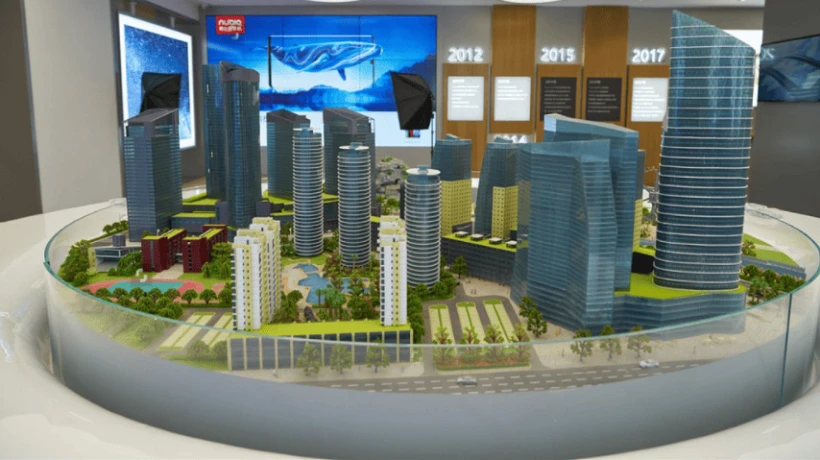
Architectural projects often involve many stakeholders. These may include architects, developers, investors, urban planners, engineers, and government authorities.
Architectural projects often involve many stakeholders. These may include architects, developers, investors, urban planners, engineers, and government authorities. Each stakeholder plays a different role in the project and needs a clear understanding of the proposed design before decisions are made.
Communicating complex architectural ideas through drawings and digital renderings can sometimes be difficult, especially for people who are not familiar with technical documents. Physical architectural models provide a clear and practical solution. An Architectural Scale Model Making Service helps present the design in a visual and tangible format that allows stakeholders to evaluate the project more effectively during review meetings.
Providing a Clear Visual Representation of the Project
One of the biggest challenges during stakeholder reviews is explaining the overall concept of the project. Architectural drawings, floor plans, and digital models contain valuable information, but they may require technical knowledge to interpret correctly.
A physical architectural model simplifies this process by presenting the design in three dimensions. Stakeholders can observe the building layout, surrounding environment, and structural relationships directly.
This clear visual representation allows everyone involved in the review process to understand the project quickly. By seeing the design in a physical form, stakeholders can better grasp the scale, proportions, and overall composition of the development.
Improving Understanding of Building Massing and Layout
During project reviews, stakeholders often evaluate the massing and layout of the buildings. Massing refers to how the different volumes of a building are arranged and how they interact with the surrounding environment.
A scale model clearly shows these relationships. It allows reviewers to observe how tall structures relate to smaller buildings, how open spaces are positioned, and how the development interacts with nearby streets or landscapes.
An Architectural Scale Model Making Service helps present these details in a way that is easy to understand. Stakeholders can quickly identify whether the design achieves the intended balance between built structures and open spaces. This visual clarity supports more productive discussions during review sessions.
Supporting Collaborative Decision Making
Architectural projects evolve through collaboration. During review meetings, stakeholders share opinions, ask questions, and suggest improvements to the design.
A physical model provides a shared reference point that everyone can examine together. Instead of interpreting separate drawings, participants can focus on a single representation of the project. This makes discussions more focused and efficient.
When stakeholders gather around a model, they can point to specific elements and explain their observations clearly. This interactive process encourages constructive feedback and helps teams reach informed decisions. By providing a clear physical reference, architectural models strengthen collaboration among project participants.
Highlighting Circulation and Accessibility
Another important aspect reviewed by stakeholders is circulation. Circulation refers to how people and vehicles move through the development. This includes pedestrian pathways, road networks, entrances, parking areas, and service access.
Understanding these movement patterns can be difficult through plans alone. A scale model allows reviewers to visualize circulation routes in a realistic context.
Roads, walkways, and access points become visible within the model. Stakeholders can evaluate whether the layout supports smooth movement and whether public areas are easily accessible. This clarity helps planners identify potential issues early and make improvements before the construction phase begins.
Demonstrating the Relationship with the Surrounding Environment
Architectural projects rarely exist in isolation. They interact with nearby buildings, natural landscapes, and urban infrastructure. During stakeholder reviews, it is important to understand how the proposed development fits within its surroundings.
A well-prepared architectural model often includes surrounding streets, neighboring buildings, and landscape features. This context helps reviewers see how the project will influence the local environment. An Architectural Scale Model Making Service carefully incorporates these contextual elements so stakeholders can evaluate factors such as skyline impact, visual harmony, and spatial balance within the area.
Helping Identify Design Challenges Early
Early detection of design challenges is essential for successful project development. Issues related to scale, accessibility, or spatial relationships can become costly if they are discovered during construction.
Physical models help stakeholders identify potential concerns at an early stage. When reviewers observe the model from different angles, they may notice aspects that require adjustment. These could include overcrowded building placements, limited open space, or unclear access routes. Because the model presents the entire project in a tangible format, it becomes easier to analyze the design thoroughly.
Improving Communication with Non-Technical Stakeholders
Not all stakeholders have a background in architecture or engineering. Investors, community representatives, and marketing teams may struggle to interpret technical drawings or digital plans.
A physical architectural model removes this barrier by presenting the design in a clear and understandable format. Anyone can observe the model and understand the general layout of the development.
This accessibility helps non-technical stakeholders participate more actively in review discussions. They can ask informed questions and provide valuable feedback about the project.
Enhancing Presentation Quality During Review Meetings
Stakeholder meetings often involve formal presentations where project teams explain design proposals and future development plans. A physical model enhances these presentations by providing a strong visual centerpiece.
When placed in a meeting room or exhibition space, the model immediately captures attention. Stakeholders can examine it closely while listening to the presentation. This visual support helps reinforce key design concepts and makes the project easier to remember. It also demonstrates the level of detail and planning that has gone into the development.
Encouraging Long-Term Project Understanding
Stakeholder reviews are not limited to a single meeting. Many projects go through multiple review stages as the design evolves. Physical models remain valuable throughout this process.
They can be updated to reflect design revisions and reused in future presentations. This allows stakeholders to track the progress of the project and understand how changes affect the overall design.
Conclusion
Stakeholder project reviews are essential for evaluating architectural designs, making decisions, and guiding projects toward successful completion. However, clear communication during these reviews can be challenging when designs are complex.
Physical architectural models provide a powerful solution by presenting the project in a clear and accessible form. They help stakeholders understand building massing, circulation patterns, environmental context, and spatial relationships.
Through accurate detailing and thoughtful presentation, an Architectural Scale Model Making Service supports productive discussions, collaborative decision making, and early identification of design improvements. By making architectural concepts easier to understand, scale models play a vital role in ensuring that stakeholders can confidently review and approve development projects.



Comments
Login to Comment