Sound Level Meter vs. Decibel Meter: What’s the Difference?
26 Oct, 2026
9 Views 0 Like(s)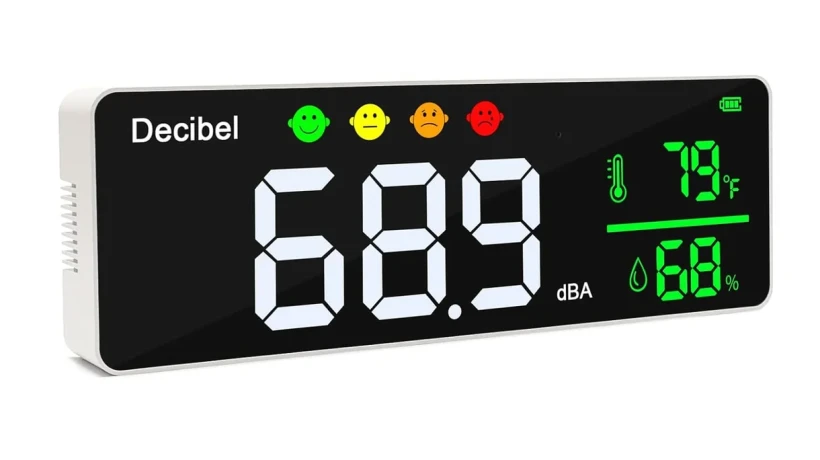
In this article, we’ll break down the differences between a sound level meter and a decibel meter, explain how each is used, and help you decide which term—and which device—is right for your needs.
If you’ve ever tried to measure how loud something is, you’ve likely come across the terms sound level meter and decibel meter. Many people use them interchangeably, and in everyday conversation, that’s usually fine. But if you’re shopping for equipment, writing a report, or trying to understand specifications, the distinction matters. In this article, we’ll break down the differences between a sound level meter and a decibel meter, explain how each is used, and help you decide which term—and which device—is right for your needs.
The Short Answer
A decibel meter is a device that measures sound intensity in decibels (dB). A sound level meter is the more formal, technical name for the same type of instrument. In practice, the two terms describe the same tool: a device with a microphone, processing electronics, and a display that shows how loud a sound is. The difference is largely one of terminology, precision, and marketing—not of fundamentally different technology.
That said, there are nuances worth understanding. Let’s dig deeper.
What Is a Decibel Meter?
A decibel meter is a colloquial term for an instrument that reads sound pressure levels in decibels. The decibel is a logarithmic unit used to express the ratio between a measured sound pressure and a reference level. Because the human ear perceives sound logarithmically, the decibel scale compresses an enormous range of sound intensities into a manageable number—from roughly 0 dB (the threshold of hearing) to 120 dB and beyond (the threshold of pain).
The term “decibel meter” is common in consumer contexts. Affordable handheld devices sold online for home use—checking noisy neighbors, testing a speaker system, or monitoring a workshop—are frequently marketed as decibel meters. These devices typically offer basic functionality: a digital display, a few weighting options (often A-weighting), and perhaps fast/slow response settings.
What Is a Sound Level Meter?
A sound level meter is the professional and standards-based term. It refers to an instrument designed and calibrated to measure sound pressure levels according to recognized standards, such as IEC 61672. Sound level meters are used in occupational health and safety, environmental noise monitoring, acoustic engineering, and product testing.
Professional sound level meters differ from basic decibel meters in several important ways:
- Accuracy classes: Sound level meters are classified (typically Class 1 or Class 2 under IEC 61672). Class 1 instruments offer tighter tolerances and are used for precise measurements; Class 2 instruments are suitable for general-purpose measurements.
- Calibration: Serious sound level meters support field calibration with an acoustic calibrator, ensuring readings remain accurate over time.
- Weighting and time constants: They offer A, C, and often Z frequency weighting, plus fast, slow, and impulse time responses.
- Data logging and analysis: Many models record measurements over time, calculate equivalent continuous levels (Leq), and export data for reporting.
- Standards compliance: Measurements taken with a compliant sound level meter may be admissible for regulatory, legal, or safety purposes.
Key Differences at a Glance
| Feature | Decibel Meter (consumer term) | Sound Level Meter (professional term) |
|---|---|---|
| Terminology | Informal, common in retail | Formal, standards-based |
| Accuracy | Often unspecified or ±2 dB or worse | Class 1 or Class 2 per IEC 61672 |
| Calibration | Rarely supported | Usually supported |
| Weighting options | Typically A-weighting only | A, C, and Z weighting |
| Data logging | Limited or none | Common in professional models |
| Best for | Casual home use | Safety, environmental, and engineering work |
Why the Terminology Matters
The words you use signal the level of rigor you expect. If you ask for a “decibel meter,” you’ll likely find inexpensive consumer devices. If you ask for a “sound level meter,” you’ll encounter instruments built to standards, with documented accuracy and calibration support.
This matters most in regulated contexts. Workplace noise assessments, environmental noise surveys, and legal disputes often require measurements from a calibrated, standards-compliant sound level meter. A casual decibel meter reading may be useful as a rough indicator, but it generally won’t hold up where precision and traceability are required.
How to Choose the Right Device
Start with your purpose:
- Casual home use—checking TV volume, monitoring a noisy appliance, or satisfying curiosity: a basic decibel meter is usually sufficient and cost-effective.
- Hobbyist or semi-professional use—audio setup, DIY acoustic projects, or classroom demonstrations: look for a device with calibration support and at least A and C weighting.
- Professional or regulatory use—occupational safety, environmental monitoring, or engineering: choose a Class 1 or Class 2 sound level meter from a reputable manufacturer, and budget for an acoustic calibrator.
Also consider frequency weighting (A-weighting mimics human hearing; C-weighting is better for low-frequency and peak measurements), time response settings, and whether you need data logging or software integration.
Conclusion
In everyday language, sound level meter and decibel meter refer to the same basic instrument: a tool that measures how loud a sound is in decibels. The real difference lies in formality, accuracy, and intended use. “Decibel meter” is the casual term often attached to consumer devices, while “sound level meter” describes standards-compliant instruments built for precision and professional applications.
Knowing this distinction helps you buy the right equipment, interpret specifications correctly, and communicate clearly—whether you’re a homeowner checking noise levels or a professional conducting a formal acoustic assessment.


Comments
Login to Comment