Small Lab Freezer for Laboratories: Common Applications and Storage Requirements
29 Oct, 2026
32 Views 0 Like(s)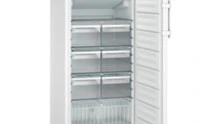
Learn how to choose a small lab freezer for reagents, samples and research materials, including temperature, monitoring and storage requirements.
A freezer may be small in size, but its role in a laboratory can be critical. What happens when valuable reagents, enzymes, samples, or biological materials are stored in equipment that cannot maintain the required temperature? Temperature instability can affect sample integrity and research results. A Small Lab Freezer can provide a practical solution when laboratory teams need reliable frozen storage without dedicating space to a large unit. The right choice depends on what you store, the required temperature, storage volume, monitoring needs, and laboratory workflow.
What Is a Small Lab Freezer?
A small laboratory freezer is a compact cold-storage unit designed for laboratories that need controlled frozen storage while working with limited floor or bench space.
Unlike a standard domestic freezer, laboratory-specific equipment is designed around the needs of scientific storage. Temperature stability, monitoring, organisation, access, and compatibility with laboratory workflows can be more important than simply achieving a low temperature.
For example, a small research laboratory may need dedicated frozen storage for enzymes and reagents without requiring the capacity of a large central freezer.
Common Applications of a Small Lab Freezer
The ideal freezer depends on the materials being stored. Before purchasing, identify the required temperature range and how frequently samples will be accessed.
1. Enzyme and Reagent Storage
Many laboratory reagents and enzymes require frozen storage to maintain their stability between uses.
LAF tech's laboratory freezer range includes fan-forced freezers designed to reach approximately -18°C to -22°C, which the company identifies as suitable for enzyme and reagent storage.
Always follow the manufacturer's specified storage conditions for each reagent rather than assuming that every frozen material requires the same temperature.
2. Biological Sample Storage
Research laboratories may need frozen storage for biological samples, cell culture materials, or other temperature-sensitive materials.
LAF tech lists MLF and DW Series freezers capable of temperatures as low as −40°C. These can be assessed for materials whose storage protocols permit that temperature, but longer storage duration alone does not establish suitability. Viable cell cultures may require cryogenic storage rather than a conventional −40°C freezer; follow the specific sample or cell-line preservation protocol.
The important point is to match freezer performance with the actual storage protocol—not simply select the coldest model available.
3. Pharmaceutical Laboratory Materials
Pharmaceutical laboratories may store temperature-sensitive materials that require controlled frozen conditions.
Storage requirements should always be based on the manufacturer's approved conditions. For temperature-sensitive medicines, the Australian TGA recommends suitable temperature monitoring, recording, calibration, and procedures for dealing with temperature excursions.
4. Biotechnology and Life Sciences Research
Biotechnology laboratories often handle valuable reagents, enzymes, biological samples, and research materials.
A compact freezer can be useful for separating frequently accessed materials from a larger central storage system. This can reduce unnecessary movement of samples and make routine laboratory workflows easier to manage.
Small Lab Freezer Storage Requirements
Choosing freezer capacity is only one part of the decision. The storage environment must also support the requirements of the materials inside.
Temperature Range
Start by identifying the exact temperature specified for each material.
For some laboratory applications, conventional laboratory freezers operate around -20°C, while other materials require lower temperatures. Thermo Fisher, for example, notes that laboratory freezers commonly reach around -20°C or -30°C, while ultra-low-temperature models can reach -40°C or -80°C.
Do not select equipment based solely on the lowest advertised temperature. The freezer must consistently maintain the temperature range required by your samples.
Temperature Monitoring
Temperature monitoring is essential when samples or materials are sensitive to temperature excursions.
CDC laboratory guidance recommends checking and recording freezer temperatures and following the storage conditions specified by the manufacturer of the relevant reagents, test kits, controls, or samples.
Depending on the application, useful features may include:
- Digital temperature display
- Temperature alarms
- Data logging
- Continuous monitoring
- Remote alerts
- Calibrated temperature sensors
For pharmaceutical or regulated environments, monitoring requirements may be more demanding.
Storage Organisation
A compact freezer can become difficult to manage if samples are simply stacked wherever space is available.
Use clearly labelled shelves, racks, boxes, or containers. Assign defined storage areas for different sample groups and maintain an inventory so technicians can locate materials without repeatedly opening the freezer.
CDC guidance also highlights the importance of planning freezer storage, including organisation, location, retention periods, and monitoring of freeze-thaw cycles.
How to Choose the Right Small Lab Freezer
Before purchasing, work through these practical questions:
- What materials will be stored? List reagents, enzymes, samples, pharmaceuticals, or other materials.
- What temperature is required? Check the manufacturer's storage instructions for every major material.
- How much storage do you actually need? Consider current volume as well as realistic future growth.
- How frequently will the freezer be opened? High-access applications may require different performance characteristics from long-term storage.
- What monitoring is required? Consider alarms, data logging, continuous monitoring, and calibration.
- How will samples be organised? Make sure shelves, racks, and internal dimensions support your storage containers.
- What happens during a power failure? Consider alarm systems, emergency procedures, backup storage, and monitoring requirements.
Practical Example: When a Small Freezer Makes Sense
Imagine a biotechnology laboratory with a small research team. The lab does not need hundreds of litres of frozen storage, but it regularly uses enzymes and temperature-sensitive reagents.
Instead of filling a large shared freezer with frequently accessed materials, the laboratory could use a dedicated compact freezer for routine reagents. This creates a clearly defined storage area and can make daily sample retrieval more efficient.
The exact freezer temperature and configuration should still be selected according to the manufacturer's storage requirements and the laboratory's quality procedures.
Why Laboratory-Grade Storage Matters
A domestic freezer may appear cheaper or more convenient, but laboratory storage has different priorities.
Laboratory-specific freezers can provide features designed around temperature stability, controlled storage, monitoring, and scientific workflows. Thermo Fisher notes that conventional domestic or commercial refrigerators can differ from laboratory equipment in temperature stability and uniformity.
For valuable research materials, the cost of a freezer should therefore be considered alongside the potential cost of compromised samples, reagents, or experiments.
Choosing a Small Lab Freezer from LAF tech
LAF tech offers a range of laboratory freezers covering different temperature and application requirements, including DW Series -40°C Freezers, MF Series Laboratory Freezers, MLF Series -40°C Freezers, and Liebherr freezer ranges. The company also offers installation, training, support, commissioning and validation services.
The right model depends on your required temperature, capacity, sample type, monitoring needs, and laboratory environment.
If you're unsure which configuration fits your application, discussing your requirements with a laboratory equipment specialist can help you avoid choosing equipment that is either undersized or unnecessarily complex.
Conclusion
A Small Lab Freezer can be an effective solution for laboratories that need dependable frozen storage without the footprint of a large unit. The best choice is determined by more than physical size: temperature range, sample type, capacity, monitoring, organisation, access frequency, and compliance requirements all matter.
For enzymes and reagents, a suitable laboratory freezer may provide the controlled conditions needed for routine storage. For biological or temperature-sensitive materials requiring lower temperatures, a -40°C or other specialised solution may be more appropriate. Always verify the required storage conditions before selecting equipment.
Looking for the right laboratory freezer for your application? Explore LAF tech's laboratory freezer range and speak with their specialists about your temperature, capacity, and storage requirements.
Frequently Asked Questions
1. What is a Small Lab Freezer used for?
A Small Lab Freezer is used to store temperature-sensitive laboratory materials such as enzymes, reagents, biological samples, research materials and certain pharmaceutical products under controlled frozen conditions.
2. What temperature should a small laboratory freezer maintain?
The required temperature depends on the material being stored. Some laboratory applications may require around -20°C, while others may need -40°C or lower. Always follow the manufacturer's recommended storage temperature.
3. How do I choose the right Small Lab Freezer?
Consider the required temperature range, storage capacity, sample type, frequency of access, temperature monitoring, alarms, internal organisation and available laboratory space before choosing a freezer.
4. Why is temperature monitoring important in laboratory freezers?
Temperature monitoring helps identify temperature changes that could affect sensitive samples, reagents or other stored materials. Depending on the application, digital displays, alarms, data logging and continuous monitoring may be useful.
5. Can a Small Lab Freezer be used in pharmaceutical laboratories?
Yes, a suitable laboratory freezer can be used for pharmaceutical materials when its temperature range and monitoring capabilities meet the required storage conditions. Always follow the product manufacturer's storage requirements and applicable laboratory procedures.



Comments
Login to Comment