ServiceNow in Insurance: Transforming Operations with Modern Digital Workflows
04 Jun, 2026
1529 Views 0 Like(s)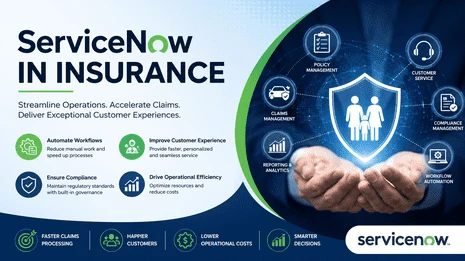
Discover how ServiceNow in insurance helps automate claims, improve customer experience, streamline operations, and drive digital transformation efficiently.
The insurance industry is undergoing rapid digital transformation. Customers expect faster claims processing, personalized services, and seamless communication across channels. At the same time, insurers face increasing regulatory requirements, operational complexities, and rising customer expectations.
This is where ServiceNow development services play a crucial role. ServiceNow enables insurance companies to automate workflows, improve customer experiences, streamline claims management, and enhance operational efficiency through a unified digital platform.
In this article, we will explore how ServiceNow is transforming the insurance sector and why investing in ServiceNow development services can help insurers stay competitive in a rapidly evolving market.
What is ServiceNow?
ServiceNow is a cloud-based digital workflow platform designed to automate business processes, improve collaboration, and enhance service delivery across organizations.
Originally known for IT Service Management (ITSM), ServiceNow has expanded into various industries, including insurance, healthcare, banking, manufacturing, and retail.
For insurance organizations, ServiceNow helps automate critical processes such as:
-
Claims management
-
Policy administration
-
Customer service operations
-
Risk and compliance management
-
Agent and broker support
-
Employee onboarding
-
Incident management
By leveraging ServiceNow development services, insurers can customize workflows, integrate existing systems, and create industry-specific solutions tailored to their business requirements.
Why Insurance Companies Need Digital Transformation
Insurance organizations often operate with legacy systems that create challenges such as:
-
Manual claim processing
-
Data silos across departments
-
Slow customer response times
-
Compliance risks
-
Inefficient policy servicing
-
High operational costs
Modern customers expect:
-
Instant policy updates
-
Faster claim settlements
-
Self-service portals
-
Personalized interactions
-
Omnichannel communication
To meet these expectations, insurers require a centralized platform capable of connecting people, processes, and technology.
ServiceNow provides that foundation.
Key Benefits of ServiceNow in Insurance
1. Faster Claims Processing
Claims processing is one of the most critical functions in insurance operations.
Traditional claim management often involves:
-
Multiple departments
-
Manual document handling
-
Lengthy approval workflows
-
Limited visibility
ServiceNow automates the entire claims lifecycle by:
-
Assigning claims automatically
-
Routing approvals digitally
-
Tracking claim status in real time
-
Reducing manual intervention
This leads to faster settlements and improved customer satisfaction.
2. Enhanced Customer Experience
Modern policyholders demand quick and transparent service.
ServiceNow enables insurers to:
-
Create customer self-service portals
-
Provide real-time claim updates
-
Offer automated notifications
-
Deliver personalized support
Customers can access information anytime without waiting for support representatives, improving overall satisfaction.
3. Improved Agent and Broker Productivity
Insurance agents and brokers manage numerous customer interactions daily.
ServiceNow centralizes information and provides:
-
Single-view customer records
-
Automated task management
-
Case tracking capabilities
-
Workflow automation
This allows agents to focus more on customer relationships rather than administrative tasks.
4. Regulatory Compliance Management
The insurance industry faces strict regulatory requirements.
ServiceNow helps insurers maintain compliance through:
-
Automated audit trails
-
Document management
-
Compliance monitoring
-
Risk assessments
-
Workflow governance
Organizations can reduce compliance risks while improving operational transparency.
5. Reduced Operational Costs
Automation significantly reduces repetitive manual work.
Insurance companies can:
-
Eliminate redundant processes
-
Minimize paperwork
-
Reduce administrative overhead
-
Improve workforce productivity
As a result, insurers can lower operational costs while increasing service quality.
ServiceNow Use Cases in Insurance
Claims Management Automation
Claims processing often involves multiple stakeholders including adjusters, investigators, policyholders, and managers.
ServiceNow streamlines claims workflows by:
-
Automating claim intake
-
Managing documentation
-
Assigning adjusters automatically
-
Tracking claim progress
-
Generating reports
The result is improved efficiency and faster resolution times.
Customer Service Management
Customer Service Management (CSM) is one of the most valuable ServiceNow capabilities for insurers.
Benefits include:
-
Omnichannel support
-
Automated ticket creation
-
Customer self-service portals
-
Knowledge management systems
-
SLA tracking
These features help insurance companies deliver superior customer experiences.
Underwriting Process Optimization
Underwriters often spend significant time gathering and reviewing information.
ServiceNow can automate:
-
Risk assessments
-
Document collection
-
Approval workflows
-
Communication between teams
This improves underwriting accuracy and accelerates policy issuance.
Policy Lifecycle Management
Managing policies involves multiple stages, including:
-
New applications
-
Renewals
-
Endorsements
-
Cancellations
ServiceNow automates these processes, reducing delays and improving customer satisfaction.
Employee Service Delivery
Insurance organizations often have large workforces spread across multiple locations.
ServiceNow helps streamline:
-
Employee onboarding
-
HR requests
-
IT support
-
Internal approvals
-
Knowledge sharing
This improves employee productivity and engagement.
How ServiceNow Development Services Help Insurance Companies
While ServiceNow provides powerful out-of-the-box capabilities, insurers often require custom solutions to address unique business requirements.
Professional ServiceNow development services help organizations maximize platform value through:
Custom Workflow Development
Every insurer has different processes.
Developers can create custom workflows for:
-
Claims handling
-
Policy approvals
-
Compliance management
-
Customer service operations
Third-Party System Integration
Insurance companies rely on various systems, including:
-
CRM platforms
-
Policy administration systems
-
ERP software
-
Data analytics tools
ServiceNow development services enable seamless integration across these platforms.
Custom Portal Development
Insurers can build customized portals for:
-
Policyholders
-
Agents
-
Brokers
-
Employees
These portals improve accessibility and user experience.
Automation Implementation
Automation opportunities include:
-
Claims routing
-
Approval processes
-
Notifications
-
Compliance reporting
Custom automation reduces manual workload and improves efficiency.
Reporting and Analytics
Insurance leaders require actionable insights.
ServiceNow developers can create dashboards that track:
-
Claim processing times
-
Customer satisfaction
-
Agent performance
-
Compliance metrics
-
Operational KPIs
Emerging Trends Driving ServiceNow Adoption in Insurance
Artificial Intelligence Integration
AI-powered capabilities help insurers:
-
Predict claim outcomes
-
Detect fraud
-
Automate customer support
-
Improve decision-making
ServiceNow's AI features enhance operational intelligence and efficiency.
Hyperautomation
Insurance companies increasingly adopt hyperautomation to connect multiple automated workflows.
This enables:
-
End-to-end process automation
-
Reduced human intervention
-
Faster service delivery
Self-Service Experiences
Customers increasingly prefer self-service options.
ServiceNow supports:
-
Customer portals
-
Knowledge bases
-
Automated assistance
-
Mobile accessibility
These features reduce support costs while improving user satisfaction.
Data-Driven Decision Making
ServiceNow provides advanced reporting and analytics capabilities that help insurers make informed business decisions based on real-time data.
Best Practices for Implementing ServiceNow in Insurance
To achieve successful implementation, insurers should:
Define Clear Business Objectives
Identify specific goals such as:
-
Faster claims processing
-
Improved customer satisfaction
-
Reduced operational costs
Prioritize High-Impact Workflows
Start with processes that deliver immediate value and measurable ROI.
Invest in Experienced ServiceNow Development Services
Partnering with skilled ServiceNow experts ensures:
-
Faster implementation
-
Customization expertise
-
Integration success
-
Long-term scalability
Focus on User Adoption
Provide adequate training to employees and stakeholders to maximize platform utilization.
Continuously Optimize Processes
Monitor workflows regularly and identify opportunities for improvement.
Why ServiceNow is the Future of Insurance Operations
The insurance industry is rapidly evolving, and organizations that continue relying on outdated systems risk falling behind competitors.
ServiceNow offers insurers a powerful platform to:
-
Automate complex workflows
-
Improve customer experiences
-
Enhance operational efficiency
-
Strengthen compliance management
-
Accelerate digital transformation
With the right ServiceNow development services, insurance companies can build scalable, future-ready solutions that drive growth and innovation.
Conclusion
Insurance providers face growing pressure to deliver exceptional customer experiences while maintaining operational efficiency and regulatory compliance. ServiceNow addresses these challenges by creating connected digital workflows across the entire organization.
From claims automation and customer service management to underwriting optimization and compliance tracking, ServiceNow provides the tools insurers need to modernize operations and remain competitive.
By investing in professional ServiceNow development services, insurance companies can unlock the full potential of the platform, streamline business processes, and create a more agile, customer-centric future.



Comments
Login to Comment