Self Pierce Riveting (SPR): Advanced Joining Technology for Modern Manufacturing
03 Jun, 2026
1500 Views 0 Like(s)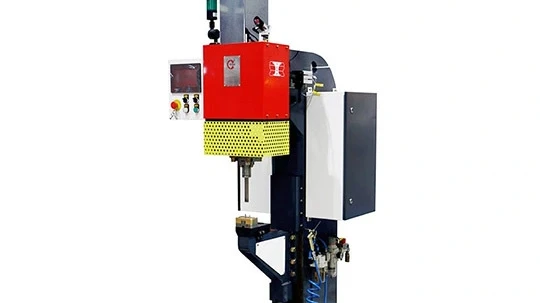
As a global manufacturer of advanced joining and resistance welding systems, Heron Welder provides high-precision SPR systems engineered for automated, high-volume production environments.
In today’s high-performance manufacturing environment, lightweight design, multi-material joining, and production efficiency are critical success factors. Self Pierce Riveting (SPR) has emerged as one of the most reliable and widely adopted mechanical joining technologies, especially in automotive, aerospace, appliance, and industrial assembly lines.
For OEMs and automation integrators, SPR offers a robust alternative to traditional welding and fastening methods—particularly when joining dissimilar materials such as aluminum, high-strength steel, and composite stacks.
As a global manufacturer of advanced joining and resistance welding systems, Heron Welder provides high-precision SPR systems engineered for automated, high-volume production environments.
What is Self Pierce Riveting?
Self Pierce Riveting (SPR) is a cold mechanical joining process that uses a specially designed rivet to penetrate and mechanically lock multiple layers of material without the need for pre-drilled holes or thermal energy.
Unlike welding, SPR does not melt the base materials. Instead, it forms a mechanical interlock by piercing the top sheet and flaring within the bottom layer, creating a strong, fatigue-resistant joint.
Key Characteristics:
- No pre-drilling required
- No heat generation
- Suitable for dissimilar materials
- High-speed automation compatible
- Consistent quality in mass production
This makes SPR especially valuable in industries transitioning toward lightweight structures and mixed-material assemblies.
How Self Pierce Riveting Works
The SPR process follows a precise sequence controlled by automated equipment:
1. Material Clamping
The stack of sheets is securely clamped between a punch and a die system to prevent movement during joining.
2. Rivet Insertion
A semi-tubular rivet is driven into the upper sheet using high force.
3. Penetration Without Full Breakthrough
The rivet pierces the top layer(s) but does not fully break through the bottom sheet.
4. Material Flare Formation
The rivet legs expand outward within the lower sheet, forming a mechanical interlock.
5. Final Joint Formation
A permanent, load-bearing joint is created without heat distortion or weakening of material properties.
This controlled deformation process ensures repeatable strength and structural integrity.
Advantages of Self Pierce Riveting in Industrial Applications
Self Pierce Riveting is widely adopted due to its engineering and production advantages.
1. Excellent for Multi-Material Joining
SPR performs exceptionally well when joining:
- Aluminum to steel
- High-strength steel combinations
- Composite-to-metal structures
2. No Thermal Distortion
Since no heat is used, SPR eliminates:
- Heat-affected zones (HAZ)
- Material warping
- Metallurgical weakening
3. High Production Efficiency
SPR cycles are extremely fast and suitable for:
- Robotic assembly lines
- High-volume automotive production
- Continuous manufacturing processes
4. Strong Mechanical Performance
SPR joints deliver:
- High shear strength
- Excellent fatigue resistance
- Long-term durability under vibration loads
5. Clean and Eco-Friendly Process
No fumes, gases, or filler materials are required, making it a cleaner alternative to welding and adhesive bonding.
Self Pierce Riveting vs Other Joining Methods
Understanding how SPR compares with alternative technologies helps manufacturers select the right solution.
SPR vs Resistance Spot Welding
Resistance spot welding relies on heat and electrical current, which can be ineffective for dissimilar materials like aluminum and steel. SPR, on the other hand, creates a mechanical bond without melting.
- Spot welding: Best for similar metals
- SPR: Ideal for mixed materials and coated sheets
SPR vs Adhesive Bonding
Adhesives require curing time and surface preparation. They also degrade under heat and environmental exposure.
- Adhesives: Good for sealing but slower
- SPR: Immediate structural strength
SPR vs Mechanical Fasteners
Traditional bolts or screws require pre-drilled holes and additional assembly steps.
- Fasteners: Flexible but slow and labor-intensive
- SPR: Fully automated and high-speed
Key Industrial Applications of Self Pierce Riveting
SPR is widely used across industries where lightweight design and structural integrity are critical.
Automotive Manufacturing
One of the largest users of SPR technology, especially in:
- Body-in-white (BIW) assembly
- Door panels and frames
- Chassis structures
- EV lightweight body structures
Aerospace Engineering
SPR is used in aircraft interior assemblies and secondary structures where composite-aluminum joining is required.
Rail and Transportation
High-strength joints in:
- Train body panels
- Structural frames
- Lightweight transport systems
Appliance Manufacturing
Used in:
- Washing machines
- Refrigeration panels
- HVAC enclosures
Industrial Equipment
Applied in:
- Electrical cabinets
- Machine enclosures
- Metal furniture and structural systems
SPR System Components and Automation Integration
Modern SPR systems are highly automated and integrated into robotic production lines.
Core System Components:
- Rivet feeding system
- Hydraulic or servo-driven press unit
- Die support system
- Control unit and sensors
- Robot integration interface
Automation Features:
- Real-time force monitoring
- Rivet presence detection
- Adaptive force control
- PLC-based production control
- Quality assurance feedback loops
Manufacturers like Heron Welder develop integrated SPR solutions designed for seamless integration into Industry 4.0 environments, enabling predictive maintenance and smart production optimization.
Best Practices for Implementing SPR in Production
To achieve maximum performance and reliability, manufacturers should follow key engineering practices:
1. Material Stack Design
Ensure compatibility of:
- Sheet thickness
- Hardness levels
- Coating materials
2. Rivet Selection
Choose rivets based on:
- Material type
- Load requirements
- Corrosion resistance
3. Tooling Maintenance
Regular inspection of:
- Punch and die wear
- Alignment accuracy
- Rivet feeding mechanisms
4. Process Optimization
Adjust parameters such as:
- Press force
- Insertion speed
- Holding time
5. Quality Control Systems
Implement real-time monitoring for:
- Joint strength validation
- Rivet deformation consistency
- Defect detection
Why Manufacturers Prefer SPR for Modern Production Lines
The shift toward lightweight engineering, EV production, and hybrid materials has increased demand for SPR technology.
Manufacturers prefer SPR because it:
- Reduces assembly complexity
- Improves structural performance
- Supports automation at scale
- Enhances product lifecycle durability
- Lowers overall production costs
For OEMs and system integrators, SPR is not just a joining method—it is a production efficiency strategy.
FAQs on Self Pierce Riveting
1. What materials can be joined using self pierce riveting?
SPR is commonly used for aluminum, high-strength steel, galvanized steel, and mixed-material stacks, including composite structures.
2. Is self pierce riveting stronger than welding?
In many mixed-material applications, SPR provides superior fatigue resistance and avoids heat-affected weakening, making it more reliable than spot welding.
3. Can SPR be automated in high-speed production lines?
Yes. SPR systems are fully compatible with robotic automation and are widely used in automotive mass production environments.
4. Does SPR require surface preparation?
Minimal surface preparation is required compared to adhesive bonding. However, cleanliness and proper material stacking are important.
5. What industries benefit most from SPR?
Automotive, aerospace, rail transportation, appliances, and industrial equipment manufacturing benefit the most due to high-volume and mixed-material joining needs.
Conclusion: The Future of Mechanical Joining with SPR
Self Pierce Riveting is becoming a cornerstone technology in modern manufacturing due to its ability to combine speed, strength, and multi-material compatibility. As industries continue shifting toward lightweight and high-efficiency designs, SPR will play an increasingly important role in production engineering.
For manufacturers looking to upgrade their joining systems, reduce cycle time, and improve structural performance, SPR provides a proven and scalable solution.
To explore customized Self Pierce Riveting systems, automation integration, or complete production line solutions, connect with Heron Welder and request a tailored consultation for your manufacturing requirements.
Disclaimer: ThynkTales is a public blogging platform where content is contributed by individual users. While we encourage thoughtful and accurate sharing, we do not independently verify the information provided. Readers are advised to use their discretion and verify any information before relying on it.


Comments
Login to Comment