Russia Gave a ‘Guarantee’ Regarding Oil and Gas, Then India Immediately Placed This Demand Before America
14 May, 2026
1734 Views 0 Like(s)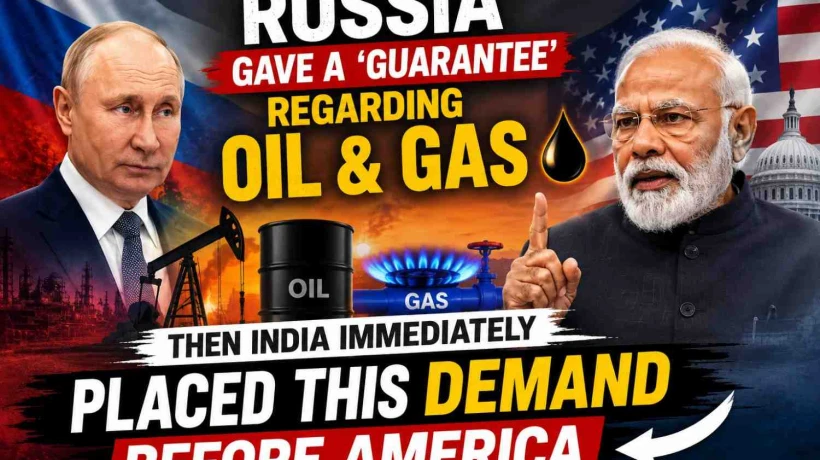
Russia Gave a ‘Guarantee’ Regarding Oil and Gas, Then India Immediately Placed This Demand Before America
India’s energy strategy has once again become the center of global attention after Russia reportedly assured uninterrupted oil and gas supplies to New Delhi despite mounting geopolitical tensions and Western sanctions. Following this assurance, India is said to have raised a significant demand before the United States, highlighting the growing complexity of global energy diplomacy and the shifting balance of power in international trade.
Over the past two years, India has emerged as one of the biggest buyers of discounted Russian crude oil. As European nations reduced their dependence on Moscow after the Ukraine conflict, India took advantage of lower prices to secure affordable energy for its rapidly growing economy. This decision not only helped India control inflation but also ensured stable fuel supplies for industries, transport, and households.
According to reports, Russian officials recently reiterated that India would continue receiving uninterrupted oil and gas shipments regardless of global political pressure. Moscow’s “guarantee” came at a time when concerns were rising over stricter sanctions, payment restrictions, and shipping disruptions in international markets. Russia reportedly assured India that both countries would continue exploring alternative payment mechanisms, shipping arrangements, and long-term energy partnerships to maintain smooth trade flows.
Soon after this assurance, India reportedly intensified discussions with the United States regarding energy security and trade flexibility. Analysts believe New Delhi’s message to Washington was clear: if the West expects India to reduce its dependence on Russian energy in the future, then America and its allies must provide reliable, affordable, and long-term alternatives.
India’s demand before the United States is believed to revolve around three major areas — stable crude oil supply, favorable pricing, and fewer restrictions on energy transactions. Indian policymakers have consistently argued that energy security remains the country’s top priority and cannot be compromised due to geopolitical rivalries between major powers.
India is currently the world’s third-largest oil importer, and its energy demand is expected to rise sharply in the coming decades. Any sudden disruption in supplies could directly impact inflation, manufacturing costs, transportation, and economic growth. This is why New Delhi has maintained a balanced diplomatic approach, strengthening ties with both Russia and Western nations simultaneously.
Experts say India’s position is driven more by economic realism than political alignment. Russian oil has often been available at discounted rates compared to global benchmarks, allowing Indian refiners to increase profit margins and export refined fuel products to international markets. At the same time, India continues to deepen strategic partnerships with the United States in areas such as defense, technology, semiconductors, and renewable energy.
The United States has repeatedly acknowledged India’s unique energy needs, even while encouraging diversification away from Russian supplies. American officials have previously stated that India’s purchases of Russian oil remain significantly lower than Europe’s earlier dependence on Moscow. However, Washington also wants New Delhi to gradually expand imports from alternative suppliers, including the United States itself.
This latest development may push both countries toward broader energy negotiations. India could seek long-term LNG agreements, investment in strategic petroleum reserves, and improved access to American energy technology. In return, the United States may expect India to support broader efforts aimed at stabilizing global energy markets and reducing excessive dependence on Russia.
The situation also reflects India’s growing confidence on the global stage. Unlike in previous decades, New Delhi is now in a stronger position to negotiate with major powers based on its economic importance and market size. With one of the fastest-growing economies in the world, India has become a critical customer for global energy exporters. Both Russia and the United States recognize that maintaining strong ties with India is strategically important.
Meanwhile, Russia sees India as a reliable long-term partner amid increasing Western isolation. Bilateral trade between the two countries has expanded significantly, especially in the energy sector. Russian companies are also exploring opportunities in Indian infrastructure, petrochemicals, and natural gas projects.
Global energy markets are likely to closely watch how this diplomatic triangle evolves. If India succeeds in balancing relationships with both Moscow and Washington, it could strengthen its role as an independent geopolitical player capable of protecting its national interests without taking sides in major international conflicts.
For now, India appears determined to prioritize affordable energy, economic stability, and strategic autonomy above all else. Russia’s assurance has provided short-term confidence, but New Delhi’s immediate outreach to America shows that India is keeping all options open. In an increasingly uncertain world, energy security has become not just an economic issue, but a powerful tool of diplomacy and global influence.


Comments
Login to Comment