Protecting Digital Evidence During Investigations
14 Mar, 2026
5007 Views 0 Like(s)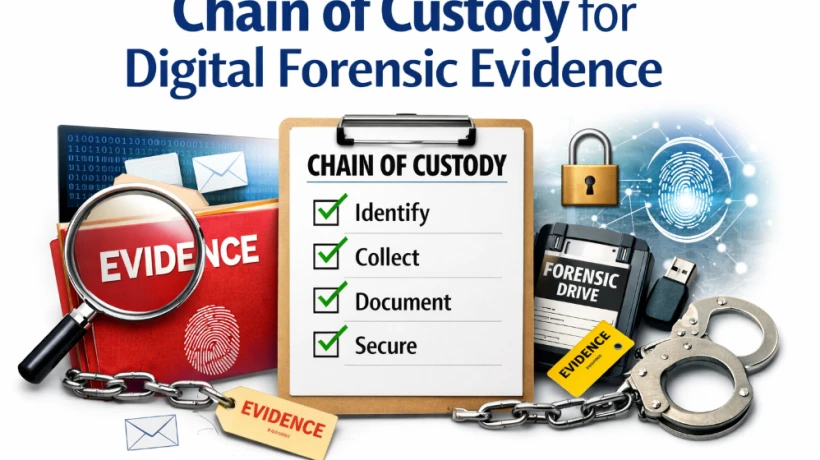
Learn how to maintain chain of custody for digital forensic evidence with clear steps. Understand proper evidence handling, documentation, and methods investigators use to preserve digital proof integrity.
Digital investigations often uncover valuable information such as emails, attachments, system logs, or documents. However, discovering evidence is only the beginning. The real challenge is preserving that evidence so it remains trustworthy and legally acceptable. If digital proof is not handled carefully, its credibility can be questioned and it may lose its value during investigations or legal reviews.
Maintaining proper handling procedures ensures that evidence stays intact from the moment it is discovered until it is analyzed. This process builds trust in the investigation and helps organizations prove that their findings are reliable.
Why Proper Evidence Handling Is Important
Digital evidence can easily be modified if it is accessed without care. Even opening a file the wrong way may change important details like timestamps or metadata. When these details change, investigators may struggle to prove that the evidence is original.
That is why investigations follow a structured method called chain of custody. It is simply a record that tracks how evidence moves during an investigation.
Imagine handing over the keys of a car. Each time the keys change hands, someone notes who received them and when. If the keys disappear without record, people start questioning what happened. Digital evidence works the same way.
Proper documentation helps investigators answer important questions such as:
-
Who discovered the evidence
-
When it was collected
-
Who accessed it later
-
Where it was stored during the investigation
These records create a clear timeline that proves the evidence remained secure and unchanged.
Basic Steps Followed During Digital Evidence Handling
Investigators usually follow a structured approach when managing digital evidence. This process helps maintain accuracy and prevents accidental changes.
Evidence Identification
The first step is identifying potential evidence sources. These may include emails, shared files, chat records, or stored documents. Investigators carefully record the location of the evidence and the time it was discovered.
This step is similar to marking an important point on a map before beginning a search. Without identifying the source correctly, the investigation may lose direction later.
Evidence Collection
Once the evidence is identified, it must be collected carefully using proper forensic techniques. The main goal is to capture the information exactly as it exists without modifying the original data.
During this stage, investigators record important details such as the person collecting the evidence, the date and time of collection, and the device or system from which the evidence was obtained.
Evidence Documentation
Every piece of evidence must be documented throughout the investigation. This documentation records each action performed on the data.
Investigators track when evidence is transferred, who accessed it, and why it was examined. This documentation acts like a timeline of the investigation and helps prove that the evidence was handled responsibly.
Secure Evidence Storage
After collection, the evidence must be stored safely. Original evidence should remain untouched while investigators work on copies for analysis.
Access to stored evidence should be restricted so that only authorized individuals can view or analyze it. This prevents accidental modification and keeps the investigation reliable.
Risks of Managing Evidence Manually
Many investigations still rely on spreadsheets or handwritten logs to track digital evidence. While this approach may work for small cases, it often introduces risks when investigations become complex.
Human errors are common. Investigators may forget to record a transfer, mistype a timestamp, or accidentally access the wrong file. These small mistakes can create gaps in the investigation record and raise doubts about the evidence.
Another important risk involves metadata, which is hidden information stored inside digital files. Metadata contains details such as file creation time, sender information, and system activity.
If evidence is copied or exported incorrectly, this metadata can disappear. When that happens, it becomes difficult to prove that the evidence remained unchanged.
The Role of Email Investigation Tools
Email communication is often one of the most important sources of digital evidence during corporate investigations. Fraud, insider threats, and compliance violations frequently leave traces in email conversations.
Manually reviewing thousands of emails can take a long time and may increase the chance of missing important information. This is where specialized forensic tools become useful.
Email investigation platforms such as MailXaminer help investigators examine large volumes of email data while preserving important information such as header analysis, timestamps, and metadata. These details play a crucial role in verifying the authenticity of evidence.
Using dedicated investigation tools also helps teams organize evidence properly and maintain clear records during the analysis process.
Common Mistakes That Can Weaken Evidence
Even experienced investigators sometimes make mistakes that affect evidence reliability. Some common issues include accessing evidence without recording the action or sharing files through unsecured communication channels.
Another frequent mistake is modifying original evidence instead of working on copies. When the original data changes, proving its authenticity becomes difficult.
Failing to preserve metadata is another problem. Metadata acts like a digital fingerprint for evidence, and losing it can weaken the strength of the investigation.
Final Thoughts
Digital evidence plays a critical role in modern investigations. However, its true value depends on how carefully it is handled throughout the investigation process.
By identifying evidence properly, documenting every step, securing storage, and protecting metadata, investigators can maintain the reliability of their findings. Organizations that follow structured evidence handling practices strengthen the credibility of their investigations and ensure that digital evidence remains trustworthy when it is needed most.



Comments
Login to Comment