Professional Facial Hair Removal in Clinical Settings: Methods and Safety Standards
17 Feb, 2026
7391 Views 0 Like(s)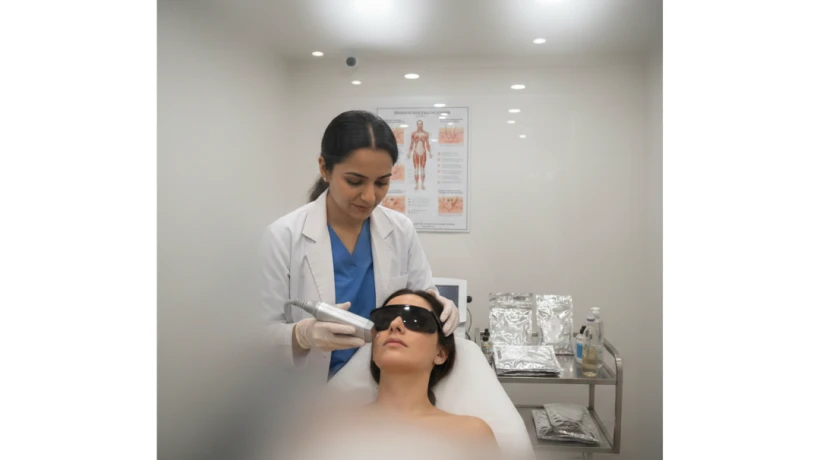
Clinical facial hair removal offers safer, long-lasting results using medical-grade lasers and expert care. Learn how the right method and clinic choice make all the difference for effective facial hair removal in Hyderabad.
Most people walk into the nearest salon, get a facial hair treatment done, and assume all procedures work the same way. They don't. A clinical procedure and a salon service are fundamentally different in equipment, training, and outcome.
Clinical facial hair removal means a dermatologist or certified technician uses medical grade devices to target hair follicles with precision. The goal is long term reduction or permanent removal, not a temporary fix that grows back in two weeks.
That one difference changes everything about results, safety, and what your skin looks like six months later.
Why Your Face Is Not the Same as Your Legs
This is something most clinics won't tell you upfront.
Facial skin is thinner. It reacts faster. It scars easier. And it sits right where the world looks at you every single day.
A wrong laser setting on your leg might leave a red patch that fades in a week. The same mistake on your upper lip can leave a dark mark that takes months to treat.
That is exactly why clinical settings exist for facial work. Controlled environment. Regulated machines. Professionals who know what a bad reaction looks like before it gets worse.
So What Methods Actually Work?
Let's skip the generic list and talk about what each method is genuinely good at.
Laser: The Workhorse
This is what most people come in asking for. A focused light beam damages the hair follicle so it slows down or stops producing hair.
But here is the part people miss. Not every laser works on every skin tone.
-
Nd:YAG is the go to for darker Indian skin tones. It penetrates deeper without burning the surface.
-
Diode sits in the middle. Effective, relatively comfortable, works on a range of skin types.
-
Alexandrite is fast but suited for lighter skin. On darker tones, it can cause pigmentation issues.
You will need 6 to 8 sessions. Anyone who promises results in 2 or 3 is either overselling or undertreating.
Electrolysis: Slow but Truly Permanent
If laser is the workhorse, electrolysis is the craftsman.
A tiny probe goes into each individual follicle. An electric current destroys the root. One follicle at a time.
It is slow. It takes patience. But it is the only method the FDA recognizes as permanent. And it works on every hair color, including blonde and grey hair that laser simply cannot treat.
Best suited for small, precise areas like the upper lip, chin, or between the eyebrows.
IPL: The Lighter Alternative
Intense Pulsed Light uses broad spectrum light. Less targeted than laser, but covers more area per pulse.
Think of it as a good option for fine facial hair or for maintenance after you have completed a laser course. It is not the strongest tool, but it has its place.
Prescription Creams: The Supporting Player
Dermatologists sometimes prescribe eflornithine cream to slow regrowth. This is not a replacement for laser or electrolysis. It works alongside them, especially when hair growth is driven by hormonal factors like PCOS.
What a Safe Clinic Actually Looks Like
This is where most people stop researching. And that is exactly where problems begin.
A proper clinical setup will do all of this before touching your face:
-
Run a patch test 24 to 48 hours before your first session.
-
Assess your skin type using a recognized scale like Fitzpatrick.
-
Use sterile, single use accessories for every patient.
-
Hand you written post treatment instructions, not just verbal advice.
-
Have a dermatologist on call or on site during every procedure.
If a place skips even one of these, walk out. Your face is not worth the discount.
Finding the Right Clinic If You Are in Hyderabad
The market for facial hair removal in Hyderabad has expanded rapidly. That means more options, but also more places cutting corners.
Here is what actually helps when choosing:
Ask specifically which device they use. Google it. Check if it is FDA cleared. Ask who operates it and what their qualification is. Visit before you book. Look at the treatment room, not just the reception area.
And read reviews that describe actual procedures and outcomes. A five star rating with only "nice staff" comments tells you nothing about clinical competence.
One more thing. The cheapest option almost always costs more in the long run. Fixing pigmentation damage from a bad session is far more expensive than paying a fair price for the right treatment from the start.
What Happens After a Session
You walk out with mild redness. Maybe slight swelling. Both fade within a few hours.
For the next 48 hours, skip makeup, retinol, and any active skincare ingredients. Apply SPF 30 or higher every single day for at least a week. Avoid direct sun exposure.
Electrolysis may leave tiny red dots at each treated spot. These disappear within a day or two.
Nothing dramatic. But ignoring aftercare is one of the fastest ways to turn a good result into a skin problem.
What This All Comes Down To
Facial hair removal in Hyderabad or anywhere else should be treated as a medical procedure, not a quick salon visit. Your choice of method depends on your skin type, hair type, and what kind of result you are after. Your choice of clinic depends on their equipment, qualifications, and willingness to follow safety steps without shortcuts. Price matters, but never more than your skin.
FAQs
Q.1 How long does each laser session take for the face?
Ans: Most facial sessions take 15 to 30 minutes depending on the area being treated. Upper lip alone can be done in under 10 minutes.
Q.2 Can hormonal conditions affect the results?
Ans: Yes. Conditions like PCOS can cause regrowth even after a full course. A dermatologist may recommend combining laser with medication for better long term control.
Q.3 Is there an age limit for facial hair removal?
Ans: Most clinics treat patients above 16 to 18 years. Hormonal stability matters because treating too early may lead to regrowth as the body is still changing.
Q.4 What if my skin reacts badly after a session?
Ans: Contact your clinic immediately. A qualified setup will have a protocol for managing reactions, including soothing treatments and follow up consultations.
Q.5 How do I know if laser or electrolysis is right for me?
Ans: A dermatologist will assess your hair color, skin tone, and treatment area. Laser works best for dark hair on lighter skin. Electrolysis works for all types but takes longer.



Comments
Login to Comment