Private Quran Tutor: Your Complete Guide to Finding the Right Quran Teacher
24 Jul, 2026
897 Views 0 Like(s)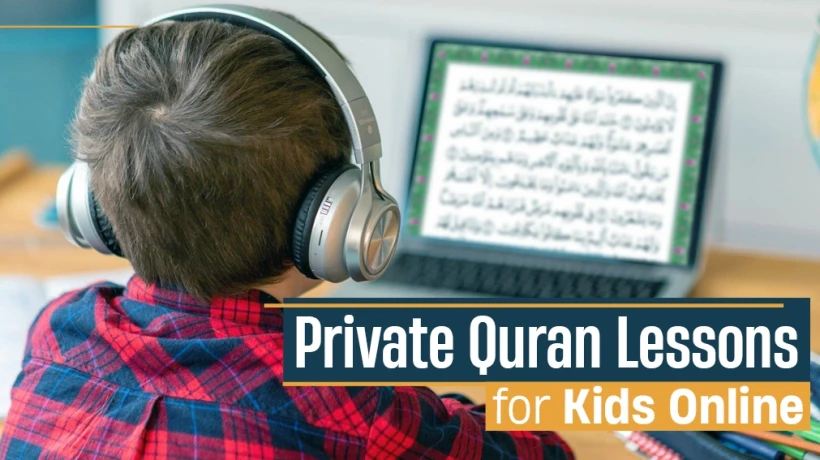
private Quran tutor instead of relying on crowded classes or scattered YouTube videos.
Learning the Quran is a journey, not a race. We know that feeling when you first think, "I want to learn properly, but where do I even start?" That's exactly why so many families and adults today are turning toward a private Quran tutor instead of relying on crowded classes or scattered YouTube videos. In this guide, we'll walk you through everything — pricing, coverage areas, accessibility, teaching styles, and how to actually pick the right Quran teacher for your needs.Think of this article as a map. You won't get lost. By the end, you'll know exactly what to expect, what to ask, and what to avoid.
Why Choose a Private Quran Tutor Over a Group Class?
Group classes have their charm, sure. But let's be honest — can a teacher juggling fifteen students really catch every mistake in your child's Tajweed? Probably not. A private tutor is like having a personal coach instead of joining a gym class where everyone follows the same routine regardless of fitness level.
Personalized Pace and Attention
We often hear parents say their child "just needs someone who won't rush." That's the biggest win here. A one-on-one Quran teacher adjusts the pace to the student — whether that's a five-year-old learning Noorani Qaida or an adult trying to finally read Arabic fluently after years of hesitation.
Flexible Scheduling That Fits Real Life
Life doesn't pause for lessons. Between school runs, work meetings, and everything in between, private tutoring bends around your calendar rather than forcing you to bend around it.
How Much Does a Private Quran Tutor Cost?
This is usually the first question, and fair enough — money matters. Prices vary quite a bit depending on location, tutor experience, and whether lessons are online or in-person.
Typical Price Ranges
- Online Quran classes: roughly $30–$80 per month for 2–3 sessions weekly, depending on the platform and tutor qualifications.
- In-person local tutors: often between $15–$40 per hour, varying heavily by city and demand.
- Specialized Hifz (memorization) programs: these tend to run higher, sometimes $100–$200 monthly, since they require daily commitment and deeper tracking.
- Package deals: many tutors offer discounted monthly bundles rather than pay-per-class, which can save 10–20% over time.
What Affects the Price?
A few things push prices up or down:
- Tutor's qualifications (certified Qari vs. general teacher)
- Class frequency (daily vs. twice weekly)
- One-on-one vs. small group of 2–3 students
- Whether Tajweed, Tafseer, or Hifz is included
- Online platform fees (some include recording, tracking apps, or certificates)
Here's the thing — cheaper isn't always worse, and expensive doesn't guarantee quality. It's worth asking for a trial class before committing.
Areas Covered by Private Quran Tutors
One of the best parts of today's setup? Location barely matters anymore.
Local In-Person Coverage
Many tutors still teach face-to-face in specific cities or neighborhoods — often visiting the student's home or teaching from a small learning center nearby. This works well for younger children who benefit from physical presence and direct correction of mouth movements for proper pronunciation.
Global Online Reach
With a stable internet connection, a Quran teacher based in Cairo can teach a student in Toronto just as easily as one across the street. This has genuinely reshaped how families access quality instruction — geography stopped being the gatekeeper it used to be.
Hybrid Models
Some tutors now offer a mix — occasional in-person sessions plus regular online classes. It's a nice middle ground for families who want some face-to-face connection without losing flexibility.
Accessibility: Making Quran Learning Available to Everyone
Accessibility isn't just about being "available" — it's about being usable for different needs, ages, and circumstances.
For Children with Learning Differences
Good tutors adapt. If a child has ADHD, dyslexia, or processing delays, a patient private tutor can slow down, repeat, and use different teaching tools rather than sticking to a rigid curriculum built for the "average" student.
For Working Adults
Early morning before work, late evening after the kids sleep — private tutoring bends to fit these odd hours far better than fixed-schedule mosque classes.
For Non-Native Arabic Speakers
Many tutors specialize in teaching students who don't speak Arabic at all, breaking down pronunciation using phonetic transliteration before gradually introducing the Arabic script itself.
Device and Platform Accessibility
Most classes today run through simple video call apps — Zoom, Skype, or dedicated learning platforms — meaning all you really need is a phone, tablet, or laptop with a decent camera and mic.
What Does a Typical Private Quran Class Look Like?
Curious what actually happens during a session? Here's a rough breakdown:
- Warm-up recitation of previously learned verses
- Tajweed correction — the teacher listens closely and corrects pronunciation in real time
- New lesson introduction — new Surah, rule, or memorization portion
- Practice and repetition with immediate feedback
- Homework assignment for the week
- Progress review — some tutors track this with apps or simple notebooks
It's a rhythm, really — much like learning an instrument. You don't master it in one sitting; you build it note by note, week by week.
Qualities to Look for in a Quran Teacher
Not every tutor is the right fit, and that's okay. Here's what actually matters:
Proper Ijazah or Certification
An Ijazah is essentially a certified chain of transmission proving the teacher learned Quran recitation correctly from a qualified source. It's not mandatory for every teaching level, but for Tajweed and Hifz, it matters a lot.
Patience and Communication Style
Can they explain a hard concept three different ways if the first two don't click? That flexibility often matters more than years of experience.
Track Record with Similar Students
A tutor great with adults might not be the best fit for a hyperactive seven-year-old, and vice versa. Ask about their experience with students similar to yours.
Trial Class Availability
Any credible tutor should offer at least one trial lesson. If they refuse, that's a bit of a red flag, honestly.
Online vs. In-Person Quran Tutoring: Which Is Better?
There's no universal answer here — it really depends on your situation.
|
Factor |
Online Tutoring |
In-Person Tutoring |
|
Flexibility |
High |
Moderate |
|
Cost |
Often lower |
Often higher |
|
Personal connection |
Moderate |
Strong |
|
Access to specialists |
Very high |
Limited by location |
|
Distraction risk |
Higher for young kids |
Lower |
If your child gets distracted easily on screens, in-person might work better. If you live somewhere with limited local options, online opens doors you simply wouldn't have otherwise.
Common Mistakes Families Make When Choosing a Tutor
We've noticed a few patterns worth flagging:
- Choosing the cheapest option without checking qualifications
- Skipping the trial class entirely
- Not setting clear goals (memorization? Tajweed? just reading fluency?)
- Expecting fast results — Quran learning is a marathon, not a sprint
- Not communicating regularly with the tutor about progress
How to Get Started with a Private Quran Tutor
Ready to actually begin? Here's a simple path forward:
- Define your goal (Tajweed, Hifz, Tafseer, or basic reading)
- Decide online, in-person, or hybrid
- Request trial classes from 2–3 tutors
- Compare teaching style, not just price
- Set a realistic weekly schedule
- Track progress monthly and adjust as needed
Conclusion
Finding the right private Quran tutor isn't about picking the first name that pops up in a search. It's about matching your goals, budget, and schedule with a teacher who genuinely understands where you or your child are starting from. Prices vary, locations barely matter anymore thanks to online platforms, and accessibility has opened doors that simply didn't exist a decade ago. Take your time, book a trial class, ask real questions, and trust the process — because learning the Quran well is worth doing right.


Comments
Login to Comment