Pratt & Whitney Auxiliary Power Unit LLP Management: A Planning Guide for 747 and 787 Fleet Teams
21 May, 2026
1639 Views 0 Like(s)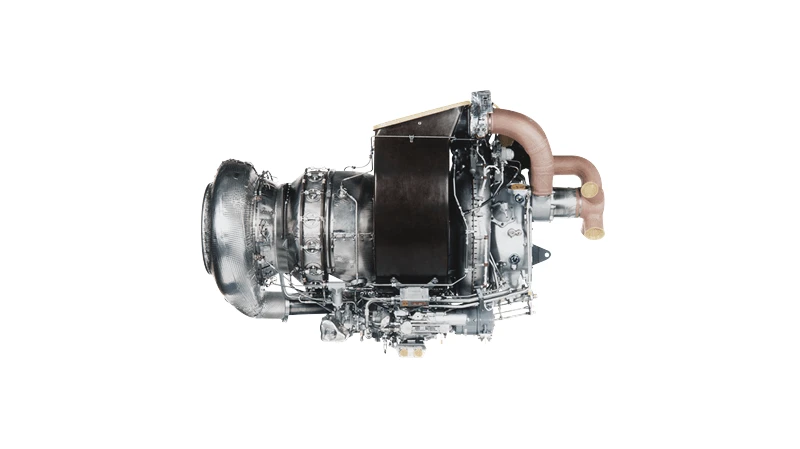
Life-limited part management is one of the most consequential elements of Pratt & Whitney auxiliary power unit program planning.
Life-limited part management is one of the most consequential elements of Pratt & Whitney auxiliary power unit program planning. LLP thresholds define when a unit must enter the shop, how much an overhaul will cost, and how much value a unit carries as a leaseable or tradeable asset. Fleet teams that manage LLP status proactively operate with significantly more flexibility than those who treat it as a reactive maintenance trigger.
What LLP Management Actually Involves
Every Pratt auxiliary power unit model has a set of components with defined maximum service lives expressed in cycles. When a component reaches its limit, it must be replaced regardless of its apparent physical condition. The limiter value assigned to a unit reflects how many cycles remain before the most restrictive LLP reaches its threshold. A unit with a high limiter value has substantial remaining life. A unit approaching its limit requires a shop visit in the near term.
Effective LLP management means tracking the current CSN for each LLP against its defined threshold, maintaining that data at the individual unit serial number level, and using it to project when shop visits will be required. Fleet teams managing multiple aircraft across the PW901A on the 747-400, the PW901C on the 747-8, and the APS5000 on the 787 Dreamliner are tracking different models with different thresholds across different cycle accumulation profiles. A single fleet-level tracking approach does not work across all three models simultaneously.
How Platform Differences Affect LLP Planning
The 747-400 and 747-8 accumulate APU cycles differently depending on whether the aircraft is configured for passenger or freighter operations. Freighter-configured aircraft typically spend more time on the ground per turn than passenger variants, running the APU longer during cargo loading and unloading. This increases cycle accumulation relative to what a passenger fleet planning model would project. Operators managing 747 freighter fleets should validate their LLP projections against actual cycle data from their specific operations rather than relying on published passenger fleet benchmarks.
The 787 Dreamliner presents a different planning profile. The aircraft's all-electric architecture places a higher electrical demand on the APS5000 than conventional bleed-air designs, affecting thermal load and operating patterns. Fleet teams planning APS5000 LLP intervals should account for this when projecting shop visit timing and cost. Early-generation 787 operators whose aircraft are now accumulating significant hours are beginning to encounter first overhaul events on this model, and the cost profile at induction is often higher than teams accustomed to narrowbody APU overhauls expect.
Setting Minimum Acceptance Values for Incoming Units
One of the most important LLP management decisions a fleet team makes is setting the minimum acceptable limiter value for incoming units, whether sourced through a lease, exchange, or outright purchase. A unit accepted with very low remaining LLP life will require a shop visit shortly after installation, generating additional cost and ground time that offsets any savings achieved in the original transaction.
The minimum acceptance value should be set with reference to the fleet's cycle accumulation rate and the planned lease or service term. A unit that meets the technical minimum for installation may not meet the practical minimum for the operator's program. Fleet teams should define their acceptance criteria before entering the sourcing process, not after a unit has been offered. A supplier who discloses full LLP limiter data upfront before transaction commitment gives the fleet team the information needed to make that assessment without time pressure.
Planning Sourcing Around LLP Thresholds
For PW901 series models, where the active 747 fleet has contracted, and the supply pool of serviceable units is narrower than high-volume narrowbody APU models, the lead time required to source a unit with acceptable limiter values is longer than it would be for an A320 or 737 operator. Fleet teams managing 747 operations should begin the sourcing process when a unit reaches its defined planning threshold, not when it approaches the minimum acceptable value. That buffer is the difference between a managed maintenance event and an AOG situation driven by supply constraints rather than the removal itself.
For 787 operators managing the APS5000, the fleet is younger, and the supply pool is currently more accessible, but it will tighten as more aircraft accumulate hours and cycle through their first overhaul intervals. Establishing sourcing relationships with lessors who hold direct APS5000 inventory before the need becomes urgent is a more cost-effective approach than entering a tightening market unde



Comments
Login to Comment