PM Modi's appeal on gold and oil continues to haunt the stock market, causing another crash.
12 May, 2026
1783 Views 0 Like(s)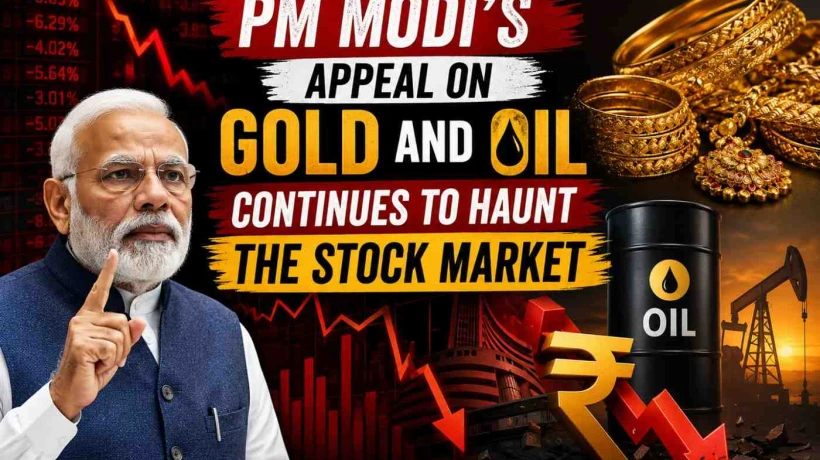
PM Modi's appeal on gold and oil continues to haunt the stock market, causing another crash.
Indian stock markets witnessed another sharp decline as investor sentiment remained under pressure due to rising concerns surrounding gold prices, crude oil volatility, and global economic uncertainty. Market experts believe that Prime Minister Narendra Modi’s repeated appeal for reducing dependency on imported gold and oil has once again come into focus amid the ongoing turbulence in the financial markets.
Benchmark indices faced heavy selling pressure across sectors, with banking, energy, automobile, and metal stocks witnessing significant losses. Investors turned cautious as international crude oil prices climbed higher while gold prices continued to remain elevated, triggering fears of inflation and pressure on India’s import bill.
Why Gold and Oil Matter So Much for India
India is one of the world’s largest importers of crude oil and gold. A rise in prices of these commodities directly impacts the country’s trade deficit, inflation levels, and currency stability. Whenever oil becomes expensive globally, India’s import costs rise sharply because the country depends heavily on foreign crude supplies to meet domestic demand.
Similarly, gold imports also put pressure on the economy. Indians traditionally invest heavily in gold during festivals, weddings, and uncertain economic conditions. While gold is considered a safe investment, excessive imports increase pressure on foreign exchange reserves and weaken the rupee.
Over the years, PM Modi has repeatedly urged citizens to reduce unnecessary gold imports and focus more on productive investments. He has also emphasized India’s need to become more self-reliant in energy production and reduce dependence on imported oil.
Market Crash Triggers Investor Panic
The latest stock market decline reflects growing nervousness among investors. Rising crude oil prices have renewed fears that inflation may remain high for a longer period. Higher fuel prices impact transportation, manufacturing, logistics, and household expenses, ultimately affecting corporate earnings.
At the same time, soaring gold prices often indicate investor uncertainty in global markets. When investors move money into gold, it is usually seen as a sign of reduced confidence in equities and risky assets.
As a result, both domestic and foreign investors have become cautious, leading to heavy selling in Indian equities. Analysts say that market volatility could continue if global commodity prices remain elevated in the coming weeks.
Banking and Auto Stocks Under Pressure
Banking stocks were among the biggest losers during the recent market decline. Rising inflation and global uncertainty increase concerns about interest rate pressures and slower economic growth. Investors fear that higher borrowing costs may reduce loan demand and impact banking profitability.
Automobile companies also came under pressure because rising fuel prices can reduce consumer demand for vehicles. Higher raw material and transportation costs further squeeze profit margins for manufacturers.
Energy-intensive sectors such as aviation, chemicals, and logistics also witnessed selling pressure due to concerns over increasing operational expenses.
Global Factors Adding to the Uncertainty
Apart from domestic concerns, global economic developments are also affecting Indian markets. Geopolitical tensions, supply chain disruptions, and fears of slowing growth in major economies continue to create uncertainty among investors.
International oil markets remain highly sensitive to geopolitical developments and production decisions by major oil-exporting nations. Even small disruptions in supply can cause crude prices to spike sharply.
Meanwhile, global central banks continue to monitor inflation closely. Investors worry that prolonged inflation could force policymakers to maintain higher interest rates for longer periods, which may slow economic growth worldwide.
Gold Becomes a Safe Haven Again
The recent surge in gold prices shows that investors are increasingly looking for safe-haven assets amid market uncertainty. Traditionally, gold performs well during periods of economic instability, inflation fears, or stock market volatility.
Indian households also tend to increase gold purchases during uncertain times, further driving demand. However, economists warn that excessive gold imports can negatively impact India’s economy by widening the current account deficit.
This is one reason why PM Modi has consistently promoted financial savings instruments, digital investments, and domestic economic growth over heavy dependence on gold purchases.
Experts Advise Long-Term Perspective
Despite the ongoing volatility, financial experts are advising investors not to panic. Market corrections are considered a natural part of long-term investing, especially during periods of global uncertainty.
Analysts suggest that investors should focus on diversification, disciplined investing, and fundamentally strong companies rather than reacting emotionally to short-term market fluctuations.
Experts also believe that India’s long-term economic growth story remains intact due to strong domestic consumption, infrastructure development, and digital expansion. However, short-term volatility may continue as global commodity prices and geopolitical risks remain unpredictable.
What Investors Should Watch Next
In the coming weeks, investors will closely monitor crude oil prices, inflation data, central bank policies, and global market trends. Any major changes in geopolitical developments or commodity supply conditions could significantly influence market direction.
The Indian stock market has shown resilience in the past despite temporary crashes and external pressures. While rising gold and oil prices continue to create uncertainty, long-term investors are expected to focus on broader economic fundamentals rather than short-term panic.
For now, PM Modi’s long-standing concerns regarding India’s dependence on imported gold and oil appear more relevant than ever, as both commodities continue to shape market sentiment and economic stability.



Comments
Login to Comment