Petroleum Coke Prices Trend Analysis with Index and Quarterly Forecast Prices
27 Oct, 2026
8 Views 0 Like(s)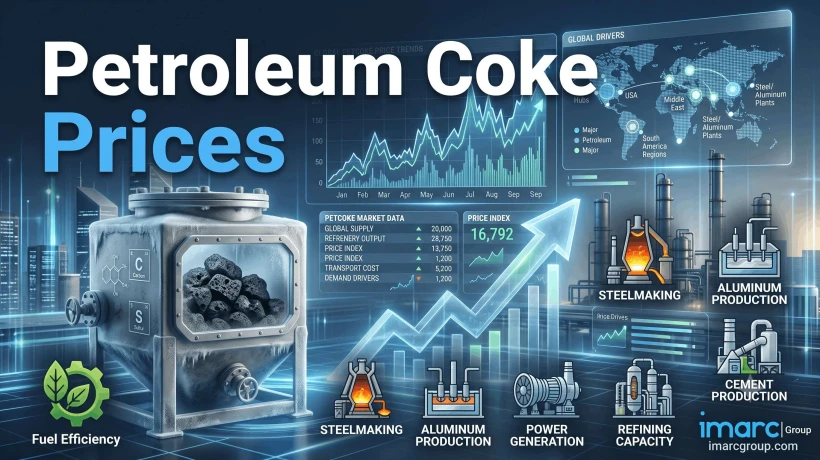
Monitoring the IMARC Price Index alongside refinery operating conditions, sulfur content, feedstock quality, logistics, and downstream demand can help manufacturers and procurement teams assess sourcing options and manage input costs.
Petroleum coke prices varied significantly across the five reported markets in Q3 2026, with South Korea recording the highest price at USD 672/MT, followed by Brazil at USD 503/MT, the USA at USD 417/MT, China at USD 385/MT, and India at USD 195/MT. These regional differences highlight the influence of refinery output, petroleum coke grade and quality, import requirements, freight expenses, and demand from energy-intensive industries. The Petroleum Coke Prices outlook provides a regional benchmark for evaluating procurement costs and market conditions.
Petroleum coke, commonly known as petcoke, is a carbon-rich solid by-product of petroleum refining. It is used as an industrial fuel and as a feedstock for calcined petroleum coke, which is essential for aluminum smelting anodes and other carbon products. Monitoring the IMARC Price Index alongside refinery operating conditions, sulfur content, feedstock quality, logistics, and downstream demand can help manufacturers and procurement teams assess sourcing options and manage input costs.
For detailed insights, charts, and forecasts, explore:
https://www.imarcgroup.com/petroleum-coke-pricing-report/requestsample
Regional Petroleum Coke Prices Outlook – Q3 2026: Where Are Prices Highest?
- USA: USD 417/MT
- China: USD 385/MT
- Brazil: USD 503/MT
- India: USD 195/MT
- South Korea: USD 672/MT
South Korea recorded the highest reported petroleum coke price at USD 672/MT, while India had the lowest at USD 195/MT. Brazil stood at USD 503/MT, followed by the USA at USD 417/MT and China at USD 385/MT. The wide variation may reflect differences in product grades, import dependence, refinery supply, transportation costs, and industrial requirements.
Petroleum coke is not a uniform commodity: fuel-grade and anode-grade materials can differ considerably in commercial value because of sulfur content, metals, and other quality specifications. Regional comparisons should therefore account for grade and delivery terms before buyers draw conclusions about sourcing competitiveness.
Regional Price Analysis of Petroleum Coke Prices – Q3 2026
South Korea
Petroleum coke prices in South Korea reached USD 672/MT in Q3 2026, the highest among the reported markets. Industrial demand, imported material availability, freight costs, and the specifications required by downstream consumers can influence regional purchasing conditions. Buyers may prioritize reliable shipments and consistent quality, particularly when sourcing material for specialized carbon applications. Grade-specific comparisons are important when assessing supplier offers.
Brazil
Brazil recorded petroleum coke prices of USD 503/MT. Demand from cement production, industrial energy users, and other heavy industries can influence purchasing requirements. Import availability, exchange-rate exposure, port handling, and inland transportation may affect delivered costs. Buyers can manage procurement risk by comparing supplier terms, fuel specifications, and delivery schedules against operational requirements.
USA
Petroleum coke prices in the USA stood at USD 417/MT. Refinery output is a central supply factor because petroleum coke is generated during the processing of heavy petroleum fractions. Demand from cement kilns, power generation, and carbon-product manufacturing influences market absorption. Procurement teams should consider refinery availability, sulfur content, logistics, and the intended application when comparing offers.
China
China recorded a petroleum coke price of USD 385/MT. Domestic refining activity and demand from cement, aluminum, and other industrial sectors can influence supply-demand conditions. Product quality, refinery operating rates, and the availability of suitable material affect purchasing decisions. Buyers may compare domestic supplies with imported options, taking account of delivered costs and technical specifications.
India
Petroleum coke prices in India stood at USD 195/MT, the lowest among the five reported markets. Demand from cement plants and other industrial users supports consumption, while domestic refinery output and imported supply influence availability. Grade requirements, transportation expenses, and applicable operating or environmental constraints can affect purchasing choices. Buyers should confirm that the quoted material meets the sulfur and quality requirements of the intended application.
Supply and Demand Overview – Q3 2026
Petroleum coke supply is closely linked to refinery operations and the processing of heavy residual petroleum fractions. Production volumes and quality depend on crude feedstock characteristics, refinery configuration, and coking-unit utilization. Fuel-grade material is used in energy-intensive industries, while suitable green petroleum coke can be calcined for applications such as aluminum anodes.
Demand intensity varies by end-use industry:
- Cement production: Fuel-grade petroleum coke can supply energy for cement kilns.
- Aluminum manufacturing: Calcined petroleum coke is used in carbon anodes for aluminum smelting.
- Power generation: Suitable grades are used as fuel in industrial and power applications.
- Steel and metallurgical industries: Petroleum coke and derived carbon materials serve selected industrial processes.
- Carbon products: Suitable feedstocks support the manufacture of electrodes and other carbon-based materials.
The reported prices establish regional differences but do not indicate whether the global market was in surplus or deficit during Q3 2026. A fuller assessment requires information on refinery output, grade availability, inventories, freight costs, and downstream purchasing activity.
Key Factors Affecting Prices – Quarterly Perspective
- Raw Material Availability: Crude processing patterns and refinery operating rates influence petroleum coke output. Changes in the availability of suitable grades can affect competition among industrial buyers.
- Downstream Demand: Cement, aluminum, power generation, and carbon-product manufacturing drive consumption. Changes in industrial production can influence purchasing volumes and prices.
- Logistics: Freight, port handling, storage, and inland transportation affect delivered costs. Shipping conditions can have a particularly important impact on import-dependent buyers.
- Energy Costs: Energy expenses influence refinery operations, material handling, and calcination. Higher operating costs may affect supplier pricing, depending on the production route.
- Trade Dynamics: Import requirements, export availability, and regional sourcing patterns influence market balances. Differences in grade specifications and transport costs can shape regional price gaps.
Recent Developments (Q3 2026 Highlights)
- Industry developments: Petroleum coke pricing remains closely linked to refinery operations and demand from energy-intensive and carbon-product industries.
- Supply developments: Refinery throughput, coking-unit utilization, and the availability of suitable grades influence the amount of material offered to the market.
- Logistics developments: Shipping expenses, port capacity, and inland transportation affect delivered prices and sourcing flexibility.
- Demand and production developments: Cement output, aluminum production, and requirements for carbon anodes influence purchasing activity across different grades.
These factors provide a framework for interpreting regional price differences without assuming specific unverified events during the quarter.
Petroleum Coke Price Chart Analysis – Quarterly Movement
The Q3 2026 data show petroleum coke prices ranging from USD 195/MT in India to USD 672/MT in South Korea. Since only one quarterly observation per region was provided, detailed price movements within the quarter cannot be established.
- Early Q3 2026: No separate early-quarter price observations were supplied, so the initial price direction cannot be independently established.
- Mid-Q3 2026: No mid-quarter data were provided to confirm whether prices rose, declined, or remained stable.
- Late Q3 2026: The supplied quarterly benchmarks ranged from USD 195/MT in India to USD 672/MT in South Korea. These are quarter-level observations, not verified late-quarter prices.
Price charts based on consistent monthly or weekly data help procurement teams track price changes, compare regional benchmarks, and assess purchasing windows. Combining price trends with grade specifications, refinery output, inventories, and freight costs can support sourcing and budgeting decisions.
Petroleum Coke Price Index & Historical Analysis
The Q3 2026 observations show substantial regional variation, with South Korea at the highest reported price and India at the lowest. Without comparable previous-quarter data, the direction of the petroleum coke price index and any longer-term price changes cannot be established from these figures alone.
Three structural drivers are particularly relevant:
- Raw material availability: Refinery throughput and crude-processing characteristics influence the quantity and quality of petroleum coke produced.
- Production and processing capacity: Coking-unit operations and calcination capacity affect the supply of fuel-grade and higher-value carbon feedstocks.
- Downstream manufacturing cycles: Cement, aluminum, power generation, and carbon-product demand influence purchasing volumes and grade preferences.
For procurement planning, regional benchmarks should be evaluated alongside historical prices, material specifications, and delivery terms. This helps buyers distinguish genuine market changes from differences in product quality or sourcing arrangements.
What Is Petroleum Coke?
Petroleum coke is a carbon-rich solid material produced during petroleum refining, particularly through processes that convert heavy hydrocarbon residues into lighter products. Commercial grades include green petroleum coke and calcined petroleum coke, with fuel-grade and anode-grade materials serving different industrial requirements. Sulfur content, metals, carbon characteristics, and other specifications influence its suitability and commercial value.
Its primary applications include:
- Cement kilns: Fuel-grade petroleum coke supplies energy for high-temperature cement production.
- Aluminum smelting: Calcined petroleum coke is used to manufacture carbon anodes.
- Power generation: Suitable grades serve as fuel in industrial energy applications.
- Steel and metallurgy: Petroleum coke and derived carbon materials support selected metallurgical processes.
- Carbon products: Suitable grades are used in the production of electrodes and other industrial carbon materials.
Petroleum coke is strategically important because it links refinery operations with energy-intensive manufacturing and carbon-material supply chains. Reliable access to the appropriate grade helps buyers manage operating costs and maintain production continuity.
Petroleum Coke Price Forecast – Next 12 Months
Over the next 12 months, petroleum coke prices will depend on refinery output, grade-specific supply, demand from cement and aluminum industries, and international freight costs. The Q3 2026 prices establish a regional reference point but do not establish a clear upward or downward trend. The following factors outline potential influences on prices rather than a numerical forecast.
Key growth drivers include:
- Stronger aluminum demand: Higher aluminum production could increase requirements for calcined petroleum coke used in anodes.
- Increased cement activity: Greater cement output may support demand for fuel-grade material.
- Reduced refinery availability: Lower coking-unit output could tighten the supply of suitable petroleum coke.
- Tighter availability of preferred grades: Constraints on low-sulfur or anode-grade material could increase competition among buyers.
- Higher logistics expenses: Rising freight and handling costs could increase delivered prices in importing markets.
Potential risks include:
- Ample refinery output: Higher production could improve availability and limit price increases.
- Weaker industrial demand: Reduced cement, aluminum, or power-sector activity could lower purchasing requirements.
- Lower freight costs: Cheaper transportation could reduce delivered prices for import-dependent buyers.
- Increased competition among suppliers: Greater regional availability could place downward pressure on offers.
- Changing fuel and environmental requirements: Restrictions on particular grades or shifts toward alternative fuels could affect demand and purchasing patterns.
Overall, the outlook depends on the balance between refinery-generated supply, grade-specific demand, and logistics. Procurement teams should monitor refinery operations, sulfur and metals specifications, downstream production, and regional trade conditions when planning contracts and inventories.
FAQs About Petroleum Coke Prices Insights & Market Analysis
What does the Petroleum Coke Price Index indicate in Q3 2026?
The supplied prices range from USD 195/MT in India to USD 672/MT in South Korea. Brazil recorded USD 503/MT, the USA USD 417/MT, and China USD 385/MT. These figures demonstrate regional price differences but do not establish historical price-index movement.
How does the Petroleum Coke Price Chart help procurement managers?
A petroleum coke price chart helps buyers compare regional benchmarks and monitor price changes over time. When combined with grade specifications, refinery availability, freight costs, and inventory information, it supports purchasing decisions and contract negotiations.
What is the petroleum coke price forecast for the next 12 months?
The outlook depends on refinery output, the availability of suitable grades, demand from cement and aluminum industries, and transportation costs. Supply constraints or stronger downstream demand could support prices, while greater availability or weaker consumption could limit increases. The supplied Q3 figures do not establish exact future prices.
How IMARC Pricing Database Can Help
The latest IMARC Group study, "Petroleum Coke Prices, Trend, Chart, Demand, Market Analysis, News, Historical and Forecast Data 2026 Edition," provides a detailed analysis of petroleum coke price trends and global market dynamics. The report covers price movements, regional developments, demand patterns, supply conditions, and the factors influencing current and future prices.
The analysis examines the relationship between raw material costs, production conditions, downstream demand, logistics, trade flows, and regional market developments. By exploring the interaction between supply and demand, the pricing analysis provides businesses with useful insights into current market conditions and future pricing dynamics.
Get Real-Time Petroleum Coke Price Analysis
Access detailed petroleum coke pricing insights to compare regional benchmarks, assess grade-specific supply conditions, and support informed procurement and sourcing decisions.
Explore pricing intelligence across 500+ commodities:
https://www.imarcgroup.com/pricing-intelligence
About Us:
IMARC Group is a global management consulting firm that provides a comprehensive suite of services to support market entry and expansion efforts. The company offers detailed market assessments, feasibility studies, regulatory approvals and licensing support, and pricing analysis, including spot pricing and regional price trends. Its expertise spans demand-supply analysis alongside regional insights covering Asia-Pacific, Europe, North America, Latin America, and the Middle East and Africa. IMARC also specializes in competitive landscape evaluations, profiling key market players, and conducting research into market drivers, restraints, and opportunities. IMARC's data-driven approach helps businesses navigate complex markets with precision and confidence.
Contact us:
IMARC Group
134 N 4th St. Brooklyn, NY 11249, USA
Email: sales@imarcgroup.com
Tel No: (D) +91 120 433 0800
United States: +1-201971-6302



Comments
Login to Comment