Oracle Financial Accounting Hub Solutions in the USA: Centralizing Financial Data for Accurate Reporting
04 Feb, 2026
8583 Views 0 Like(s)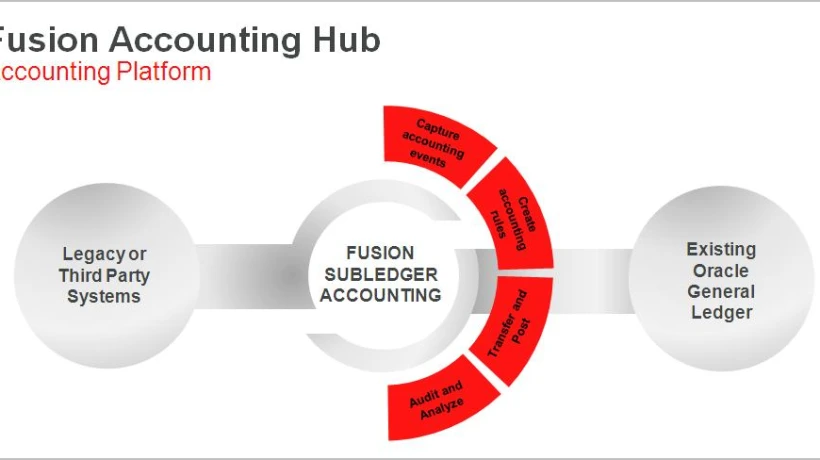
In the intricate financial landscape of American enterprise, data is the lifeblood of compliance, strategy, and stakeholder trust.
In the intricate financial landscape of American enterprise, data is the lifeblood of compliance, strategy, and stakeholder trust. Yet, for many U.S. organizations—especially those with complex operational footprints, a history of mergers, or diverse source systems—financial data is not a single, clear stream but a torrent of disconnected tributaries. Data flows from ERP systems, custom-built applications, CRM platforms, and legacy installations, each with its own rules and logic. Reconciling this chaos at month-end is a Herculean task that jeopardizes reporting accuracy, prolongs close cycles, and obscures true financial performance. This is the critical challenge that Oracle Financial Accounting Hub (FAH) is engineered to solve. For U.S. businesses, implementing an Oracle Accounting Hub is not just a technical integration project; it is a strategic initiative to build a single, authoritative source of financial truth, ensuring compliance and enabling confidence in every figure reported.
The solution, particularly in its modern Oracle Fusion Accounting Hub cloud incarnation, provides a unified accounting and compliance platform that sits as a central layer between your operational source systems and your general ledger. It transforms disparate transactional data into consistent, auditable, and precisely governed financial information.
The High Cost of Financial Data Fragmentation in the U.S. Market
The risks of a decentralized financial data environment are magnified by the stringent regulatory and competitive pressures in the United States:
-
The Compliance and Audit Nightmare: With data sourced from multiple systems, ensuring every transaction complies with U.S. GAAP (or IFRS) and internal controls becomes exponentially difficult. Auditors spend excessive time tracing numbers through a maze of systems, increasing fees and audit risk. Material weaknesses become a real threat.
-
The Reporting Bottleneck and Latency: The financial close is delayed as armies of accountants manually reconcile, adjust, and re-key data from operational reports into the corporate GL. This "spreadsheet bridge" is slow, error-prone, and prevents timely management reporting, leaving leaders to make decisions with outdated information.
-
The Lack of Operational Insight: When financial data is siloed, it is nearly impossible to get a clear, unified view of profitability by product line, project, or business unit that spans different source systems. This obscures true cost drivers and profitable opportunities.
-
The Agility Deficit: Implementing a new operational system (like a specialized CRM or a new warehouse management tool) or undergoing an acquisition creates a massive, protracted accounting integration challenge, slowing down innovation and growth.
Oracle Financial Accounting Hub directly attacks these issues by acting as the central nervous system for all financial data conversion, enforcing standardization and control at the enterprise level.
How the Accounting Hub Centralizes and Governs Financial Data
The power of the Oracle FAH lies in its ability to serve as a universal translator and rule-enforcer for financial data. Here’s the transformative process:
1. Subledger Standardization: Creating a Universal Financial Language
Instead of forcing the corporate GL to interpret dozens of data formats, FAH becomes the central subledger.
-
Unified Data Ingestion: The hub connects to virtually any source system—Oracle E-Business Suite, SAP, Salesforce, custom legacy applications, third-party logistics platforms, and more. It ingests raw transactional data (invoices, shipments, payroll records) in its native format.
-
Centralized Rule Application: This is the core of its value. U.S. companies configure accounting rules once, centrally within the hub. These rules dictate how transactions from any source are accounted for—determining the correct account (e.g., Revenue, COGS, Accruals), cost center, legal entity, and intercompany partner. A sales event in Salesforce and a shipment in an old logistics system can both be automatically and consistently transformed into perfectly formatted GL journal entries.
2. Ensuring Unwavering Compliance and Auditability
For U.S. controllers and audit committees, this centralized control is invaluable.
-
A Complete Audit Trail: Every journal entry generated by the Oracle Accounting Hub maintains a complete, transparent audit trail back to the original source system transaction. Auditors can drill from a consolidated balance directly to the originating operational event in seconds, not days.
-
Consistent GAAP & Corporate Policy Enforcement: Whether a transaction originates in a newly acquired division or a homegrown system, it is subjected to the same centralized accounting rules. This ensures uniform compliance with accounting standards and corporate policies across the entire organization.
3. Accelerating the Financial Close and Improving Accuracy
By automating the entire transactional accounting process, FAH delivers profound operational efficiency.
-
Elimination of Manual Processes: It removes the need for manual journal entries and spreadsheet reconciliations for high-volume transactions. This drastically reduces errors, cuts down the close timeline, and frees finance staff from low-value work.
-
Real-Time Visibility: Finance gains real-time insight into financial metrics as operational transactions occur, rather than waiting for batch processing at month-end. This enables continuous accounting and proactive management.
4. Enabling Strategic Agility and Simplification
The Oracle Fusion Accounting Hub provides a future-proof financial backbone.
-
Simplified IT Landscape: It allows businesses to choose best-of-breed operational applications without worrying about GL integration complexity. The hub handles the translation, protecting the sanctity of the general ledger.
-
M&A and Restructuring Readiness: Integrating the financials of an acquired company becomes a configuration exercise in the hub, not a years-long systems integration nightmare. This accelerates post-merger synergy realization.
The Strategic Impact for U.S. Enterprises
Adopting an Oracle FAH solution translates into tangible competitive and operational advantages for American businesses:
-
Unshakeable Trust in Financial Data: Leadership, auditors, and investors can have absolute confidence in the accuracy, consistency, and traceability of reported numbers.
-
Faster, More Efficient Financial Cycles: The close process is accelerated by days or even weeks, delivering insights faster and reducing operational costs in the finance department.
-
Enhanced Financial Governance and Reduced Risk: Centralized control significantly lowers compliance risk and the cost of both internal and external audits.
-
Deeper, Unified Financial Insight: With all transactional data standardized, finance can provide more accurate and granular profitability analysis and management reporting, driving better business decisions.
Conclusion: Building the Foundation for Financial Integrity and Insight
In an era where data is fragmented and regulatory scrutiny is intense, U.S. enterprises cannot afford a fractured financial data architecture. Oracle Financial Accounting Hub solutions provide the definitive blueprint for centralization, control, and clarity. By implementing FAH, companies move from a state of constant reconciliation to one of automated trust. They build a resilient, agile financial core that ensures accurate reporting not as a monthly achievement, but as a continuous, inherent outcome.
For American businesses committed to operational excellence, robust compliance, and data-driven leadership, the journey begins with unifying their financial truth. The Oracle Fusion Accounting Hub is the strategic platform that makes this unity possible, transforming financial data from a persistent challenge into a unparalleled source of confidence and competitive advantage.
Disclaimer: ThynkTales is a public blogging platform where content is contributed by individual users. While we encourage thoughtful and accurate sharing, we do not independently verify the information provided. Readers are advised to use their discretion and verify any information before relying on it.

Comments
Login to Comment