New PUC Proposal Explained: 3-Year Pollution Certificate for Eligible Vehicle Owners
28 Jul, 2026
847 Views 0 Like(s)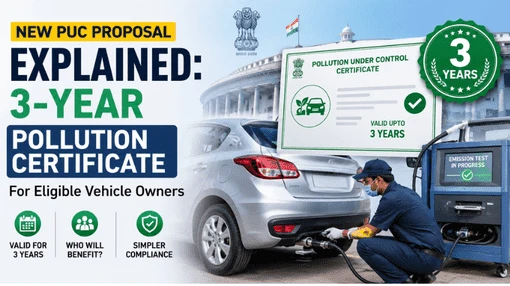
The Central Government has proposed a significant change to the validity period of Pollution Under Control (PUC) certificates for certain vehicles in India.
The Central Government has proposed a significant change to the validity period of Pollution Under Control (PUC) certificates for certain vehicles in India. If approved, the new rule will extend the validity of PUC certificates for eligible vehicles from the current one-year period to three years. The proposal is aimed at reducing compliance burdens for vehicle owners while encouraging the use of cleaner and more environmentally friendly automobiles.
The draft proposal primarily focuses on BS-VI (Bharat Stage VI) compliant vehicles, which are designed with advanced emission-control technologies. These vehicles produce significantly lower emissions compared to older models and are considered more environmentally responsible. Since BS-VI vehicles already meet stringent pollution standards, the government believes they may not require frequent emission testing during the initial years of operation.
What Is a PUC Certificate?
A Pollution Under Control (PUC) certificate is an official document issued after a vehicle passes an emission test at an authorized testing center. The certificate confirms that the vehicle's emissions are within the limits prescribed by the government.
Under the current rules, new vehicles receive an initial PUC certificate from the manufacturer. After that period expires, owners must renew the certificate periodically by visiting an authorized PUC testing center. Driving without a valid PUC certificate can result in penalties and legal action under the Motor Vehicles Act.
What Does the New Proposal Say?
According to the draft notification issued by the Ministry of Road Transport and Highways, eligible BS-VI vehicles may receive a PUC certificate valid for three years instead of the current one-year validity after the initial manufacturer's certificate expires.
The proposal is still under the consultation stage, meaning it has not yet become law. The government has invited feedback from stakeholders before issuing the final notification.
Who Will Benefit?
If implemented, the revised rule is expected to benefit millions of vehicle owners across India.
Owners of New BS-VI Vehicles
People who have purchased BS-VI compliant cars and two-wheelers will no longer need to renew their PUC certificates every year during the proposed validity period.
Reduced Costs
Although obtaining a PUC certificate is relatively inexpensive, extending the renewal cycle will help vehicle owners save money over time by reducing repeated testing charges.
Less Time and Hassle
Vehicle owners will spend less time visiting emission testing centers, waiting in queues, and renewing certificates every year.
Better Administrative Efficiency
Authorities can focus more on monitoring older, higher-polluting vehicles instead of repeatedly testing newer vehicles that already comply with strict emission norms.
Why Is the Government Considering This Change?
The proposal reflects improvements in vehicle technology. BS-VI vehicles are equipped with advanced engines, catalytic converters, onboard diagnostics, and emission-control systems that significantly reduce harmful pollutants such as nitrogen oxides (NOx), particulate matter (PM), carbon monoxide (CO), and hydrocarbons.
Since these vehicles are engineered to maintain cleaner emissions for longer periods, extending the PUC validity could reduce unnecessary inspections without compromising environmental goals.
Environmental Impact
The proposal does not mean that pollution checks will become less important. Instead, it recognizes that newer vehicles generally maintain low emission levels during their early years of operation.
Authorities are expected to continue strict monitoring of older vehicles, commercial vehicles, and those that fail to meet prescribed emission standards. Regular maintenance will remain essential, as even BS-VI vehicles can emit excessive pollutants if they are poorly maintained.
Responsibilities of Vehicle Owners
Even if the proposal is approved, vehicle owners should continue to:
- Service their vehicles regularly.
- Use high-quality fuel recommended by the manufacturer.
- Repair engine or exhaust issues promptly.
- Keep insurance, registration, and other vehicle documents up to date.
- Follow all traffic and environmental regulations.
A longer PUC validity period should not be viewed as permission to neglect vehicle maintenance.
Current Status
At present, the proposal remains a draft and has not yet been officially implemented. The Ministry is reviewing public comments and stakeholder feedback before issuing the final rules. Until the notification is finalized, existing PUC certificate validity rules continue to apply.
Conclusion
The Centre's proposal to extend the validity of Pollution Under Control (PUC) certificates to three years for eligible BS-VI vehicles could simplify compliance for vehicle owners while recognizing the superior emission performance of modern automobiles. If approved, the change is expected to reduce paperwork, lower compliance costs, and save time for millions of motorists across India. However, vehicle owners must continue maintaining their vehicles responsibly, as clean and efficient operation remains essential for reducing air pollution and protecting public health. The final implementation will depend on the government's review of stakeholder feedback and the issuance of an official notification.

Comments
Login to Comment