Mayo Scissors: The Complete Guide to Types, Uses & Benefits
03 Mar, 2026
5969 Views 0 Like(s)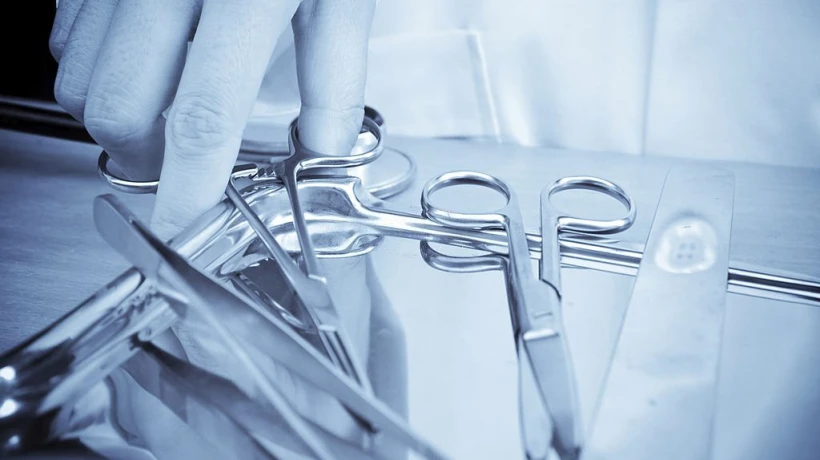
Mayo scissors, also known as Mayo dissecting scissors, are heavy-duty surgical scissors designed for cutting dense biological tissue including fascia, muscle, tendons, and sutures. Unlike finer scissors used for delicate tissue work, these instruments are made for robust, high-force cutting tasks that demand blade durability and edge longevity.
Mayo scissors are among the most widely recognized and trusted instruments in surgical settings worldwide.
Whether used in a routine C-section, a complex thoracic procedure, or an orthopedic dissection, these instruments deliver the strength, sharpness, and control that surgeons depend on.
This guide covers everything you need to know about Mayo scissors, from their design and types to their clinical uses, advantages, and how to choose the right variation for your specific surgical needs.
What Are Mayo Scissors? (And Why Do Surgeons Rely on Them?)
Mayo scissors, also known as Mayo dissecting scissors, are heavy-duty surgical scissors designed for cutting dense biological tissue including fascia, muscle, tendons, and sutures. Unlike finer scissors used for delicate tissue work, these instruments are made for robust, high-force cutting tasks that demand blade durability and edge longevity.
Characteristics of Mayo Scissors
• Thick, reinforced blades: Made to handle fibrous and tough tissue without flexing or losing edge integrity.
• Straight or curved configurations: Straight blades are ideal for direct cuts; curved blades improve access in deeper anatomical regions.
• Blunt or semi-blunt tips: Reduce the risk of accidental puncture to surrounding structures.
• Ergonomic ring handles: Provide a comfortable, secure grip during prolonged surgical use.
• High-grade stainless steel construction: Typically German stainless steel, offering corrosion resistance, high tensile strength, and steam autoclave compatibility.
How Are Mayo Scissors Different from Other Dissection Scissors?
Understanding the distinction between Mayo scissors and other dissection scissors is critical for selecting the right instrument for each procedure. Here is how they compare:
|
Feature |
Mayo Scissors |
Metzenbaum Scissors |
|
Primary Use |
Tough tissue, fascia, muscle |
Delicate soft-tissue dissection |
|
Blade Design |
Heavy, thick blades |
Slender, fine blades |
|
Tissue Type |
Dense and fibrous |
Thin and fragile |
|
Blade Style |
Straight & curved |
Straight & curved |
|
Common Procedures |
C-sections, thoracic, ortho |
Gynecology, laparoscopy |
Mayo scissors handle the heavy lifting in the OR. Metzenbaum and other fine dissection scissors are reserved for more precise, tissue-sparing work. Both have their plac, the key is knowing when to use which.
What Are the Main Types of Mayo Dissecting Scissors?
Several variations of Mayo dissecting scissors exist, each designed with specific surgical tasks in mind. Let’s discuss.
1. Mayo Dissecting Scissors — Straight
Straight Mayo scissors are the standard workhorse of surgical suites. They feature a flat, linear blade profile ideal for cutting fascia, sutures, and surface-level tissue with maximum control and precision.
The straight configuration makes them particularly well-suited for procedures where direct, unobstructed access to the target tissue is available.
• Ideal for: Fascia cutting, suture removal, surface tissue dissection
• Available sizes: 5.5", 6.75", 9"
• Material: Premium German stainless steel
• Maintenance: Built-in corrosion resistance; low maintenance requirement
2. Mayo Dissecting Scissors — Curved
The curved variation offers surgeons improved access to anatomical areas that straight scissors cannot easily reach. The blade curvature allows for more natural hand positioning and reduces the need to awkwardly angle the wrist during deep-tissue dissection. These are widely used in abdominal and thoracic surgeries.
• Ideal for: Deep tissue access, abdominal dissection, thoracic procedures
• Available sizes: 5.5", 6.75", 9"
• Advantage: Natural ergonomic motion; reduces operative strain
3. SuperCut Mayo Scissors — Straight and Curved
SuperCut Mayo scissors represent a premium tier of surgical cutting precision. These instruments feature a razor-sharp upper blade paired with a micro-serrated lower blade. The serrated edge grips tissue firmly during cutting, preventing slippage and delivering cleaner, more controlled incisions, particularly important in neurosurgical and microsurgical applications.
• Upper blade: Razor-sharp for clean cutting
• Lower blade: Micro-serrated to grip and stabilize tissue
• Available in both straight and curved designs
• Sizes available: 5.5", 6.75", 9"
• Best for: Neurosurgery, fine dissection, procedures requiring maximum precision
4. Tungsten Carbide Mayo Scissors — Curved
Tungsten carbide inserts significantly extend the functional lifespan of surgical scissors. These Mayo scissors are fitted with carbide-tipped blades that retain their sharpness far longer than standard stainless steel blades, an important consideration for high-volume surgical facilities where instruments undergo repeated sterilization cycles.
• Material: German stainless steel with tungsten carbide inserts
• Blade profile: Closed tip, curved design
• Advantage: Extended sharpness retention; lower long-term replacement cost
• Sizes: 5.5", 6.75", 9"
• Identified by: Gold-colored ring handles (standard industry convention)
5. Mayo Dissecting Scissors — Straight, Left Hand
Approximately 10% of surgical professionals are left-handed, and standard scissors can create awkward, fatiguing hand mechanics for these users. Left-handed Mayo scissors are specifically designed with a mirrored handle and blade geometry, ensuring the same level of control and comfort for left-handed surgeons as their right-handed counterparts experience with standard models.
• Designed exclusively for left-handed users
• Mirrored ring handle and blade orientation
• Material: German stainless steel; autoclave-compatible
• Sizes available: 5.5", 6.75"
6. Mayo Noble Dissecting Scissors
Mayo Noble scissors are a specialized hybrid design developed for in-depth tissue dissection. Available in both straight and curved profiles at 6.25", they offer surgeons a customizable length option, a notable advantage when standard sizes do not meet the anatomical requirements of a specific patient or procedure.
• Custom-length options available
• Reusable and sterilizable
• Ideal for: Complex deep dissections requiring precision at extended reach
7. Cardiovascular and Thoracic Dissecting Scissors
These scissors are designed for the demanding environment of cardiovascular and thoracic surgery, where access to deep, narrow anatomical corridors is often required. The 11.5" Harrington scissors, for example, offer significantly extended reach that standard-length scissors cannot provide.
• Harrington Scissors Straight 11.5", for cardiovascular access
• Harrington Scissors Curved 11.5", for angled thoracic dissection
• Made from high-tensile German stainless steel
• Ideal for cutting tissues in hard-to-reach areas of the chest and heart
What Are Mayo Scissors Used For? (Clinical Applications)
The clinical applications of Mayo scissors span a wide range of surgical disciplines. Their versatility and robustness make them relevant far beyond basic general surgery.
General Surgery
In general surgery, Mayo dissecting scissors are used to cut fascia layers during abdominal access, dissect muscle tissue, and trim sutures. They are commonly found in exploratory laparotomies, hernia repairs, and appendectomies.
Obstetrics and Gynecology
During cesarean sections (C-sections), Mayo scissors are a standard instrument for cutting through the abdominal fascia before uterine access. Their thick blade profile handles the dense fascial layer efficiently, reducing operative time.
Cardiovascular and Thoracic Surgery
In open-heart and thoracic procedures, longer-blade variations such as Harrington scissors provide the reach and precision needed to dissect tissue within the chest cavity. Straight and curved forms allow surgeons to adapt based on surgical access.
Orthopedic Surgery
Mayo scissors assist in cutting through thick connective tissue, ligaments, and periosteum during orthopedic procedures. Their robust build ensures consistent performance even when encountering highly fibrous structures.
Neurosurgery
SuperCut Mayo scissors are particularly valuable in neurosurgical environments, where the precision of each cut directly impacts patient outcomes. The micro-serrated lower blade ensures tissue grip while the razor-sharp upper blade creates clean, controlled incisions.
Suture Cutting
Straight Mayo scissors are frequently used to cut sutures during and after surgical procedures. Their precise tip geometry and sharp edge allow for clean suture transection without disturbing surrounding tissue.
What Are the Key Benefits of Using Mayo Scissors in Surgery?
• Exceptional Durability: Made from premium German stainless steel, Mayo scissors are built to withstand the demands of repeated sterilization and high-frequency use without degrading in performance.
• Versatility Across Specialties: From general surgery to neurosurgery, a single set of mayo scissors in appropriate configurations can serve multiple procedural needs across a clinical environment.
• Ergonomic Design Reduces Fatigue: The ring-handle grip and balanced weight distribution help reduce hand and wrist fatigue during extended operations.
• Multiple Configurations Available: Straight, curved, left-handed, SuperCut, and tungsten carbide options allow procurement teams to match instruments precisely to their caseload.
• Cost-Effective Over Time: Particularly with tungsten carbide variants, the extended blade sharpness life reduces the frequency of replacement, offering better long-term value for high-volume facilities.
• Sterilization Compatible: All variants are designed to withstand standard autoclave sterilization, supporting infection control compliance.
How Do You Choose the Right Mayo Scissors for Your Procedure?
Selecting the correct Mayo scissors comes down to four practical considerations:
1. Tissue Type, For thick fascia or muscle, standard stainless steel Mayo scissors are sufficient. For fibrous or reinforced tissue in high-volume use, choose tungsten carbide variants.
2. Surgical Access, Straight blades work best with open, direct access. Curved blades improve maneuverability in deep cavities or angled anatomical regions.
3. Precision Requirements, For neurosurgical or delicate dissections, SuperCut variants with serrated lower blades provide superior tissue control.
4. Surgeon Handedness: Always confirm whether the operating surgeon requires left-handed instruments to avoid mechanical disadvantage during the procedure.
Where to Buy High-Quality Mayo Scissors?
When it comes to sourcing reliable, precision-crafted Mayo scissors and dissection scissors, GerMedUSA stands out as a trusted brand in the surgical instrument industry.
GerMedUSA offers a comprehensive range of Mayo dissecting scissors including straight, curved, SuperCut, tungsten carbide, and left-handed configurations, all crafted from premium German stainless steel to meet the exacting standards of modern surgical practice.
FAQs
Q1. What is the primary difference between Mayo scissors and Metzenbaum scissors?
Mayo scissors are designed for cutting thick, tough biological structures such as fascia, muscle, and tendons. Metzenbaum scissors, by contrast, feature slender, delicate blades specifically designed for fine soft-tissue dissection where tissue preservation is critical.
Surgeons use Mayo scissors for heavy-duty cuts and Metzenbaum scissors for precise, tissue-sparing dissection work.
Q2. Can Mayo scissors be used for suture removal?
Yes, straight Mayo scissors are commonly used to cut sutures both during and after surgical procedures. Their sharp tips and sturdy blade profile allow for clean suture transection. However, dedicated suture removal scissors offer a safer option in post-operative wound care settings where surrounding skin tissue must be protected.
Q3. What makes tungsten carbide Mayo scissors superior to standard stainless steel ones?
Tungsten carbide inserts significantly extend blade sharpness retention compared to standard stainless steel blades. This means fewer sharpenings, a longer instrument lifespan, and lower total cost of ownership, particularly valuable in high-volume surgical environments where instruments are sterilized and reused frequently.
Tungsten carbide Mayo scissors are typically identified by their gold-colored ring handles.
Q4. What sizes do Mayo dissecting scissors come in?
Mayo scissors are commonly available in three standard sizes: 5.5 inches (14 cm), 6.75 inches (17 cm), and 9 inches (23 cm). Specialized cardiovascular and thoracic variants such as Harrington scissors are available in 11.5 inches for deeper anatomical access.
Q5. Are Mayo scissors autoclave-compatible?
Yes. All standard Mayo scissors, including stainless steel, SuperCut, and tungsten carbide variants, are designed to withstand steam autoclave sterilization.



Comments
Login to Comment