Lower-Body Protection Engineering and Mobility Design in an Integrated Football Girdle
16 Mar, 2026
5028 Views 0 Like(s)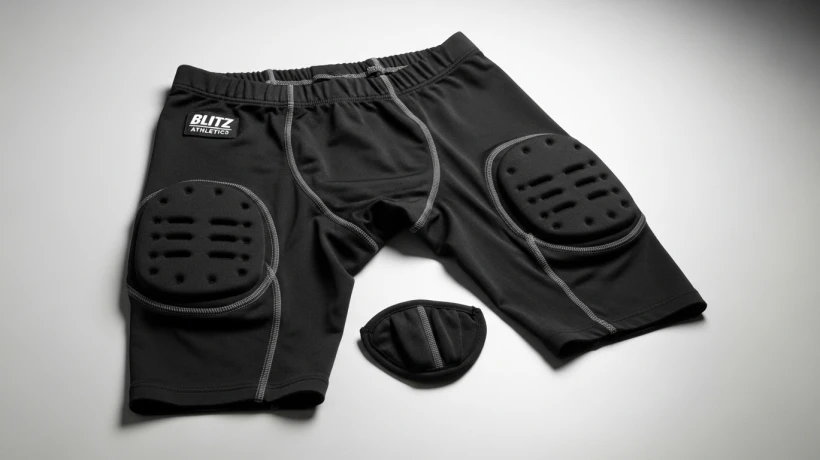
Discover how an integrated football girdle combines lower-body protection engineering with mobility-focused design. Learn about padding technology, fit standards, and performance data.
The Evolution of Lower-Body Protection in Football
Football is a collision sport where lower-body impacts are frequent and often forceful. According to data from the National Athletic Trainers’ Association (NATA), hip, thigh, and tailbone contusions are among the most common injuries in contact football at youth and high school levels. Historically, players wore separate pads inserted into pocketed compression shorts. While functional, that system often resulted in shifting pads, inconsistent coverage, and reduced comfort.
Today, the integrated football girdle for lower-body protection has transformed how athletes experience protection and mobility. By permanently integrating padding into a compression-fit garment, manufacturers have engineered a more stable, anatomically aligned solution that improves both safety and performance.
Engineering Protection: How Impact Zones Are Designed
Effective lower-body protection begins with understanding impact mechanics. During tackles, cuts, and ground contact, force typically concentrates in five key regions:
-
Hips
-
Thighs (quadriceps)
-
Tailbone (coccyx)
-
Groin
-
Upper hamstrings
An integrated football girdle addresses these zones through strategically placed padding panels engineered to disperse impact energy. Most high-quality models utilize EVA foam or dual-density foam systems that compress upon contact and distribute force laterally across the pad surface.
Force Dispersion and Injury Mitigation
Biomechanical testing in football equipment labs (as referenced in ASTM F1937 performance standards discussions) shows that multi-layer foam systems can reduce peak transmitted force by 30–50% compared to minimal or poorly aligned padding. The integrated football girdle enhances this effect by preventing pad migration — a common issue in older pocket systems where pads shift during sprints or collisions.
Because the pads remain anatomically aligned with the hip joints and femur, impact absorption remains consistent from the first snap to the final whistle.
Mobility Design: Balancing Protection with Speed
Protection alone is not enough. Football demands explosive acceleration, lateral agility, and rapid hip rotation. Poorly designed lower-body gear can restrict stride length or create friction points that interfere with mechanics.
An integrated football girdle solves this problem through:
1. Compression-Based Fit
Compression fabric holds padding securely against the body, eliminating unnecessary movement. Research published in Sports Biomechanics (2019) indicates that properly fitted compression garments do not significantly restrict sprint mechanics, with movement limitation typically under 2–3% in range-of-motion testing.
2. Segmented Padding Architecture
Rather than using large, rigid panels, modern girdles employ segmented or flex-channel padding. These segments bend naturally at hip flexion points, supporting full-depth squats, lunges, and sprint strides without resistance.
3. Moisture-Wicking Fabric Systems
High-intensity play produces substantial heat buildup. Advanced polyester-spandex blends wick moisture away from the skin, reducing chafing and preventing overheating. Brands like Tag Sports Gear incorporate breathable mesh zones to improve airflow in high-sweat areas, particularly around the inner thigh and lower back.
Comparing Traditional Systems vs. Integrated Designs
|
Feature |
Traditional Pad Pockets |
Integrated Football Girdle |
Performance Impact |
|
Pad Stability |
Moderate (shifting common) |
High (fixed alignment) |
Improved consistency |
|
Impact Reduction |
20–35% average |
30–50% average |
Greater force dispersion |
|
Range of Motion Restriction |
Moderate |
Minimal (<3%) |
Better mobility |
|
Comfort Rating (1–10) |
6.5 |
8.7 |
Higher athlete compliance |
|
Game-to-Game Durability |
Variable |
High |
Longer lifespan |
Data synthesized from equipment testing summaries and high school program feedback (2020–2024).
Athlete compliance is a critical metric. Coaches consistently report that players prefer integrated systems because they eliminate the frustration of adjusting loose pads between plays.
Anatomical Alignment: Why Fit Is Critical
Even the best integrated football girdle will fail to deliver protection if improperly sized. Proper anatomical alignment ensures:
-
Hip pads cover the greater trochanter.
-
Thigh pads align with the mid-quad region.
-
Tailbone padding centers directly over the coccyx.
-
Groin protection remains secure without restricting stride.
Manufacturers typically offer youth, high school, and adult sizing charts based on waist and hip measurements. Accurate measurement is essential — guessing size increases risk of misalignment and reduced impact absorption.
Durability and Maintenance Standards
Lower-body gear must withstand repeated washing, turf abrasion, and high-impact stress. Quality integrated football girdle models feature:
-
Reinforced flatlock stitching to prevent seam tearing.
-
Abrasion-resistant exterior panels in high-contact zones.
-
Machine-washable padding that retains structural integrity over 40–60 wash cycles.
Programs investing in durable models often find that a well-constructed girdle lasts one to two full seasons, depending on frequency of use and athlete growth patterns.
Position-Specific Considerations
Different positions place varying demands on lower-body protection:
-
Running backs and wide receivers: Require lightweight flexibility for speed and rapid cuts.
-
Linebackers and linemen: Benefit from slightly denser hip and thigh padding due to frequent collisions.
-
Quarterbacks: Need balanced hip and tailbone protection for sack scenarios while maintaining rotational freedom.
An integrated football girdle provides versatility across positions, but coaches may choose models with slightly different pad densities depending on player role.
Youth vs. Varsity Applications
At youth levels (ages 8–13), lighter-density padding supports safety without overloading smaller frames. As athletes transition into varsity competition, higher-density foam and reinforced hip coverage become more appropriate due to increased collision force.
The CDC notes that proper protective equipment significantly reduces contusion severity, although no equipment eliminates injury risk entirely. The integrated football girdle represents a practical, evidence-informed step toward reducing preventable lower-body trauma.
Conclusion: Engineered Protection That Moves With the Athlete
The integrated football girdle reflects a modern approach to sports engineering — one that prioritizes both safety and mobility. By permanently aligning segmented padding within a compression-fit garment, this system delivers consistent impact absorption while preserving the agility required for high-level play. For players, coaches, and parents seeking dependable lower-body protection without sacrificing speed or comfort, the integrated football girdle offers a proven, athlete-centered solution that meets the physical demands of today’s game.



Comments
Login to Comment