Innovations in Cardiovascular and Vascular Instruments for Better Outcomes
10 Jun, 2026
1412 Views 0 Like(s)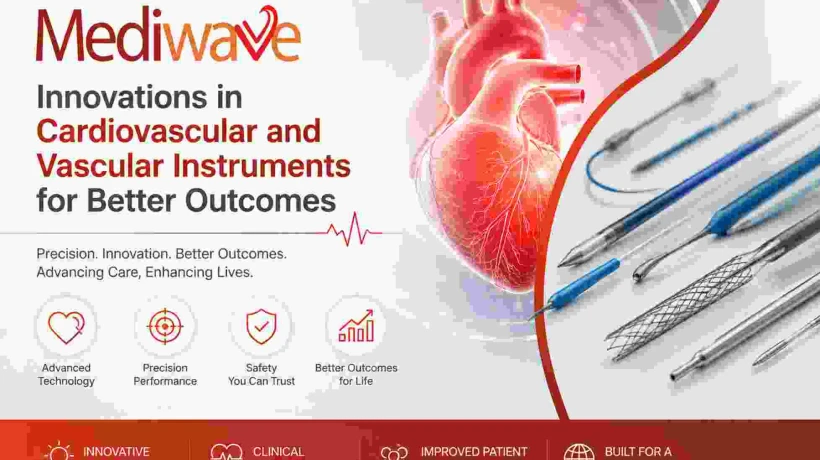
Mediwave India is a trusted manufacturer, supplier, and exporter of high-quality medical and surgical instruments based in Jalandhar, Punjab, India.
Halfway through a cardiac case, nobody wants to discover that a clamp closes unevenly on one side. That is why Cardiovascular Instruments Manufacturers matter beyond purchase price. WHO India data says cardiovascular diseases accounted for 27% of India’s NCD deaths in 2016 and 45% of deaths in the 40–69 age group. A weak hinge, a rough jaw, or poor batch traceability is not a small issue. It is a clinical risk dressed up as procurement savings.
The Spec Detail Most Buyers Skip in Cardiovascular Instruments Manufacturers
Materials, finish, and working control
Medical grade stainless steel is the predominant material used in all cardiovascular and vascular instruments due to the need for durability with exposure to blood, saline, cleaning solutions, and repeated autoclaving. Mediwave has provided information on all of their cardiovascular and vascular instruments to assist you in determining whether they are compatible with your medical practice. Here are some of the important items you should consider:
Surface Finish: Surface finish is not an aesthetic issue; it can affect the level of residue that is captured inside of a poorly finished jaw after being cleaned or affect a stiff hinge from prohibiting a surgeon from providing effective control of a vessel. Therefore, any buyer who simply states "I want SS instruments" is not asking a complete question.
Common instrument groups
A practical set may include vascular clamps, cardiovascular scissors, forceps, needle holders, vessel holding tools, and access instruments. Vascular clamps need slim atraumatic jaws and a locking mechanism that gives controlled occlusion, not brute pressure. CDSCO’s Medical Devices Rules, 2017 sit within India’s device-regulation framework, so documentation should not be treated as optional paperwork.
Nobody tells you how difficult it is to keep the same jaw feel across a repeat order after six months.
Five Questions That Expose a Weak Supplier
-
Can you show material and batch traceability?
Good answer: heat/batch reference, material declaration, and inspection record. Bad answer: “Same quality as last time, sir.” That is not traceability. -
Which procedures are these instruments meant for?
Good answer: cardiovascular, vascular, transplant, microvascular, or general vessel handling use. Bad answer: “All surgery use.” That usually means the supplier has no clinical understanding. -
What sterilization methods are compatible?
Good answer: clear compatibility such as autoclave, ETO, or chemical sterilization where applicable. Bad answer: “Hospital can sterilize normally.” Too vague. -
How do you handle defects?
Good answer: written replacement review, batch check, and dispatch correction. Bad answer: “We will handle case by case.” That is a negotiation you lose after the goods arrive. -
Can you support mixed-category procurement?
Good answer: cardiovascular, vascular, orthopedic, ENT, dental, gynecology, diagnostic, and tray categories under one managed supply cycle. Bad answer: sending a catalogue with no stock clarity. India’s medical device sector is projected to reach USD 50 billion by 2030, so buyers have more options; lazy suppliers will still waste time.
Benefits That Protect Outcomes and Margins
Lower rejection risk: Consistent finish and jaw alignment reduce complaints from OT teams. One rejected lot can cost more than the price difference between a cheap clamp and a controlled one.
Fewer emergency purchases: Reliable Cardiovascular and Vascular Instruments Suppliers help hospitals avoid last-minute buying before surgical rosters. Panic buying usually kills negotiation power.
Better surgical control: A vascular clamp must occlude without crushing. That protects the vessel, but it also protects the hospital from avoidable procedural friction.
Cleaner audit trails: Batch documentation, sterilization compatibility, and product category clarity make procurement files easier to defend. And yes, audit files matter when a hospital scales from one branch to four.
Margin protection for distributors: Vascular Instruments Suppliers who maintain packing discipline, documentation, and dispatch timelines reduce after-sale arguments. Every replacement shipment eats margin.
Better training readiness: Medical colleges and training institutes need repeatable instrument feel. The WHO surgical safety checklist study used 19 items and showed how standard process can reduce complications; instruments should support the same discipline, not fight it.
Availability Across India Is a Supply Chain Decision
India’s medical device market was valued at about USD 11 billion and is expected to grow to USD 50 billion by 2030 at 16.4% CAGR. That growth changes sourcing behaviour. Hospitals in Delhi NCR, Punjab, Haryana, Rajasthan, Gujarat, Maharashtra, Karnataka, Tamil Nadu, Telangana, West Bengal, and Uttar Pradesh want faster answers, not just lower quotes.
As Cardiovascular Instruments Manufacturers in India, Mediwave fits buyers who need one source for cardiovascular and vascular instruments, vascular clamps, orthopedic instruments, surgical instruments, diagnostic equipment, and hospital furniture categories. Vascular Clamps Suppliers in India with domestic dispatch discipline can reduce the gap between purchase order and OT readiness. For international buyers, Vascular Instruments Exporters must also think about packing strength, paperwork, and destination-country documentation.
Which means location is not only an address. It affects freight time, replacement speed, sample approval, and landed cost.
About Mediwave India
We work with hospitals, clinics, nursing homes, surgeons, medical colleges, and healthcare procurement teams that do not have time to chase five vendors for five categories. Since 2017, we have built our medical instruments range around surgical, orthopedic, dental, ENT, gynecology, neurosurgery, cardiovascular, vascular, diagnostic, and tray categories.
We have learned one practical lesson the hard way: buyers often approve the sample but forget to lock packing, finish, and product code references for repeat orders, so we now ask for those details before dispatch planning.
Our USP is simple. We reduce sourcing complexity by offering multiple categories of medical devices, instruments, and hospital furniture from a single supplier. Not every buyer needs the cheapest quote. Most buyers need the quote that does not create trouble after delivery.
Send the Requirement, Not Just the Product Name
We respond to serious purchase enquiries within 24–48 working hours. Our MOQ starts from 1 set or 1 piece for standard available items, subject to product type and stock status.
Send us the product name, required quantity, preferred finish, sterilization expectation, destination city or country, urgency date, and any tender or compliance document required. We will check availability, suggest the right category, and share the quotation with dispatch feasibility. For bulk hospital orders, tell us the department list first.
Cardiovascular Instruments Manufacturers: Final Buying View
Good Cardiovascular Instruments Manufacturers do more than make polished steel tools. They control material, finish, grip, documentation, packing, and repeat supply. In a country where CVDs accounted for 27% of NCD deaths in 2016, small instrument differences can create large operational problems. The next wave of better outcomes will come from smarter sourcing as much as smarter surgery.
1. What should hospitals check before choosing Cardiovascular Instruments Manufacturers?
Check material grade, jaw alignment, surface finish, sterilization compatibility, batch traceability, and complaint policy. India’s CVD burden is high, so hospitals should not buy cardiovascular tools like ordinary consumables. A caveat: final selection should always match surgeon preference and procedure type.
2. Do Cardiovascular and Vascular Instruments Suppliers offer complete sets?
Yes, many Cardiovascular and Vascular Instruments Suppliers offer sets with clamps, forceps, scissors, needle holders, and vessel handling tools. But do not assume every set fits every procedure. Ask for the instrument list before approving the order.
3. Can suppliers of vascular clamps participate in government hospital bids?
Yes, if the supplier provides clear documentation, GST information, product specifications, packaging requirements, and delivery times. The Vascular Clamp Supplier must also provide a written statement of how he/she will handle replacements. Oral commitments are weak from the point of view of tender supply.
4. How can suppliers of vascular instruments support small clinics or nursing facilities?
Most suppliers of vascular instruments (instruments for surgery to treat blood vessels in legs) generally provide support in terms of small quantities, ordering again, and basic information regarding the categories of vascular instruments they provide (i.e. Allium vs. Steel). However, a clinic or nursing facility should always verify the finish, grip, and sterilization compatibility of the instrument prior to using it for the first time. Because these instruments are used daily, instruments made of inferior metal and have loose hinges will exhibit problems within a short period of time.
5. Are vascular clamps suppliers located in India also offering services related to exporting?
Yes, there are several suppliers of vascular clamps located in India that provide support for exporting through packing, documentation, and logistics. However, it is the responsibility of the buyer to provide proof that the shipment will be in compliance with the importing country's rules and regulations prior to shipment, as they vary from country to country.



Comments
Login to Comment