Industrial Air Filtration with Open-Cell Polyurethane Foam Filter Media
25 Sep, 2026
26 Views 0 Like(s)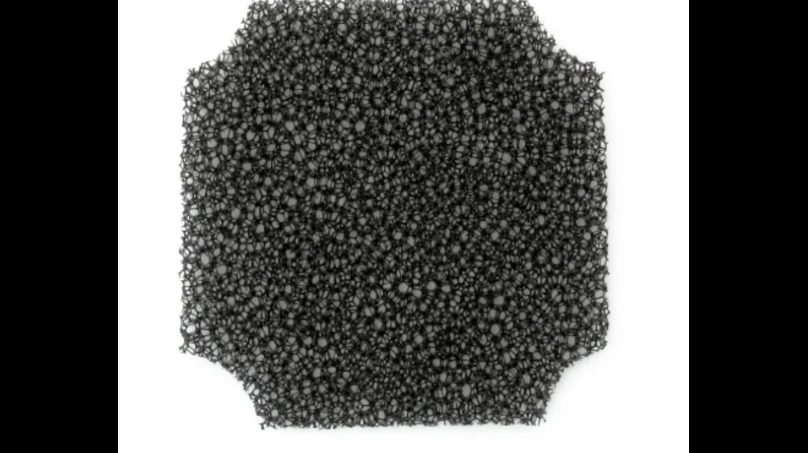
Forced-air cooling is the most economical and efficient method for controlling temperatures inside industrial control panels, medical equipment, and automation enclosures.
Forced-air cooling is the most economical and efficient method for controlling temperatures inside industrial control panels, medical equipment, and automation enclosures. However, drawing high volumes of ambient air into an enclosure exposes delicate electronic boards and switching systems to airborne dust, oil mist, lint, and debris. Without effective intake filtration, airborne particles settle onto energized circuits, acting as an insulating blanket that causes hotspots and risks catastrophic short-circuits. Outfitting equipment cooling fans with an open-cell polyurethane foam filter provides balanced mechanical filtration, preventing particulate ingress while preserving high-velocity airflow.
Polyurethane filter foams are specifically engineered for thermal cooling tasks where disposable paper or non-woven cotton media create too much airflow resistance. Through a precision chemical manufacturing process known as reticulation, the closed membrane cells of standard polyurethane foam are broken open, leaving an open, three-dimensional skeletal matrix. This structure captures airborne contaminants throughout its entire depth, avoiding surface blinding and maintaining consistent intake airflow.
Understanding PPI Ratings: Matching Density to Application Needs
Reticulated polyurethane filter media is classified by its pore density, measured in pores per inch (PPI). The PPI rating determines the balance between particle capture efficiency and static airflow resistance, enabling designers to match the filter media to their specific operating environment.
-
30 PPI Media: Offers a broad, coarse skeletal network designed for environments with heavy airborne lint, wood shavings, or large textile fibers. It delivers minimal static resistance, allowing cooling fans to operate at peak cubic-feet-per-minute (CFM) output with almost no motor backpressure.
-
45 PPI Media: Represents the industry-standard all-around choice for commercial machinery, automation enclosures, and audiovisual racks. It balances effective dust-capture capabilities with low static pressure drop, intercepting common industrial airborne dust without choking intake air volume.
-
60 PPI Media: Features a dense cellular structure optimized for fine particulate capture in sensitive operating spaces, such as clean manufacturing cells, laboratory apparatus, and telecommunication switches. While it demands higher static pressure from the cooling fan, it protects mission-critical circuit boards against microscopic dust infiltration.
The Physics of Depth Filtration vs. Surface Barrier Loading
Traditional paper, cellulose, or thin non-woven fabric filters trap dust particles exclusively on their outer front face. This surface-loading behavior causes rapid particulate accumulation, quickly forming an impermeable cake that spikes static pressure and dramatically drops fan airflow across the cabinet.
In contrast, reticulated polyurethane foam functions as a three-dimensional depth filtration medium. As airborne dust particles pass through the tortuous paths of the open skeletal matrix, momentum causes them to strike and adhere to the polyurethane strands across the full thickness of the foam pad. This deep particle distribution allows the filter to hold significant particulate mass before air resistance increases, substantially lengthening intervals between required maintenance cycles.
Washability, Chemical Resistance, and Sustainable Maintenance
One of the greatest operational advantages of an open-cell polyurethane foam filter is its washability and long service life. Disposable paper filters must be replaced and discarded after a single loading cycle, creating ongoing replacement costs and unnecessary solid waste.
Industrial polyurethane foam is structurally resilient, chemically stable, and completely water-resistant. Maintenance crews can quickly extract dirty filter pads from their retention frames, wash them in warm water using a mild industrial detergent or degreaser, rinse out the trapped particulate, and shake them dry. Once dry, the foam springs back to its original geometric profile with zero degradation to its cell matrix or filtration efficiency, allowing the filter to be cleaned and reused for dozens of service cycles.
Flame Retardancy and Safety Standards Compliance
Electronics cabinets house live electrical connections, power transformers, and circuit components that carry inherent fire risks. Any material introduced into the intake airflow path must meet rigorous flame-retardant safety standards to prevent the spread of fire in an overcurrent or arcing incident.
High-grade industrial polyurethane filter media is formulated with chemical flame-retardant additives to satisfy strict UL 94 flammability ratings, such as UL 94 HF-1 or UL 94 VO certifications. These certifications confirm that if exposed to an open flame, the foam media will self-extinguish within seconds without releasing flaming droplets. Complying with these standards guarantees that intake filter screens remain safe and fully compliant during safety evaluations conducted by plant fire marshals or insurance underwriters.
Preserving Electronic Reliability and Minimizing Downtime
Unplanned equipment downtime trace back to thermal failure remains one of the largest hidden expenses in modern manufacturing and data communication facilities. Operating cooling fans without high-grade air filtration allows particulate accumulation to accelerate component wear, degrade fan bearings, and cause intermittent electronic trips.



Comments
Login to Comment