India’s GDP Growth: A Roadmap to 2050 and the Global Economic Powerhouses
03 Oct, 2025
10725 Views 34 Like(s)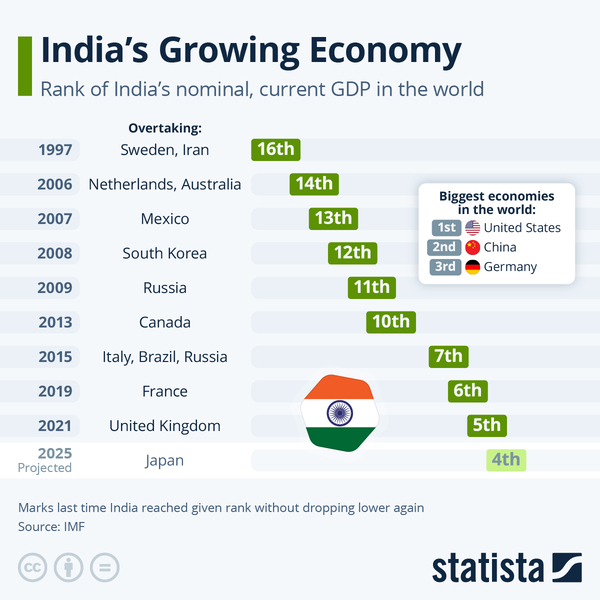
India is on track to become one of the world’s leading economic powers by 2050. With a large and youthful population, rapid technological advancement, and strategic reforms, India’s GDP (Gross Domestic Product) is expected to rise significantly over the next 25 years.
🌍 Introduction
India is on track to become one of the world’s leading economic powers by 2050. With a large and youthful population, rapid technological advancement, and strategic reforms, India’s GDP (Gross Domestic Product) is expected to rise significantly over the next 25 years.
In this article, we’ll explore:
- India’s projected GDP by 2050
- The top 5 global economies of 2050
- Key factors driving GDP growth
- Challenges and opportunities on the road ahead
📊 India’s GDP Projection by 2050
According to estimates by PwC, Goldman Sachs, and HSBC, India is poised to become the world’s second-largest economy by 2050, behind only China.
- Current (2025): ~$3.7 trillion (5th largest globally)
- Projected by 2050: $28–35 trillion
- Estimated GDP growth rate: 6–7% annually (average)
This exponential growth would move India ahead of economic giants like the United States, Japan, and Germany, thanks to a combination of demographic advantage, digital innovation, and structural reforms.
🏆 Top 5 Economies by GDP in 2050 (Projected)
Based on reports by PwC and Goldman Sachs, here’s how the global GDP leaderboard is expected to look:
|
Rank |
Country |
Projected GDP (2050, USD) |
|
1 |
China |
$40–50 trillion |
|
2 |
India |
$28–35 trillion |
|
3 |
United States |
$27–30 trillion |
|
4 |
Indonesia |
$10–13 trillion |
|
5 |
Brazil |
$9–11 trillion |
🌟 Note: These projections are based on Purchasing Power Parity (PPP) as well as nominal terms in some studies, so figures may vary across reports.

🚀 Key Factors Driving India’s GDP Growth
Let’s explore the main drivers that will help India scale its economy over the next two decades:
1. Demographic Dividend
India has one of the youngest populations in the world, with a median age of just 28. By 2050, it will still have a large working-age population, unlike aging nations like Japan and China.
More workers = more production = higher GD
2. Digital Transformation
India is undergoing a digital revolution. From UPI (Unified Payments Interface) to Aadhaar, India’s public digital infrastructure is accelerating financial inclusion and efficiency.
- AI, blockchain, and automation adoption are rising
- Startups and unicorns are booming
- E-governance is improving transparency and delivery
3. Urbanization and Infrastructure
Massive investments in:
- Smart cities
- High-speed rail
- Highways (e.g., Bharatmala)
- Ports and logistics (Sagarmala)
- Renewable energy (solar, wind)
This will improve productivity, reduce costs, and attract global investors.
4. Reforms and Policy Shifts
Key government initiatives will continue shaping the economy:
- Make in India: Manufacturing boost
- PLI Scheme: Production-linked incentives for key sectors
- Startup India: Innovation & entrepreneurship support
- GST and Tax Reforms: Simplifying business operations
- 5. Global Supply Chain Shifts

India is becoming a preferred alternative to China for manufacturing and sourcing. With global companies looking to diversify their supply chains, India stands to gain billions in FDI (Foreign Direct Investment).
6. Growing Middle Class & Consumption
A rising middle class means higher domestic demand. With more disposable income, spending on:
- Real estate
- Consumer goods
- Travel
- Education
will fuel GDP growth internally.
⚠️ Challenges Ahead
Despite the positive outlook, several challenges could impact India’s growth path:
- Unemployment & skill mismatch
- Income inequality
- Environmental degradation
- Agricultural dependence
- Political instability or policy paralysis
Solving these will require inclusive growth policies, sustainable development, and continued reform momentum.
💡 What Needs to Happen for India to Reach $30 Trillion GDP?
For India to reach its 2050 economic goals, here’s what must be prioritized:
|
Focus Area |
Why It Matters |
|
Education Reform |
To build a future-ready workforce |
|
Healthcare Investment |
To reduce out-of-pocket expenses and increase productivity |
|
Women in Workforce |
Gender equality can boost GDP by 20% |
|
Manufacturing Growth |
To reduce import dependency and create jobs |
|
Climate Action |
To balance growth with sustainability
|

📈 Conclusion: India’s Economic Rise Is Inevitable—If Managed Right
India has all the ingredients to become the second-largest economy in the world by 2050 — youth, technology, innovation, and global relevance. The journey will require smart policies, consistent reforms, and inclusive development.
If executed well, India could not only grow in size but also become a model for sustainable, inclusive, and tech-driven economic progress in the 21st century.


Comments
Login to Comment
Good keep it up