India PVC Pipes Industry Analysis, Size, Share and Growth Forecast 2026–2034
24 Aug, 2026
531 Views 0 Like(s)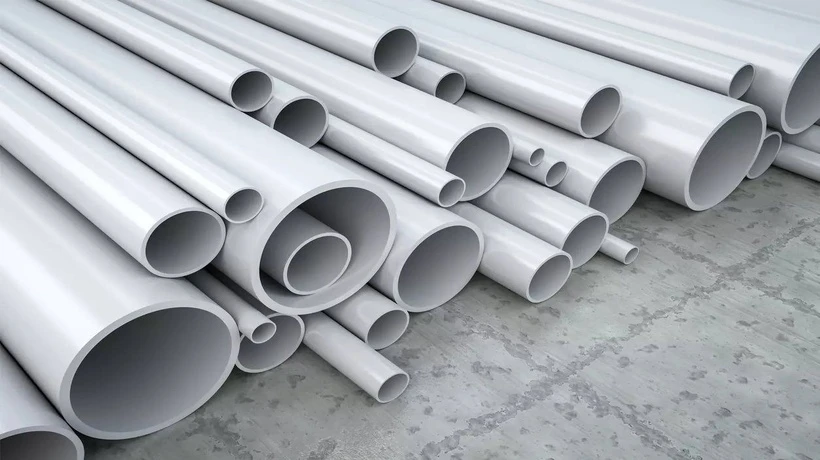
The India PVC pipes market size reached 3.08 Million Tons in 2025 and is projected to reach 5.62 Million Tons by 2034, exhibiting a CAGR of 6.59% during the forecast period 2026-2034.
Market Overview & Summary
The India PVC pipes market size reached 3.08 Million Tons in 2025. Looking forward, the market is projected to reach 5.62 Million Tons by 2034, exhibiting a steady compound annual growth rate (CAGR) of 6.59% during the 2026-2034 forecast period. The industry is experiencing a robust structural transformation, driven by mission-mode water infrastructure programs, agricultural modernization, and the rapid pace of residential and commercial construction. As traditional metal and galvanized iron piping systems are phased out in favor of durable, corrosion-resistant polymers, PVC pipes have cemented their position as the fundamental backbone of India's fluid-transport and sanitation networks.
Market Size & Forecast:
-
Market Size (2025): 3.08 Million Tons
-
Projected Market Size (2034): 5.62 Million Tons
-
CAGR (2026 - 2034): 6.59%
-
Leading Regional Market: North India (29.4% Volume Share in 2025)
Key Market Trends:
-
Surging CPVC Penetration in Hot-Water Plumbing:
The market is witnessing a rapid shift toward Chlorinated PVC (CPVC) pipes for indoor hot- and cold-water plumbing applications. Projected to expand at an impressive ~16.8% CAGR through 2030, CPVC adoption is surging as real estate developers in both metropolitan and tier-2 cities transition away from legacy metal piping due to superior temperature tolerance and absolute corrosion resistance.
-
Shift Toward Lead-Free and Eco-Friendly Formulations:
Driven by stricter Bureau of Indian Standards (BIS) compliance and evolving environmental guidelines, organized manufacturers are phasing out toxic lead stabilizers. The industry is rapidly adopting advanced calcium-zinc and organic-tin stabilization systems, establishing sustainable, lead-free PVC as the mandatory benchmark for municipal and public infrastructure tenders.
-
Introduction of Molecularly Oriented PVC (PVC-O) Pipes:
High-performance infrastructure projects are beginning to trial PVC-O pipes. By realigning the polymer structure during manufacturing, PVC-O pipes deliver 30% to 40% higher pressure ratings at a significantly reduced wall thickness, making them ideal for heavy-duty municipal water trunk mains.
-
Digitization of Dealer Networks and Supply Chains:
Leading pipe manufacturers are increasingly leveraging B2B digital applications and automated distributor portals. App-based ordering and digital inventory tracking have streamlined supply chain efficiencies, capturing a rapidly growing share of transactions across tier-3 and tier-4 regional retail outlets.
-
Upstream Backward Integration by Industrial Giants:
To insulate operations from raw material price volatility and reduce import dependence, major corporate conglomerates are heavily investing in domestic PVC resin and compound production plants, reshaping the upstream security of the Indian piping ecosystem.
➤ Grab a sample copy of this report: https://www.imarcgroup.com/india-pvc-pipes-market/requestsample
Strategic Market Dynamics:
Growth Drivers:
-
Aggressive Rollout of the Jal Jeevan Mission:
The central government’s flagship Jal Jeevan Mission has served as a massive volume catalyst, achieving over 78% rural household tap-water connectivity (reaching 15.4 crore tap connections). This mission-mode push generates sustained, high-volume annual demand for UPVC pressure and distribution pipes across rural districts.
-
Agricultural Modernization and Micro-Irrigation:
Supported by schemes like the Pradhan Krishi Sinchayee Yojana (PMKSY), farming communities are rapidly shifting away from open-channel water distribution toward efficient drip and sprinkler networks. Because irrigation commands over a third of total pipe consumption, agricultural mechanization provides a highly stable demand baseline.
-
Booming Real Estate and Urban Housing Schemes:
Rapid urbanization, coupled with government-backed affordable housing initiatives (such as the PM Awas Yojana) and expansive commercial real estate construction, is driving an unprecedented need for residential drainage, sewage, and plumbing pipe installations.
-
Superior Technical and Economic Advantages over Alternatives:
PVC pipes offer an unmatched combination of lightweight handling, ease of installation, high tensile strength, and absolute immunity to electrochemical corrosion. These properties drastically reduce long-term maintenance overheads for both municipal authorities and private builders.
-
Favorable BIS Quality Standards Favoring Organized Players:
The strict enforcement of BIS certification for public procurement acts as a powerful quality filter. It effectively rewards compliant, organized manufacturers who meet stringent pressure and burst-tolerance ratings while filtering out sub-standard unorganized fabricators.
Market Restraints:
-
High Volatility in Raw Material (PVC Resin) Prices: Because PVC resin prices are fundamentally tied to global crude oil fluctuations, currency swings, and international trade dynamics, domestic pipe manufacturers frequently experience severe margin compression when input costs cannot be immediately passed on to fixed-price construction contracts.
-
Intense Pricing Pressure from Unorganized Local Fabricators: Despite tightening regulatory compliance, a fragmented tier of unorganized local extruders continues to operate with minimal overheads. These regional players frequently market sub-gauge, non-certified pipes at aggressive discount pricing, creating intense pricing friction for organized national brands.
➤ Explore the Full Report with Charts, Table of Contents, and List of Figures: https://www.imarcgroup.com/india-pvc-pipes-market
Competitive Landscape & Key Company Insights:
The India PVC pipes market operates as a consolidated oligopoly anchored by massive, highly automated national players who command a dominant share of organized volume. Competition is intensely fought on the basis of extensive pan-India dealer networks, rigorous product warranties, manufacturing plant proximity to high-growth infrastructure zones, and diverse product breadth spanning agriculture, plumbing, and industrial infrastructure. Top-tier players are actively expanding their regional manufacturing footprints to minimize freight costs and capture localized demand.
Some of the key players shaping the domestic ecosystem include:
-
Finolex Industries Ltd.
-
Supreme Industries Ltd.
-
Astral Limited
-
Prince Pipes & Fittings Ltd.
-
APL Apollo
-
Ashirvad Pipes Pvt. Ltd. (a Aliaxis Group company)
-
Jain Irrigation Systems Ltd.
-
Kisan Mouldings Ltd.
-
Dutron Group
Deep-Dive Segment Insights:
Type Insights:
-
Unplasticized PVC (UPVC) Pipes
-
Chlorinated PVC (CPVC) Pipes
-
Plasticized PVC Pipes
Key Insight: Unplasticized PVC (UPVC) pipes dominate the market structure, holding a massive 61.8% volume share in 2025. Their rigidity, exceptional chemical resistance, and cost-effectiveness make them the primary choice for agricultural irrigation, borehole casings, and exterior water mains. Meanwhile, CPVC is the fastest-growing type, driven by indoor plumbing upgrades.
Application Insights:
-
Irrigation
-
Water Supply
-
Sewerage
-
Plumbing
-
HVAC
-
Oil and Gas
Key Insight: Irrigation commands the largest application share at 34.6% in 2025, heavily sustained by government-backed micro-irrigation and canal network projects. Water supply follows closely as the second-largest application segment (28.6% share), propelled directly by rural drinking water schemes.
Region Insights:
-
North India
-
West and Central India
-
South India
-
East and Northeast India
Key Insight: North India leads the regional market with a 29.4% share in 2025, supported by extensive agricultural activities in Punjab and Haryana, massive urban real estate buildouts in the Delhi-NCR cluster, and heavy Jal Jeevan Mission rollouts across Uttar Pradesh and Rajasthan. West and Central India hold 27.6%, driven by industrial hubs in Gujarat and Maharashtra, while South India accounts for 24.3%, anchored by micro-irrigation adoption in Tamil Nadu and Andhra Pradesh.
Recent News and Developments:
-
Prince Pipes Expands Eastern India Footprint (March 2025): Prince Pipes and Fittings Ltd. officially commenced commercial production at its advanced manufacturing facility in Begusarai, Bihar. Representing an initial capacity of 24,000 metric tons per year across its first phase, this strategic plant expansion was designed to seamlessly service the rapidly growing infrastructure and housing demands across eastern India.
-
Reliance Industries Announces Massive PVC Capacity Investments (August 2024 – 2026): To secure domestic feedstock and reduce heavy import reliance, Reliance Industries announced major capital expenditure plans to construct new PVC and CPVC production plants at its Dahej and Nagothane sites, boasting a combined annual capacity of 1.5 million tons slated for progressive commissioning through FY 2026–2027.
-
Adani Group Plans Mega Mundra PVC Facility (July 2025): Continuing the massive upstream capacity buildout in the sector, the Adani Group formally announced its blueprint to establish a 1 million tonnes per annum PVC manufacturing plant in Mundra, Gujarat, targeted for commissioning in FY2028 to support national self-reliance in polymer raw materials.
Customization Note: If you require any specific information not covered within this report's scope, we will provide it as part of the customization.
➤ Request Report Customization: https://www.imarcgroup.com/request?type=report&id=21741&flag=E
FAQs
Q1. What is the India PVC pipes market size in 2025?
Ans. The India PVC pipes market size reached 3.08 Million Tons in 2025.
Q2. What is the projected market size and growth rate through 2034?
Ans. The market is projected to reach 5.62 Million Tons by 2034, exhibiting a steady compound annual growth rate (CAGR) of 6.59% during the 2026-2034 forecast period.
Q3. What are the key factors driving the market?
Ans. Growth is primarily driven by mission-mode government water infrastructure programs like the Jal Jeevan Mission, agricultural modernization and micro-irrigation expansion under the PMKSY, and a booming residential real estate construction sector.
Q4. Which pipe type and application segment dominate the market?
Ans. Unplasticized PVC (UPVC) pipes lead the type segment with a 61.8% share, while Irrigation commands the largest application share at 34.6% in 2025.
Q5. Which region holds the largest market share in India?
Ans. North India commands the largest regional share at 29.4% in 2025, supported by intense agricultural activity, large-scale urban development, and extensive rural water supply rollouts.


Comments
Login to Comment