India Perfume Market Growth Analysis, Industry Trends and Forecast 2026–2034
02 Sep, 2026
231 Views 0 Like(s)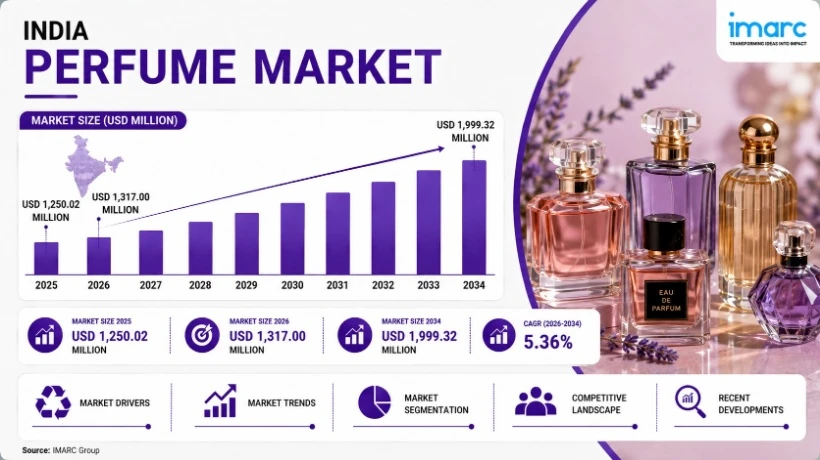
The India perfume market grew from USD 1,250.02 Million in 2025 to USD 1,317.00 Million in 2026 and is projected to reach USD 1,999.32 Million by 2034, growing at a compound annual growth rate of 5.36% from 2026-2034.
India Perfume Market: Outlook
The report titled "India Perfume Market Size, Share, Trends and Forecast by Perfume Type, End User, and Region, 2026–2034" comprises a comprehensive analysis of the Indian market, covering its size, growth trends, key drivers, regional insights, and other critical metrics defining the domestic fragrance ecosystem.
How Big is the India Perfume Market?
The India perfume industry size increased from USD 1,250.02 Million in 2025 to USD 1,317.00 Million in 2026. Looking forward, IMARC Group expects the market to reach USD 1,999.32 Million by 2034, exhibiting a compound annual growth rate (CAGR) of 5.36% during the 2026–2034 forecast period. The sector is experiencing a rapid structural shift, transitioning from occasional luxury consumption to an essential daily grooming habit, strongly supported by a surging millennial and Gen Z workforce.
What are the Key Developments and Emerging Trends in the India Perfume Market?
Based on the absolute latest industry shifts from 2025–2026, the perfume sector is witnessing rapid technological and cultural evolution:
-
AI-Driven Scent Profiling and Hyper-Personalization: Gone are the days of blind purchasing. Leading D2C brands are now deploying AI-powered algorithmic quizzes that map a consumer's lifestyle, diet, and aesthetic preferences to specific olfactory families. This technology is creating a surge in bespoke, made-to-order fragrances tailored exactly to individual body chemistry, driving unprecedented customer loyalty.
-
The "Modern Attar" Renaissance: There is a massive revival of indigenous Indian perfumery, but in highly modernized formats. Artisanal brands are utilizing centuries-old Kannauj hydro-distillation techniques to extract rare natural botanicals (like Ruh Khus and Mitti Attar) and blending them into modern, alcohol-based Eau de Parfums (EDPs). This bridges heritage craftsmanship with contemporary spray convenience.
-
Rise of "Scent Wardrobing" and Layering: Indian millennials are abandoning the concept of a single "signature scent." Influenced by global fragrance communities, consumers are actively building "scent wardrobes"—purchasing multiple fragrances to suit different moods, climates, or times of day. Brands are actively encouraging this by selling complementary layering sets, allowing users to mix notes like vanilla and oud to create custom auras.
-
Solid Perfumes and Micro-Formats: Responding to the highly mobile, fast-paced urban lifestyle, there is an explosive trend toward solid perfumes (balms) and 10ml travel-sized rollerballs. These leak-proof, alcohol-free formats are incredibly popular among Gen Z for on-the-go touch-ups, simultaneously serving as an affordable entry point into ultra-luxury fragrance houses.
-
Demand for Clean, IFRA-Compliant Transparency: With the rising consciousness around skin health, consumers are aggressively scrutinizing ingredient lists. There is a decisive shift toward "clean fragrances" that are 100% vegan, cruelty-free, and visibly compliant with International Fragrance Association (IFRA) safety standards. Brands that transparently declare the absence of phthalates and synthetic musks are commanding a significant market premium.
Grab a sample copy of this report: https://www.imarcgroup.com/india-school-market/requestsample
What Factors are Driving Growth in the India Perfume Market?
-
The Quick-Commerce (Q-Commerce) Luxury Boom: The integration of premium beauty and fragrance into 10-minute delivery platforms (like Blinkit, Zepto, and Swiggy Instamart) has fundamentally altered purchasing behavior. The ability to instantly order a premium ₹3,000+ perfume for an impromptu date or last-minute gift has unlocked a massive new vector of impulse-driven luxury consumption.
-
Explosion of the Male "Grooming-Plus" Segment: The Indian male demographic has decisively moved beyond functional, mass-market aerosol deodorants. Driven by corporate competitiveness and digital dating culture, men are actively upgrading to sophisticated, high-concentration EDPs featuring complex woody, leather, and aquatic accords, making male fine fragrances one of the fastest-scaling categories.
-
Aspirational Consumption in Tier-2 and Tier-3 Hubs: Wealth creation is decentralizing. Consumers in emerging economic hubs (such as Surat, Indore, and Kochi) possess massive disposable incomes and acute brand awareness driven by social media. The aggressive penetration of omnichannel beauty retailers into these markets is satisfying a massive, previously untapped appetite for aspirational "masstige" (mass-prestige) brands.
-
Rise of the "Frag-Head" Influencer Economy: The Indian social media landscape has birthed a highly dedicated niche of fragrance reviewers and influencers (colloquially known as "frag-heads"). Their detailed breakdowns of a perfume's sillage, projection, and dry-down notes on platforms like Instagram and YouTube are demystifying complex perfumery, driving massive cult followings and instant sell-outs for niche D2C launches.
-
Premiumization of the Corporate and Wedding Gifting Sector: Perfumes are rapidly replacing traditional sweets (Mithai) and chocolates in the massive Indian gifting economy. High-end, aesthetically packaged discovery sets and engraved perfume bottles are now viewed as sophisticated, hygienic, and highly personalized gifting solutions for corporate events, Diwali hampers, and lavish Indian weddings.
How will the India Perfume Market Evolve in the Coming Years?
The India perfume market is positioned for steady, highly profitable expansion throughout the forecast period. It is transitioning from a highly fragmented, mass-oriented sector heavily dominated by deodorants into a sophisticated, benefit-driven fine fragrance ecosystem.
The market generated a revenue of USD 1,317.00 Million in 2026 and is projected to reach USD 1,999.32 Million by 2034, compounding at 5.36% annually. While mass-market perfumes maintain baseline volume dominance, the premium and niche sub-segments will continuously outpace overall industry growth, securing substantially higher profit margins.
Industry Value Chain Analysis
-
Raw Material Sourcing: The foundational tier involves procuring natural essential oils (like Kannauj rose and jasmine), absolutes, and synthetic aroma chemicals. Ensuring sustainable and ethical sourcing of rare botanicals is rapidly becoming a critical competitive advantage.
-
Formulation and Blending: Master perfumers (noses) blend the top, heart, and base notes. The fragrance oil is then matured and mixed with a high-grade alcohol base (or oil base for traditional attars) in precise concentrations to ensure stability, projection, and sillage.
-
Packaging and Distribution: The aesthetic presentation (glass bottles and atomizers) plays a massive role in perceived value. Finished products are distributed through a complex network of specialty beauty retailers, department stores, brand-owned boutiques, and specialized e-commerce platforms.
Investment & Growth Opportunities
-
Scaling D2C Niche Perfumery: Institutional capital should focus heavily on agile, digital-first artisanal brands that offer personalized fragrance profiling. Backing brands that utilize high-quality native ingredients while maintaining modern, minimalist branding captures the rapidly growing millennial luxury segment.
-
Travel-Retail and Airport Expansion: There is a highly lucrative opportunity in backing premium retail expansion across India’s rapidly growing domestic and international airport network, capturing high-intent impulse purchases from affluent travelers.
-
Sustainable and Clean Fragrances: Capitalizing on the wellness trend offers a strong growth vector. Developing hypoallergenic, cruelty-free perfumes utilizing upcycled ingredients and 100% recyclable glass packaging directly aligns with the preferences of eco-conscious Gen Z consumers.
Explore the Full Report with Charts, Table of Contents, and List of Figures: https://www.imarcgroup.com/india-school-market
Deep-Dive Segment Insights
-
By End User: The market is segmented into Male, Female, and Unisex. The Female segment dominates the market, accounting for a leading 52% share in 2025. This supremacy is heavily propelled by a higher spending propensity on premium grooming products, a vast variety of female-targeted product lines, and the strong cultural integration of fragrances into daily cosmetic routines.
-
By Perfume Type: Segmented into Premium and Mass. While Mass perfumes historically command volume leadership due to affordability and deep penetration in Tier-2 and Tier-3 cities, the Premium segment acts as the explosive growth engine as urban consumers aggressively upgrade their lifestyle portfolios.
-
By Region: The market is analyzed across North India, West and Central India, South India, and East and Northeast India. North India acts as the absolute market leader, commanding a 31% share in 2025. This regional supremacy is anchored by the dense concentration of metropolitan hubs like Delhi-NCR, significantly higher per-capita purchasing power, and the presence of highly developed luxury retail infrastructure.
Competitive Landscape & Key Company Insights
The India perfume market features a highly dynamic and fragmented competitive landscape. It consists of entrenched global luxury conglomerates, large-scale domestic FMCG companies, and a rapidly expanding cohort of agile homegrown artisanal brands.
To defend and expand market share, global brands are localizing their marketing narratives and expanding into premium e-commerce, while domestic players are successfully moving up the value chain by launching premium "Eau de Parfum" variants and engaging high-profile Bollywood celebrities to instantly establish brand equity in a crowded marketplace.
Recent Developments (2025–2026)
-
Fraganta's Cultural Fusion Launch (January 2025): Domestic fragrance startup Fraganta aggressively targeted the affordable luxury segment by launching two new signature fragrances, 'Ganga' and 'Jogi'. These specific profiles aim to perfectly blend deep-rooted Indian cultural elements with premium European-style scent experiences.
-
Velvetor Brand Launch (2025): Signaling high investor confidence in the domestic premium fragrance space, a new luxury perfume brand named Velvetor officially launched in India. The brand strategically combines European artisanal craftsmanship with bespoke olfactory profiles tailored specifically for local Indian scent preferences.
-
Creed and LUXASIA Strategic Partnership (2025): The ultra-prestige fragrance house Creed partnered with LUXASIA to aggressively deepen its omnichannel presence in India. This expansion explicitly integrates high-end physical boutiques with luxury e-commerce platforms like Tata CLiQ, drastically improving digital accessibility for premium buyers.
-
Diptyque's First Indian Boutique: Highlighting the surging demand for niche, high-end fragrances, the iconic French luxury house Diptyque officially entered the Indian market. The brand opened its first immersive, experiential retail store at the Chanakya Mall in New Delhi, directly targeting ultra-high-net-worth urban consumers.
Customization Note: If you require any specific information not covered within this report's scope, we will provide it as part of the customization.
Request Report Customization: https://www.imarcgroup.com/request?type=report&id=1265&flag=E
Q1. What is the current size of the India perfume market?
The India perfume market size increased from USD 1,250.02 Million in 2025 to USD 1,317.00 Million in 2026.
Q2. What is the projected market size by 2034 and the CAGR from 2026 to 2034?
The market is projected to reach USD 1,999.32 Million by 2034, growing at a steady compound annual growth rate (CAGR) of 5.36% during the 2026–2034 forecast period.
Q3. Which end-user segment dominates the India perfume market?
The Female segment leads the market with a 52% share in 2025, primarily driven by a high propensity for cosmetic spending and a massive portfolio of lifestyle fragrances.
Q4. Which region holds the leading position in the India perfume market?
North India represents the absolute market leader, holding a 31% share in 2025, largely fueled by the high concentration of premium retail malls and affluent demographics in the Delhi-NCR corridor.


Comments
Login to Comment