India Non-Ferrous Metals Market Size, Share, Trends and Growth Analysis Report 2026–2034
26 Aug, 2026
500 Views 0 Like(s)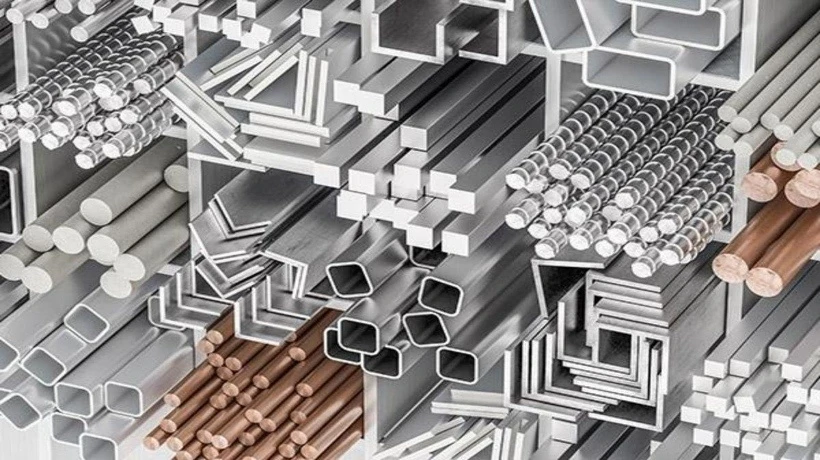
The India non-ferrous metals market grew from USD 40.72 Billion in 2025 to USD 42.68 Billion in 2026 and is projected to reach USD 62.97 Billion by 2034, growing at a CAGR of 4.81% during 2026-2034.
India Non-ferrous Metals Market: Outlook
The report titled "India Non-ferrous Metals Market Size, Share, Trends and Forecast by Type, Application, and Region, 2026–2034" comprises the overall market analysis of India, size, growth trends, key drivers, regional insights, and other critical metrics defining the domestic non-ferrous metals ecosystem.
How Big is the India Non-ferrous Metals Market?
The India non-ferrous metals market grew from USD 40.72 Billion in 2025 to USD 42.68 Billion in 2026 and is projected to reach USD 62.97 Billion by 2034, growing at a steady compound annual growth rate (CAGR) of 4.81% during the 2026–2034 forecast period. The sector is experiencing critical structural growth, driven by aggressive domestic smelting capacity expansions, the enforcement of non-ferrous recycling frameworks, and surging demand across the electric vehicle (EV) and renewable energy sectors.
What are the Key Developments and Emerging Trends in the India Non-ferrous Metals Market?
-
Enforcement of Non-Ferrous Extended Producer Responsibility (EPR): In a monumental regulatory shift for the circular economy, the Ministry of Environment, Forest and Climate Change notified the Hazardous and Other Wastes Amendment Rules, 2025. Taking strict effect on April 1, 2026, this framework mandates EPR for 18 specific product categories containing aluminium, copper, and zinc. Manufacturers are now legally obligated to register on a centralized CPCB portal, meet strict recycling targets, and generate EPR certificates, fundamentally formalizing the domestic scrap ecosystem.
-
Scale-Up of Mega Greenfield Copper Smelting: To counter volatile global concentrate shortages and heavy import reliance, India is drastically scaling its domestic primary copper capacity. A defining development is the operationalization and ramp-up of Adani's Kutch Copper plant in Mundra. With an initial capacity of 500,000 tonnes per annum (and plans to scale to 1 million tonnes), this facility marks a structural shift toward making India a self-reliant powerhouse in copper processing for renewable energy grids and electrical equipment.
-
Transition to Advanced Al-Si Cast Alloys for EVs: As automakers face intense pressure to reduce vehicle curb weight to optimize electric vehicle (EV) battery ranges, there is a massive technical shift toward Aluminum-Silicon (Al-Si) cast alloys. Exhibiting superior casting fluidity, corrosion resistance, and high strength-to-weight ratios, Al-Si alloys are rapidly becoming the dominant material for complex EV engine blocks, transmission cases, and battery enclosures, aggressively replacing heavier steel components.
-
The "Low-Carbon" Metal Premium: Primary aluminium production is highly electricity-intensive. With stringent global carbon mandates coming into play, domestic smelters are actively pivoting toward producing "low-carbon aluminum"—defined as yielding below 4 tonnes of CO2 equivalent per tonne. To capture the market premium from eco-conscious sectors like aerospace, automotive exports, and packaging, Indian manufacturers are heavily investing in captive renewable energy sourcing and exploring inert anode technologies to drastically slash Scope 1 emissions.
Grab a sample copy of this report: https://www.imarcgroup.com/india-non-ferrous-metals-market/requestsample
What Factors are Driving Growth in the India Non-ferrous Metals Market?
-
Historic Peak in Mineral Block Auctions (FY2025–26): Upstream raw material security acts as the absolute foundational growth engine. In FY2025–26, the Ministry of Mines achieved a historic milestone by successfully auctioning a record-breaking 212 mineral blocks. This unprecedented acceleration in granting mining leases drastically reduces India's vulnerability to global supply chain shocks and secures a localized pipeline of critical non-ferrous ores like bauxite and copper.
-
Mandated Recycled Content in Manufacturing: Moving beyond mere waste collection, the regulatory framework imposes a strict "minimum recycled-content duty" on producers. By requiring supply-side manufacturers to incorporate a rising, mandatory share of secondary recycled metal into new industrial products, the government is guaranteeing a massive, long-term B2B commercial off-take for secondary smelters and organized recyclers.
-
Aggressive PLI Execution in High-Efficiency Solar Modules: India's ambition to become a global solar manufacturing hub is directly driving non-ferrous volume. Massive federal disbursements under the Production Linked Incentive (PLI) scheme for high-efficiency solar PV modules require immense volumes of extruded aluminum structural frames and highly conductive copper ribbons, guaranteeing a continuous, non-discretionary procurement pipeline from the clean energy sector.
-
National Grid Modernization and Power Outlays: The aggressive expansion of India's transmission and distribution infrastructure to handle rising renewable capacity requires massive quantities of high-purity copper and electrical-grade aluminum conductors. The expansion of high-voltage direct current (HVDC) transmission lines across inter-state green energy corridors acts as a resilient driver for heavy electrical applications.
How will the India Non-ferrous Metals Market Evolve in the Coming Years?
The India non-ferrous metals market is positioned for solid and sustained expansion throughout the forecast period. It is transitioning from a traditional heavy industry segment into a high-tech advanced materials ecosystem, heavily supplying the aerospace, renewable energy, defense, and electric mobility sectors.
The market grew to USD 42.68 Billion in 2026 and is projected to reach USD 62.97 Billion by 2034, compounding at 4.81% annually. While aluminum will maintain the absolute volumetric dominance due to its ubiquitous structural applications, the critical need for electrical conductivity in next-generation technologies ensures that copper will stand out as the fastest-growing sub-segment over the coming decade.
Explore the Full Report with Charts, Table of Contents, and List of Figures: https://www.imarcgroup.com/india-non-ferrous-metals-market
Deep-Dive Segment Insights:
-
By Type: The market is segmented into Aluminum, Copper, Lead, Tin, Nickel, Titanium, Zinc, and Others. Aluminum completely dominates the sector, holding a 41.8% share in 2025. This leadership is secured by its low density, exceptional corrosion resistance, and massive application across construction, electrical networks, and lightweight transportation. Copper follows as the second-largest metal type (accounting for a 24.6% share) and represents the fastest-growing category due to aggressive grid modernization and EV adoption.
-
By Application: Segmented into Automobile Industry, Electronic Power Industry, Construction Industry, and Others. The Construction Industry leads the market with a 36.4% share in 2025, fueled by rapid urbanization and massive commercial real estate development. The Automobile Industry represents the fastest-growing application segment, propelled by the surging per-vehicle consumption of non-ferrous alloys in electric vehicles and lightweight ICE architectures.
-
By Region: Analyzed across North India, West and Central India, South India, and East and Northeast India. West and Central India represents the absolute market leader, commanding a 38.2% share in 2025. This regional supremacy is anchored by Gujarat's mega copper refining complexes, Chhattisgarh's heavy aluminum smelting base, and dense automotive demand hubs across Maharashtra.
Competitive Landscape & Key Company Insights
The India non-ferrous metals market exhibits a highly consolidated, capital-intensive competitive landscape dominated by massive, vertically integrated domestic conglomerates and strategic Public Sector Undertakings (PSUs).
Key industry participants actively shaping the competitive environment include:
-
Aditya Birla Management Corporation Pvt. Ltd. (Hindalco Industries)
-
Vedanta Limited
-
National Aluminium Company Limited (NALCO)
-
Hindustan Copper Ltd.
-
Maan Aluminium Ltd.
To defend their market positions and escape commoditization, these legacy giants are fiercely prioritizing capacity expansions in value-added products (like battery-grade foils and precision billets), executing heavy capital expenditures to secure captive bauxite and copper blocks, and actively decarbonizing their smelting operations through captive solar-wind hybrid setups to maintain global competitiveness.
Recent Developments:
-
Hindustan Copper Capacity Expansion (2026): Hindustan Copper presented its Vision 2030 Corporate Plan, laying out a strategic ₹7,188 crore expansion roadmap to triple its ore production capacity to 12.2 MTPA. Moving aggressively on this target, the company laid the foundation stone for the revival of the Kendadih Copper Mines in Jharkhand in June 2026.
-
Vedanta Aluminium's Billet Expansion (February 2026): Solidifying its position as India's largest billet manufacturer, Vedanta Aluminium commissioned an additional 250 KTPA of billet capacity at its Jharsuguda plant. This brought its total billet production capacity to 830 KTPA, establishing Jharsuguda as one of the largest aluminum billet production sites globally.
-
Vedanta Secures Land for Future Smelters (February 2026): In a major push to support downstream industrialization, Vedanta Aluminium secured an allotment of 1,447 acres in Dhenkanal, Odisha. The land will facilitate massive future expansion projects to meet India's projected multi-fold rise in domestic aluminum demand.
-
Strong Financial Performance (August 2026): Driven by robust domestic demand and firm London Metal Exchange (LME) pricing, leading non-ferrous manufacturers reported massive growth. Hindalco Industries posted a 170% year-on-year surge in net profit to ₹7,013 crore for the quarter ending June 2026, while NALCO reported a 16.3% rise in net profit to ₹2,003 crore.
Customization Note: If you require any specific information not covered within this report's scope, we will provide it as part of the customization.
Request Report Customization: https://www.imarcgroup.com/request?type=report&id=21749&flag=E
Frequently Asked Questions (FAQs)
Q1. What is the current size of the India non-ferrous metals market?
The India non-ferrous metals market grew from USD 40.72 Billion in 2025 to USD 42.68 Billion in 2026.
Q2. What is the projected market size by 2034 and the CAGR from 2026 to 2034?
The market is projected to reach USD 62.97 Billion by 2034, growing at a steady compound annual growth rate (CAGR) of 4.81% during the 2026–2034 forecast period.
Q3. Which metal type dominates the India non-ferrous metals market?
Aluminum holds the absolute largest market share at 41.8% in 2025, heavily driven by its extensive use across structural construction, lightweight automotive paneling, and power distribution networks.
Q4. Which application commands the highest share in the market?
The Construction Industry leads the market with a 36.4% share in 2025, reflecting the massive, uninterrupted volume of metals required for national infrastructure and real estate development.
Q5. Which region holds the leading position in the India non-ferrous metals market?
West and Central India represents the absolute market leader with a 38.2% share in 2025, primarily fueled by the dense concentration of smelting plants, heavy automotive clusters, and robust logistics infrastructure.

Comments
Login to Comment