India Crosses 1.28 Lakh MBBS Seats: A Milestone in Indian Medical Education
16 Jul, 2026
1007 Views 0 Like(s)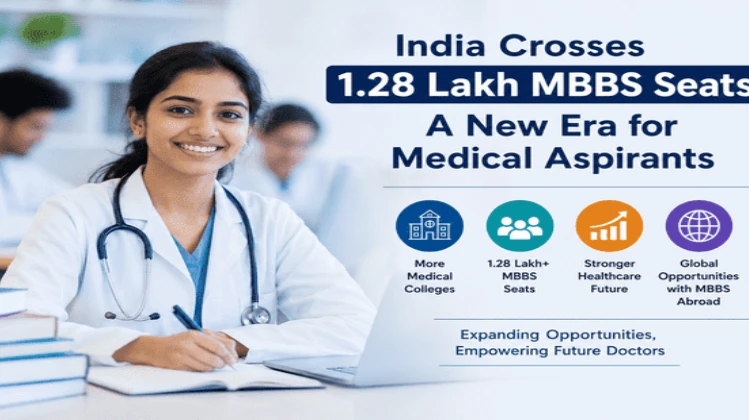
India Crosses 1.28 Lakh MBBS Seats as medical education expands across the country. Learn how this milestone affects MBBS admissions, competition, and studying MBBS abroad in 2026.
India has achieved a historic milestone in medical education. According to recent government updates, India Crosses 1.28 Lakh MBBS Seats, marking a significant expansion in the country's healthcare education infrastructure. Over the past decade, the number of medical colleges and MBBS seats has increased substantially, creating more opportunities for aspiring doctors.
However, despite this remarkable growth, the demand for MBBS admission continues to far exceed the available seats. Every year, millions of students appear for NEET UG, making the competition extremely intense. As a result, thousands of deserving candidates continue to explore MBBS abroad as a practical and affordable alternative.
This article explains how India Crosses 1.28 Lakh MBBS Seats impacts Indian students, the medical education system, and the future of studying MBBS abroad.
India's Medical Education Has Expanded Rapidly
The Indian government has focused heavily on strengthening healthcare infrastructure and medical education over the past several years. New government and private medical colleges have been established across different states, while existing institutions have increased their intake capacity.
Some major developments include:
-
Significant increase in government medical colleges
-
Expansion of private medical colleges
-
More MBBS seats across India
-
Better access to medical education in rural regions
-
Improved healthcare workforce planning
The achievement that India Crosses 1.28 Lakh MBBS Seats reflects India's commitment to producing more qualified doctors to meet the growing healthcare needs of its population.
Why Competition Remains High Despite More MBBS Seats
Although India Crosses 1.28 Lakh MBBS Seats, admission remains highly competitive.
Each year:
-
More than 20 lakh students register for NEET UG.
-
Only a fraction secure government MBBS seats.
-
Government colleges continue to have very limited availability compared to the number of applicants.
-
Private medical colleges often have significantly higher tuition fees.
This means that many qualified students still struggle to secure affordable MBBS admission within India.
Government Colleges Continue to Be the First Choice
Government medical colleges remain the preferred option because they offer:
-
Affordable tuition fees
-
High-quality education
-
Experienced faculty
-
Excellent clinical exposure
-
Recognized medical degrees
However, limited government seats mean that students need exceptionally high NEET scores for admission.
Even after India Crosses 1.28 Lakh MBBS Seats, competition for government colleges remains intense.
Rising Interest in MBBS Abroad
As competition continues, many Indian students are choosing international universities for medical education.
Popular destinations include:
-
Russia
-
Georgia
-
Kazakhstan
-
Uzbekistan
-
Kyrgyzstan
-
Armenia
-
Belarus
-
Nepal
These countries offer globally recognized medical programs with modern infrastructure and comparatively affordable tuition fees.
Why Students Still Choose MBBS Abroad
The increase in Indian MBBS seats is positive, but several reasons continue to encourage students to study abroad.
Affordable Fee Structure
Many international universities offer complete MBBS programs at costs significantly lower than private medical colleges in India.
Students can access quality education without facing extremely high tuition expenses.
Easier Admission Process
Admission procedures abroad are generally straightforward.
Students usually require:
-
NEET qualification (as per NMC eligibility)
-
Academic documents
-
Passport
-
Visa
There are fewer admission hurdles compared to the highly competitive counselling process in India.
Globally Recognized Universities
Many foreign medical universities are recognized by:
-
National Medical Commission (NMC)
-
World Health Organization (WHO)
-
World Federation for Medical Education (WFME)
-
Educational Commission for Foreign Medical Graduates (ECFMG), where applicable
Recognition allows graduates to pursue licensing examinations in various countries, subject to local regulations.
Modern Infrastructure
Medical universities abroad often provide:
-
Advanced laboratories
-
Simulation centers
-
Digital classrooms
-
Well-equipped hospitals
-
International learning environment
Students receive practical exposure from the early years of their medical education.
How India Crosses 1.28 Lakh MBBS Seats Benefits Students
The expansion of MBBS seats offers several long-term advantages.
More Opportunities
More students can now pursue medicine without facing the severe shortage seen in previous years.
Better Regional Access
New medical colleges in smaller cities reduce the need for students to relocate far from home.
Stronger Healthcare System
Increasing the number of trained doctors helps improve healthcare delivery across India.
Improved Medical Infrastructure
The establishment of new colleges also brings investments in hospitals, research facilities, and faculty development.
Challenges That Still Exist
Even though India Crosses 1.28 Lakh MBBS Seats, several challenges remain.
High NEET Competition
Demand continues to exceed supply.
Expensive Private Colleges
Private medical education remains unaffordable for many middle-class families.
Limited Government Seats
Government institutions still have comparatively fewer seats.
Increasing Number of Aspirants
Every year, the number of NEET applicants continues to rise.
Should Students Still Consider MBBS Abroad?
The answer depends on individual circumstances.
MBBS abroad remains a strong option for students who:
-
Qualify NEET but miss government college admission
-
Cannot afford high private college fees
-
Want international exposure
-
Prefer globally recognized universities
-
Plan for global medical careers
Students should carefully verify university recognition, curriculum, internship opportunities, and eligibility under NMC regulations before taking admission.
Tips Before Choosing MBBS Abroad
Students should keep the following points in mind:
-
Verify NMC eligibility and guidelines.
-
Check university recognition and accreditation.
-
Compare tuition fees and living expenses.
-
Understand the medium of instruction.
-
Evaluate hospital training facilities.
-
Learn about FMGE/NExT preparation support.
-
Consult trusted education advisors.
Making an informed decision can significantly improve future career prospects.
The Future of Medical Education in India
The milestone that India Crosses 1.28 Lakh MBBS Seats is only one step toward strengthening India's healthcare system.
Future initiatives may include:
-
More AI-enabled medical education
-
Better digital learning platforms
-
Increased postgraduate seats
-
Expansion of super-specialty programs
-
Improved rural healthcare training
These developments are expected to further enhance the quality of medical education in India.
Conclusion
The announcement that India Crosses 1.28 Lakh MBBS Seats marks a significant achievement in India's journey toward strengthening its medical education system. The expansion provides more opportunities for aspiring doctors and supports the country's long-term healthcare goals.
However, the number of NEET applicants continues to be much higher than the available seats, particularly in government colleges. As a result, MBBS abroad remains an attractive and practical option for many students seeking affordable, high-quality medical education.
Whether you choose to study in India or abroad, careful planning, proper guidance, and selecting a recognized medical university are essential steps toward building a successful medical career.
Frequently Asked Questions (FAQs)
1. What does India Crosses 1.28 Lakh MBBS Seats mean?
It means that India now has more than 1.28 lakh MBBS seats available across government and private medical colleges, reflecting significant growth in medical education capacity.
2. Will the increase in MBBS seats reduce NEET competition?
Competition may ease slightly over time, but with more than 20 lakh NEET applicants each year, admissions remain highly competitive.
3. Is MBBS abroad still a good option?
Yes. Many students continue to choose MBBS abroad due to affordable tuition, globally recognized universities, and lower competition for admission.
4. Can Indian students practice in India after studying MBBS abroad?
Yes, provided they graduate from an eligible university and meet the latest National Medical Commission (NMC) requirements, including any applicable licensing examinations.
5. Which countries are popular for MBBS abroad?
Russia, Georgia, Kazakhstan, Uzbekistan, Kyrgyzstan, Armenia, Belarus, and Nepal are among the preferred destinations for Indian medical aspirants.

Comments
Login to Comment