How TSCM Bug Sweeping Works: A Professional Guide for Bangalore Businesses
05 Oct, 2026
10 Views 0 Like(s)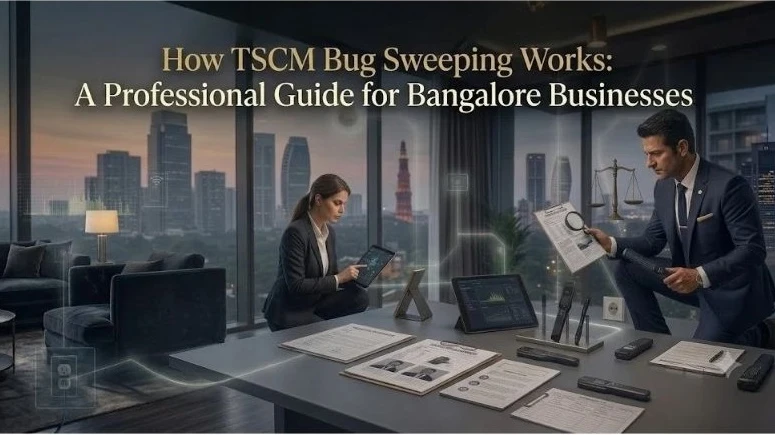
Discover how professional TSCM bug sweeping works for Bangalore businesses—from initial risk assessment and physical inspection to RF signal analysis, technical evaluation, and structured reporting. Understand how a systematic TSCM assessment can help identify potential electronic surveillance concerns through evidence-based, professional methods.
In a business environment where sensitive meetings, intellectual property, strategic discussions, and confidential information are routinely exchanged, concerns about unauthorized electronic surveillance can arise for many reasons. For organizations in Bangalore, a professional TSCM bug sweeping assessment provides a structured way to examine such concerns through technical inspection, signal analysis, and documented evaluation.
Technical Surveillance Counter-Measures (TSCM) is not simply a search for a hidden camera or listening device. A professional assessment combines physical observation with specialized electronic testing to identify anomalies that may warrant further investigation.
What Is a TSCM Bug Sweep?
A TSCM assessment is a systematic examination of an environment for indicators associated with unauthorized surveillance or other electronic security concerns.
Depending on the circumstances, an assessment may consider:
- Radio-frequency activity
- Potential wireless transmission sources
- Suspicious electronic components or devices
- Concealed cameras or microphones
- Unusual wiring or electronic installations
- Possible tracking-related equipment
- Physical areas where surveillance equipment could potentially be concealed
The objective is not to label every unusual signal or electronic component as a surveillance device. Instead, trained professionals evaluate findings in context and distinguish normal environmental activity from anomalies requiring closer examination.
How Does Professional TSCM Bug Sweeping Work?
A professional assessment generally follows a structured process rather than a quick visual search.
1. Initial Consultation and Risk Assessment
The process begins by understanding why an organization is considering an assessment.
Relevant factors may include the type of premises, the nature of the information handled, sensitive meetings conducted there, previous incidents, changes to the environment, and specific concerns reported by personnel.
This preliminary stage helps establish an appropriate inspection scope.
2. Physical and Technical Inspection
The assessment may then move into a systematic examination of relevant areas.
Depending on the assignment, professionals may inspect meeting rooms, executive offices, workspaces, vehicles, or other sensitive environments for unusual installations or physical indicators.
The purpose is to identify anything that appears inconsistent with the normal configuration of the environment.
3. RF and Signal Analysis
Radio-frequency analysis can form an important part of TSCM assessment.
Specialized equipment can be used to examine portions of the RF spectrum and identify signals that may require further evaluation. However, the presence of an RF signal does not automatically mean that a surveillance device is present.
Wi-Fi networks, Bluetooth devices, mobile communications, wireless peripherals, and other legitimate technologies can generate RF activity. Professional interpretation therefore requires an understanding of the environment and the ability to distinguish ordinary signals from potentially significant anomalies.
Read More: Debugging Services in Mumbai for Sensitive Spaces
4. Examination of Electronic and Concealed Areas
Where appropriate, a TSCM inspection can include examination of locations where unauthorized electronic equipment could potentially be installed.
This may involve assessing furniture, fixtures, power-related areas, communication equipment, and other relevant locations.
The inspection should remain proportionate to the environment and the identified risk rather than relying on exaggerated or intrusive investigative techniques.
5. Correlation of Findings
One of the most important aspects of professional bug detection in Bangalore is the correlation of findings.
An isolated signal, unexplained component, or unusual physical observation may have an entirely legitimate explanation. Findings become more meaningful when technical information, physical observations, and environmental context are considered together.
This approach helps reduce false conclusions and keeps the assessment evidence-based.
Why Businesses in Bangalore May Consider Corporate TSCM
Bangalore's business ecosystem includes technology companies, startups, financial organizations, professional-service firms, research operations, and enterprises handling commercially sensitive information.
Sensitive information can be discussed in many environments, including
- Boardrooms and conference rooms
- Executive offices
- Research and development areas
- Client meeting spaces
- Temporary meeting locations
- Corporate vehicles
- Residential or executive environments used for business discussions
A corporate TSCM assessment may therefore be considered when an organization has a specific concern or wants to evaluate the technical environment surrounding particularly sensitive activities.
The objective should be practical: establish facts, evaluate anomalies, and document relevant findings.
What Makes a TSCM Assessment Professional?
Professional TSCM work involves more than possessing specialist equipment. Equipment can identify signals and technical characteristics, but interpretation is equally important.
A structured assessment should consider:
Methodology: The inspection should follow a defined and repeatable process.
Technical interpretation: Signals and electronic findings should be assessed within their environmental context.
Documentation: Relevant observations should be recorded systematically.
Discretion: Sensitive business circumstances should be handled professionally.
Clear reporting: Findings should be communicated in a way that distinguishes observations, technical findings, and areas requiring further evaluation.
This combination helps turn a technical inspection into a useful electronic security assessment rather than an indiscriminate search.
What Happens After the Sweep?
Documentation and reporting are important components of a professional TSCM process.
Depending on the assignment, a report may record the areas assessed, methodology used, significant observations, technical findings, and recommendations for appropriate follow-up.
A report can also provide an organization with a reference point for future assessments, particularly when the same environment contains sensitive operations or undergoes significant changes.
TSCM Is About Assessment, Not Assumption
One of the most significant misconceptions surrounding electronic surveillance detection is that every unexplained signal or unfamiliar device represents a hidden surveillance system.
Real environments are technically complex.
Modern offices contain numerous wireless systems, smart devices, networking equipment, and electronic infrastructure. Consequently, effective TSCM bug sweeping in Bangalore requires technical knowledge, contextual analysis, and disciplined interpretation.
The goal is not to create alarm. It is to determine what can reasonably be established through a professional assessment.
Choosing the Right Approach for a Bangalore Business
Before commissioning a TSCM assessment, organizations should consider what they actually need to evaluate.
A focused assessment may be appropriate for a particular meeting room or executive office, while broader concerns may require examination of multiple locations or environments.
The organization's risk profile, the nature of the concern, the physical environment, and the type of information involved can all influence the scope.
Professional guidance can help determine whether a targeted inspection or broader assessment is appropriate.
Read More: Background Verification: Why It Matters Before Making Important Decisions
Conclusion
A professional TSCM bug sweep is a structured technical assessment—not a dramatic search for spy gadgets. From initial consultation and physical inspection to RF analysis, technical interpretation, and reporting, each stage contributes to a clearer understanding of the environment being assessed.
For Bangalore businesses handling sensitive conversations, intellectual property, or commercially important information, a properly planned TSCM assessment can provide a methodical way to evaluate electronic surveillance concerns and document relevant findings.
If your organization has concerns about potential electronic surveillance in an office, meeting space, vehicle, or other sensitive environment, discuss the circumstances with Trace Point India to determine an appropriate TSCM assessment approach in Bangalore.


Comments
Login to Comment