How to Win Arguments with Bad Logic: A Comically Unethical Guide to Debate Domination
17 Nov, 2025
10619 Views 3 Like(s)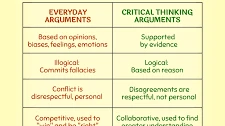
Sometimes it’s about being louder, weirder, or confusing enough that the other person gives up out of mental exhaustion.
Let’s be honest:
Winning an argument isn’t always about being right. This blog is NOT a moral guide.
It’s a humorous journey into the chaotic world of terrible logic, used by people who win arguments simply by breaking the laws of reason.
Read responsibly.
Use sparingly.
And please… don’t actually try these in real life (unless you want to lose friends and respect).
1. The Confidence Method: Be Wrong, But Loudly
Rule #1:
If you say anything with enough conviction, people may doubt their intelligence before yours.
Example:
“Of course dinosaurs used smartphones. Why do you think they went extinct? Poor battery life.”
Say this boldly—chin up, eyebrows serious—and watch your opponent hesitate.
Confidence > Logic.
2. The Classic “I Know You Are But What Am I?” Technique
This technique works best when:
-
You have no real argument
-
You want to annoy someone into quitting
-
You secretly enjoy chaos
Whatever insult or point they make—bounce it back.
Them: “You’re not making sense.”
You: “YOU’re not making sense.”
It’s childish.
It’s ridiculous.
It works.
3. The Magical Topic Shift (A.K.A. The Debate Escape)
If you’re losing, simply change the topic to something completely unrelated.
Them: “You forgot to pay your share of the bill.”
You: “Well, what about global warming? Have you even thought about the penguins?”
This move is called derailing, and it’s extremely annoying, which makes it surprisingly effective.
4. The Fake Fact Bomb
Create a fact on the spot.
Make it sound scientific.
Throw in a percentage.
Examples:
-
“Studies show 86% of arguments are won by people wearing socks.”
-
“Actually, according to the Institute of Random Knowledge…”
Will they question it?
Probably not.
Will they Google it?
Hopefully not.
The goal is to overwhelm them with confidence and nonsense.
5. The Over-Complication Strategy
Say something so complex and unnecessarily intellectual that the other person gets confused and quietly retreats.
For example:
“I reject your premise based on the epistemological limitations of rational dualism as outlined by pre-neoclassical thinkers.”
Does it mean anything?
Not really.
Does it sound unbeatable?
Absolutely.
6. The “Emotional Explosion” Maneuver
Logic losing?
Tears incoming.
If you suddenly act dramatically upset, the other person will stop arguing and start apologizing—whether you’re right or wrong.
Bonus points if you say:
“I can’t believe you’d say that to me… again.”
(Even if nothing like this has ever happened.)
7. The Question Avalanche
Ask rapid-fire questions so fast your opponent forgets the original argument.
Examples:
-
“Why would I do that?”
-
“Why do you think that?”
-
“Why is the sky blue?”
-
“Who invented spoons?”
They’ll get overwhelmed, confused, and emotionally drained.
Victory.
8. The Strawman Slam
Misrepresent what they said—then argue against THAT instead of the real point.
Them: “I think we should eat healthier.”
You: “Wow… so you think I’m fat and unhealthy? That’s what you’re saying?”
Unfair? Yes.
Effective? Also yes.
9. The “I’m Too Smart for This Conversation” Move
Pretend the argument is beneath your mental level—even if you’re the one who started it.
Say things like:
-
“This is basic stuff, I can’t believe I’m explaining it.”
-
“You wouldn’t understand; it’s complicated.”
Congratulations:
You’ve turned arrogance into a debate weapon.
10. The Historical Rewrite
Invent a fake past where you were right all along.
Them: “You said the Earth was flat yesterday!”
You: “No, YOU said that. I said it was triangular.”
Gaslighting Level 100: achieved.
11. The Anecdote Attack
Even if the argument is logical, bring in a personal story that has nothing to do with the topic.
Them: “Seatbelts save lives.”
You: “Well, my cousin never wore one and he’s fine.”
Suddenly personal stories outweigh science.
Terrible, but effective.
12. The Hypothetical Nuke
Create a wild what-if scenario that derails the discussion:
Them: “You still haven’t done the dishes.”
You: “What if aliens landed tomorrow and declared dishes illegal? Then wouldn’t you feel silly?”
They will blink twice and walk away.
You win.
13. The Victory Through Exhaustion Strategy
This is the most powerful technique of all.
Keep arguing.
Don’t stop.
Don’t take breaks.
Don’t blink.
Most people eventually give up, even if they’re right, because:
No one wants to debate a person who refuses to shut up.
Why These Methods Work (Psychologically Speaking)
People often lose arguments not because they’re wrong, but because:
-
They get confused
-
They get frustrated
-
They get tired
-
They get emotionally overwhelmed
-
They don’t want to deal with nonsense
Winning through bad logic weaponizes CHAOS.
It’s not noble, but it’s oddly effective.
Ethical Disclaimer (Because We Should Probably Include One)
This blog is humor, not moral guidance.
Don’t use these tactics in:
-
Real debates
-
Relationships
-
Work meetings
-
Job interviews
-
Courtrooms
-
Therapy
-
Anywhere humans exist
This guide is meant to make you laugh, not become a menace to society.
Conclusion: Bad Logic Wins… But At What Cost?
You CAN win arguments with bad logic…
But you’ll lose:
-
Respect
-
Friends
-
Sanity
-
And possibly your invitation to family dinners
Still, knowing these techniques helps you recognize when others use them on you.
And now, at least, you can laugh about it.



Comments
Login to Comment