How to Maintain Artificial Turf in Dallas Climate (Expert Guide)
10 Apr, 2026
2579 Views 0 Like(s)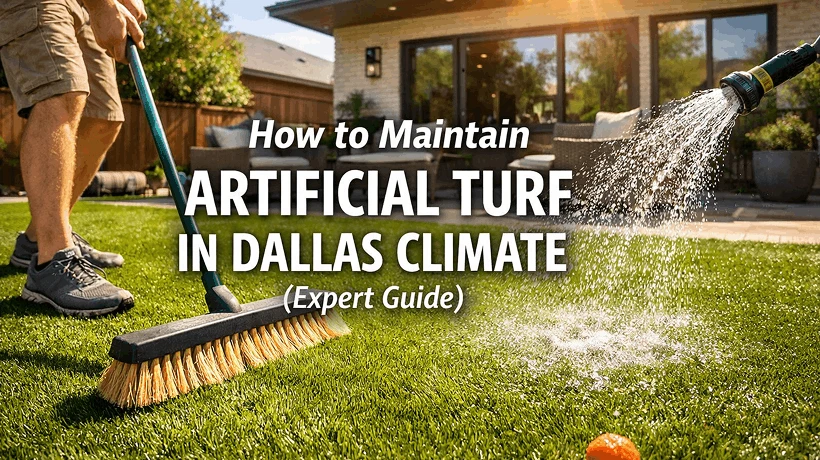
Learn how to maintain artificial turf in Dallas climate with this expert guide. Discover seasonal tips, cleaning routines, and pro strategies to extend turf life.
Introduction
Dallas is one of the most demanding cities in the United States for artificial turf owners. The combination of scorching summer heat that regularly pushes past 100 degrees Fahrenheit, unpredictable spring storms, some of the highest pollen counts in the country, and occasional winter freezes creates a maintenance environment that is unlike almost anywhere else in America.
If you have artificial turf installed at your Dallas home or commercial property, following generic maintenance advice written for moderate climates will not be enough. Your turf needs a maintenance approach that is specifically designed for what Dallas weather actually does to synthetic grass throughout the year.
This expert guide covers everything you need to know about how to maintain artificial turf in Dallas climate, from monthly care routines and seasonal adjustments to common problems and when to call a professional. Whether you have a small backyard lawn, a pet area, or a large commercial installation, this guide gives you the knowledge to protect your turf investment and keep it performing at its best for years to come.
Why Dallas Climate Makes Artificial Turf Maintenance Different
Most artificial turf manufacturers publish general maintenance guidelines that assume a relatively mild climate. Dallas does not fit that assumption. Understanding why the local climate creates unique challenges is the first step toward building a maintenance routine that actually works.
Extreme Summer Heat in Dallas
From June through August, Dallas regularly experiences temperatures above 100 degrees Fahrenheit. During these periods, the surface temperature of artificial turf can climb to between 150 and 180 degrees, which is significantly hotter than the surrounding air temperature.
This extreme heat does several things to your turf. First, it dramatically accelerates the growth of bacteria in the infill material. Pet waste, organic debris, and moisture that would take weeks to cause odor problems in a cooler climate can create serious hygiene issues within two to three days in peak Dallas summer heat. Second, prolonged heat exposure causes turf fibers to become compressed and matted, particularly in high-traffic areas. Third, the infill material can shift and compact under extreme heat, reducing the cushioning and drainage performance of your turf.
Understanding this effect of Dallas summer heat is the foundation of any serious turf maintenance plan.
Heavy Spring Storms and Flash Flooding
Dallas spring weather is unpredictable and often severe. Heavy thunderstorms can dump large amounts of rain in short periods, and flash flooding is a real concern in many Dallas neighborhoods. These storms bring significant amounts of debris onto your turf surface, including leaves, sticks, mud, and organic matter carried by runoff water.
Flash flooding can also displace and compact the infill material beneath the turf surface, creating uneven areas and reducing drainage capacity. After any significant storm event, a post-storm inspection and cleaning routine is essential to prevent debris from working its way deep into the turf base where it becomes much harder to remove.
High Pollen and Allergen Levels
Dallas consistently ranks among the worst cities in the United States for pollen. Oak, cedar, and ragweed pollen seasons hit hard and last for extended periods. This pollen does not just settle on the surface of your turf. It works its way into the turf fibers and infill, where it accumulates over time.
For households with allergy sufferers, this accumulation can make the outdoor turf area uncomfortable to use during peak pollen seasons. Regular rinsing during high pollen periods removes allergens from the surface and reduces the amount that penetrates into the infill.
Occasional Winter Freezes
While Dallas winters are mild compared to most of the country, the city does experience occasional ice storms and hard freezes that can affect artificial turf. Ice forming on the turf surface is generally not a structural problem for quality installations, but there are specific things you should and should not do during freeze events.
You should never use rock salt or chemical ice melt products on artificial turf. These chemicals can damage turf fibers and degrade infill material. If you need to remove ice, allow it to melt naturally or use warm water. Avoid heavy foot traffic on frozen turf as the stiff fibers are more vulnerable to breakage under pressure when frozen.
Essential Tools and Products for Dallas Turf Maintenance
Having the right tools and products on hand makes a significant difference in the effectiveness of your maintenance routine. Using the wrong tools or products can actually damage your turf and void manufacturer warranties.
Recommended Cleaning Tools
A stiff-bristled turf brush or power broom is the most important tool for regular maintenance. It lifts matted fibers, redistributes infill, and helps remove surface debris effectively. Choose a brush with synthetic bristles rather than metal, as metal bristles can damage turf fibers.
A garden hose with an adjustable pressure nozzle is essential for regular rinsing. You do not need extremely high pressure for routine rinsing. A firm spray setting is enough to remove pollen, dust, and surface debris without disturbing the infill.
A turf rake is useful for removing larger debris such as leaves, twigs, and pet toys from the surface before rinsing. A wet and dry vacuum is particularly useful for pet owners. It can extract liquid waste from the infill surface more effectively than rinsing alone in pet-heavy areas.
Best Cleaning Products for Dallas Climate
Enzyme-based cleaners are the single most important product category for Dallas turf owners. These cleaners work by breaking down the organic compounds in pet urine, feces, and other biological material at the molecular level. Unlike deodorizers that simply mask odors, enzyme cleaners eliminate the source of the smell. In the Dallas heat, where odors develop rapidly, enzyme cleaners are not optional for pet owners. They are essential.
A pH-neutral turf shampoo is recommended for general cleaning sessions. These products clean the turf surface and fibers without stripping infill material or damaging fiber coatings.
An antibacterial treatment designed specifically for artificial turf is worth applying before and during peak summer months in Dallas. This treatment reduces the bacterial load in the infill and helps control odor development during the hottest periods.
Products to avoid include bleach, ammonia-based household cleaners, and any solvent-based products. These chemicals degrade turf fibers, damage infill materials, and can create toxic residue that is harmful to pets and children.
Infill Materials That Perform Best in Dallas Heat
Not all infill materials perform equally in the Dallas climate. Crumb rubber infill is common and affordable, but it absorbs and retains heat more than other options, contributing to extremely high surface temperatures during Dallas summers. If surface heat is a concern for pets or children, crumb rubber may not be the best choice.
Silica sand infill is a cooler option and works well in Dallas conditions. It is durable, drains well, and does not retain heat as aggressively as rubber. Organic infill options made from materials like cork or coconut fiber are becoming more popular and offer a cooler surface temperature along with natural antibacterial properties, though they require more frequent replacement than synthetic infill options.
Signs that your infill needs replacing include visible compaction, uneven surface texture, persistent odors that do not respond to enzyme treatment, and reduced drainage performance.
How to Maintain Artificial Turf in Dallas Climate Month by Month
A month-by-month maintenance calendar is the most practical way to ensure your Dallas turf receives the right care at the right time throughout the year.
January and February
Winter maintenance in Dallas is relatively light. Focus on a monthly rinse to remove debris and check for any mold developing in shaded areas of your turf where moisture from winter rain lingers. Inspect drainage after heavy winter rain events and clear any debris that may be blocking drainage channels.
Avoid using pressure washing during freeze events as the combination of high-pressure water and freezing temperatures can displace infill and stress the turf backing. If temperatures are expected to drop below freezing, complete any planned rinsing or cleaning before the freeze arrives.
March and April
Spring is the time to wake up your turf after winter and prepare it for the intense months ahead. Start with a full rinse to remove winter buildup, early pollen, and any organic matter that has accumulated since fall.
Check infill levels across the entire turf area and add infill where it has compacted or thinned during winter. Inspect all seams and edges carefully for any signs of lifting or separation that may have developed during winter weather. March and April are the ideal months to schedule a professional pre-summer deep clean that gets your turf into peak condition before the heat arrives.
May
May is arguably the most important maintenance month of the entire year for Dallas turf owners. This is the transition month between manageable spring conditions and the intense summer heat that will dominate June through August.
A professional deep clean in May sets your turf up for success through the difficult summer period. This should include deep extraction of any debris embedded in the infill, a full enzyme treatment for pet areas, infill top-up and replenishment, and an antibacterial treatment applied ahead of peak heat. Investing in a thorough May maintenance visit pays dividends throughout the entire summer.
June, July, and August
These three months represent the most demanding maintenance period for Dallas artificial turf. Your maintenance frequency needs to increase significantly compared to the rest of the year.
Rinse pet areas daily or every other day during peak summer heat. Bacteria develop quickly in extreme temperatures, and daily rinsing is the most effective way to prevent odor from becoming embedded in the infill. Brush fibers weekly to prevent heat-induced matting and keep the turf looking full and natural.
Watch closely for odor development. In peak summer heat, odors can become noticeable within two to three days of pet use. Do not wait for odor to become severe before treating it. Apply enzyme cleaner proactively after every significant pet use.
Schedule a professional enzyme treatment and deep clean every four to six weeks during summer months for pet households. Consider rinsing your turf in the late afternoon during extreme heat waves to bring the surface temperature down and create a more comfortable environment for pets and children.
September and October
As temperatures begin to ease in September and October, your priority is recovery from a demanding summer. Schedule a full professional deep clean in September to reset your turf after months of heavy heat exposure and intensive use.
Check infill levels across the entire surface and replenish where needed after summer compression. Begin removing early fall leaves promptly before they start to decompose on the turf surface. Decomposing organic matter can stain turf fibers, contribute to drainage problems, and add to the bacterial load in the infill. Inspect the turf backing and all seams for any wear or damage that developed during summer.
November and December
The final two months of the year are transition months for Dallas turf maintenance. Complete a final cleaning before the cooler, wetter winter months arrive. Check all drainage channels and clear any accumulated debris before winter rains arrive.
Reduce your maintenance frequency as temperatures drop. Monthly light maintenance is typically sufficient through November and December for most Dallas turf installations. Prepare your turf for potential freeze events by ensuring the surface is clean and dry before any forecasted freeze.
Artificial Turf Maintenance by Usage Type in Dallas
Beyond the seasonal calendar, the right maintenance approach depends significantly on how your turf is being used.
Maintaining Residential Turf in Dallas
For standard residential front and back yards in Dallas without heavy pet use, a weekly rinsing routine is the foundation of good maintenance. Rinse the entire surface to remove dust, pollen, and light debris. Brush the fibers monthly to maintain their upright shape and prevent matting in high-traffic areas such as pathways and seating zones.
During summer, increase rinsing frequency and pay attention to any areas that receive direct afternoon sun, as these areas will experience the highest surface temperatures and fastest fiber degradation. A professional clean twice per year, ideally in May before summer and in September after summer, is the minimum recommended professional service schedule for residential turf without pets.
Maintaining Pet Turf in Dallas
Pet turf maintenance in Dallas is a category of its own. The combination of pet waste and extreme Dallas summer heat creates conditions that demand consistent and proactive maintenance attention.
Daily rinsing of pet areas is the most effective habit you can build. Remove solid waste immediately every single time and rinse the area right away rather than waiting for a scheduled maintenance session. Keep a diluted enzyme cleaner in a spray bottle near your back door and apply it to pet use areas daily during summer months.
The biggest mistake Dallas pet turf owners make is waiting until odors become obvious before treating them. By that point, bacteria and odor compounds have already penetrated deep into the infill and require professional extraction to fully eliminate. Consistent daily treatment prevents the problem from ever reaching that stage.
When professional intervention is needed for severe pet odor, a combination of deep extraction and infill treatment is the most effective approach. In severe cases, partial or full infill replacement may be necessary to completely resolve embedded odor.
Maintaining Commercial Turf in Dallas
Commercial turf installations in Dallas require a structured and consistent maintenance program that treats turf care as a professional responsibility rather than an occasional task.
Weekly maintenance including brushing and rinsing should be built into your property maintenance schedule as a standard line item. A professional deep clean should be conducted every one to two months depending on the level of foot traffic and use the turf receives. High-traffic zones such as building entrances, outdoor seating areas, and walkways may need more frequent professional attention than lower-traffic areas of the same installation.
The condition of your commercial turf directly reflects on your brand. Worn, odorous, or poorly maintained turf sends a negative message to clients and visitors. A consistent professional maintenance program protects both your physical asset and your professional reputation.
Maintaining Sports Fields and Playgrounds in Dallas
Sports fields and playground surfaces face the most intensive use of any turf application. These surfaces must be maintained to high standards not just for appearance but for safety.
Brushing and a visual inspection of the entire surface should be conducted after every significant use. Look for low infill areas, seam issues, and any debris that could create a tripping or injury hazard. A full cleaning and infill inspection should be done monthly. A professional deep extraction clean should be scheduled at least four times per year, at the beginning of each season.
During Dallas summer months, heat management on sports surfaces requires particular attention. Surface temperatures on artificial turf sports fields can reach levels that are dangerous for prolonged barefoot contact. Scheduling games and activities for early morning or evening hours during peak summer heat and providing water stations for rinsing feet reduces heat-related risk.
Common Artificial Turf Problems in Dallas and How to Fix Them
Even with consistent maintenance, Dallas turf owners encounter specific problems that the local climate makes more likely. Knowing how to identify and address these issues quickly prevents small problems from becoming expensive ones.
Matted and Flattened Turf Fibers
Matted fibers are one of the most common issues for Dallas turf owners. The combination of extreme heat and heavy foot traffic compresses fibers and prevents them from returning to their natural upright position.
For mild to moderate matting, regular brushing with a stiff-bristled turf brush can restore fiber shape over time. Brush against the grain of the fibers in short, firm strokes. For severe matting that does not respond to brushing, professional grooming with power brushing equipment is needed. In some cases, matting is a sign that infill has compacted too much and needs replenishment to provide the structural support that keeps fibers upright.
Persistent Pet Odor That Will Not Go Away
Persistent odor that does not respond to regular rinsing and basic enzyme treatment is a sign that odor compounds have penetrated deep into the infill layer. At this stage, surface treatment alone is not sufficient.
Professional deep extraction cleaning is the most effective solution for embedded pet odor. This process uses specialized equipment to pull contaminated material out of the infill rather than simply treating the surface. In cases where odor has been present for an extended period, partial or complete infill replacement may be the only way to fully resolve the problem. Prevention through consistent daily enzyme treatment is far less expensive than remediation after the fact.
Poor Drainage and Water Pooling
Water pooling on the surface of your turf after rain or rinsing indicates a drainage problem. This can be caused by compacted infill blocking the drainage holes in the turf backing, debris accumulation in the base layer, or issues with the base preparation beneath the turf.
Start by checking the infill distribution across the surface. Compacted areas can often be identified visually or by pressing on the surface. Professional power brushing and infill redistribution resolves many drainage issues caused by compaction. If the problem persists after infill treatment, a professional assessment of the base layer and drainage system is needed.
Discoloration and Staining
Discoloration on Dallas turf can come from several sources including tannins from decomposing leaves, sunscreen and oils from human use, pet waste, food and beverages, and hard water mineral deposits from regular rinsing.
For most staining, a pH-neutral turf cleaner applied directly to the stained area and scrubbed with a soft brush is effective. Allow the cleaner to dwell on the stain for several minutes before rinsing. For stubborn stains that do not respond to DIY treatment, contact a professional turf cleaning service. Never use bleach or solvent-based products on stained turf as these can permanently damage fibers and infill.
Weed Growth Through Turf
Weeds appearing through artificial turf are more common than most homeowners expect. Weed seeds blown by wind or carried by birds land on the turf surface, and if organic debris has accumulated in the infill, seeds have a growing medium to germinate in.
Remove weeds by hand, pulling them out carefully by the root to avoid damaging turf fibers. For larger weed problems, a water-based weed killer that is safe for use around artificial turf can be applied directly to the weeds. Do not use oil-based or solvent herbicides as these can damage turf materials. The best prevention strategy is regular removal of organic debris from the turf surface so that weed seeds do not have a growing medium.
Seam Separation and Edge Lifting
Seam separation and edge lifting are structural issues that are more common in Dallas than in cooler climates because of the expansion and contraction of materials caused by extreme temperature swings between summer heat and winter freezes. Ground movement from Dallas clay soil also contributes to seam stress over time.
Early warning signs include visible gaps at seam lines, edges of the turf that have begun to curl or lift, and sections where the turf feels loose underfoot. Seam issues should be addressed by a professional turf repair service as soon as they are noticed. Small seam separations are inexpensive to repair. Ignored seam issues grow larger over time and can require extensive repair or section replacement.
DIY Maintenance Versus Professional Turf Maintenance in Dallas
Understanding the appropriate role of DIY maintenance versus professional service saves Dallas turf owners money while ensuring their turf receives the level of care it actually needs.
What Dallas Homeowners Can Handle Themselves
Regular rinsing is the most impactful DIY task a homeowner can perform. Weekly rinsing removes surface debris, pollen, and light contamination before it has a chance to work into the infill. Pet waste removal and immediate spot treatment with enzyme cleaner is another high-impact DIY task that prevents the most common and expensive turf problems in Dallas.
Monthly brushing to keep fibers upright is straightforward and effective. Seasonal visual inspections of seams, edges, and drainage allow homeowners to identify developing problems before they require expensive professional repair.
What Requires a Professional Turf Company in Dallas
Deep extraction cleaning that reaches into the infill layer and removes embedded contamination requires professional equipment that homeowners do not have access to. Infill replacement and replenishment requires the correct materials and application equipment for consistent coverage and depth.
Fiber restoration and professional power brushing for severely matted turf requires commercial-grade equipment. Seam and edge repair requires professional training and materials to achieve durable results. Severe odor and bacteria treatment that has progressed beyond surface-level contamination requires professional-grade extraction and treatment products.
How Often Should Dallas Residents Hire a Professional
For residential properties without pets, a minimum of two professional cleanings per year is recommended. The ideal schedule is a pre-summer deep clean in May and a post-summer recovery clean in September.
Pet households in Dallas should schedule professional cleaning every two to three months given the accelerating effect of Dallas heat on pet waste-related contamination. Commercial properties should schedule professional maintenance monthly. Sports fields and playgrounds should schedule quarterly professional service at minimum with additional visits based on seasonal demand.
How Proper Maintenance Extends the Life of Your Dallas Turf
Artificial turf is a significant investment. Understanding how maintenance decisions affect the lifespan and total cost of ownership helps Dallas homeowners and businesses make better decisions about their maintenance programs.
The average lifespan of artificial turf without proper maintenance in a demanding climate like Dallas is between eight and ten years. With consistent professional maintenance, quality artificial turf installations in Dallas can last between fifteen and twenty years. That difference in lifespan represents a very large difference in total cost of ownership.
The cost of regular professional maintenance over the life of a well-maintained installation is a fraction of the cost of early replacement. A turf installation that lasts twenty years with proper care instead of ten years without it effectively pays for its maintenance program several times over.
Beyond lifespan, proper maintenance preserves the performance qualities of your turf throughout its life. A well-maintained Dallas turf installation maintains its drainage capacity, cushioning, and appearance far better than a neglected one. This matters for property values, commercial brand presentation, and the safety of sports and playground surfaces.
Frequently Asked Questions
How do I maintain artificial turf in Dallas climate?
Maintaining artificial turf in Dallas climate requires a schedule that accounts for extreme summer heat, heavy spring storms, and high pollen seasons. Key practices include weekly rinsing, monthly brushing, regular enzyme treatment for pet areas, and professional deep cleaning at least twice per year with increased frequency during summer months.
How often should I clean artificial turf in Dallas?
For residential turf without pets, light rinsing every one to two weeks and professional cleaning twice per year is the minimum. Pet households should rinse daily during summer and schedule professional cleaning every two to three months. Commercial properties need monthly professional service.
Does Dallas heat damage artificial grass?
Extreme Dallas heat does not directly damage quality artificial turf fibers, but it significantly accelerates bacteria growth and odor development in the infill. It also contributes to fiber matting and infill compaction. Managing the effects of heat through more frequent cleaning and rinsing is essential for Dallas turf maintenance.
What is the best cleaner for artificial turf in Texas?
Enzyme-based cleaners are the most effective product for artificial turf in Texas, particularly for pet areas. These cleaners eliminate odor at the molecular level rather than masking it. For general cleaning, a pH-neutral turf shampoo is recommended. Always avoid bleach, ammonia-based products, and solvent-based cleaners.
How do I stop my artificial turf from smelling in summer?
The most effective approach is consistent prevention through daily rinsing of pet areas, immediate removal of pet waste, and regular enzyme cleaner application. For existing odor that has become embedded in the infill, professional deep extraction and enzyme treatment is the most effective solution. In severe cases, infill replacement may be necessary.
Can artificial grass survive Dallas winters?
Yes, quality artificial grass handles Dallas winters well. The occasional freeze events Dallas experiences do not cause structural damage to properly installed turf. Avoid using chemical ice melt products and minimize foot traffic on frozen turf. Allow ice to melt naturally or use warm water if removal is necessary.
How long does artificial turf last in Dallas with proper maintenance?
With consistent professional maintenance tailored to the Dallas climate, quality artificial turf installations typically last fifteen to twenty years. Without proper maintenance in the demanding Dallas environment, lifespan can be reduced to eight to ten years.
Conclusion
Maintaining artificial turf in Dallas is not a one-size-fits-all task. The extreme summer heat, heavy spring storms, high pollen levels, and occasional winter freezes that define the Dallas climate create specific challenges that require a maintenance approach built for local conditions rather than generic advice.
The homeowners and businesses that get the longest life and best performance from their Dallas turf installations are the ones who follow a consistent maintenance schedule, treat pet areas proactively, and invest in regular professional care before problems become serious.
By following the seasonal guidance, usage-based recommendations, and problem-solving strategies in this expert guide, you are equipped to protect your artificial turf investment and keep it performing at its best through every season Dallas throws at it.
For Dallas and Fort Worth homeowners and businesses ready to experience what professional artificial turf maintenance looks like, Artificial Turf Maintenance brings more than 25 years of experience and the right equipment to deliver results that DIY care simply cannot match. Contact us today to schedule your professional turf cleaning and maintenance service and give your turf the expert care it deserves.


Comments
Login to Comment