How to Choose the Right U-40 Insulin Syringe for Your Pet
10 Sep, 2026
7 Views 0 Like(s)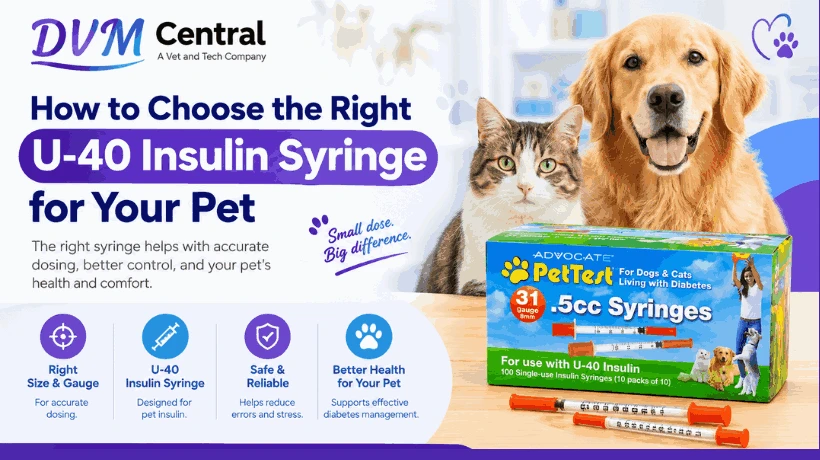
If your dog or cat has diabetes, choosing the right insulin syringe is very important. U-40 and U-100 syringes are different, and using the wrong one can give your pet too much or too little insulin. In this simple guide, learn how U-40 insulin syringes work, how to choose the right size and needle, avoid common mistakes, and give your pet safe and accurate insulin injections.
If your dog or cat has just been diagnosed with diabetes, one of the first things your vet will talk to you about is insulin syringes. It sounds simple, but picking the wrong syringe is one of the most common and most dangerous mistakes pet owners make at home. A U-40 insulin syringe is not the same as a U-100 syringe, and using the wrong one can lead to a serious overdose or underdose.
This guide breaks down everything you need to know about U-40 insulin syringes for pets, in plain, simple language, so you can give your pet safe, accurate, and comfortable injections every single day.
What Is a U-40 Insulin Syringe?
U-40 stands for 40 units of insulin per milliliter (mL) of liquid. It is a measurement of insulin concentration, not the size of the syringe itself. U-40 insulin syringes are specially calibrated with markings that match this concentration, so the numbers on the barrel line up exactly with the dose your vet prescribed.
U-40 insulin, such as Vetsulin and ProZinc, is the type most commonly prescribed for dogs and cats with diabetes. These insulins are formulated specifically for animals, which is why a matching U-40 syringe is needed not a human U-100 syringe you might have at home.
U-40 vs U-100: Why the Difference Really Matters
This is the single most important thing to understand before you draw up an insulin dose.
- U-40 insulin has 40 units per mL and needs a U-40 syringe.
- U-100 insulin has 100 units per mL and needs a U-100 syringe.
If you mix these up, the dose your pet receives will be completely wrong. For example, drawing up insulin using a U-100 syringe when your pet is on U-40 insulin can lead to a significant underdose, while the reverse mistake can cause a dangerous overdose. This is why most U-40 syringes come with a red needle cap, while U-100 syringes usually have an orange cap a simple visual cue to help prevent mix-ups.
If you are ever unsure which concentration your pet's insulin bottle is, check the label or call your veterinarian before giving the injection.
Understanding Syringe Sizes (0.3cc, 0.5cc, and 1cc)
U-40 syringes typically come in three barrel sizes:
- 0.3cc (3/10cc): Holds up to 12 units. Best for very small doses, since the lines are spaced further apart and easier to read.
- 0.5cc (1/2cc): Holds up to 20 units. A popular middle-ground choice for cats and small-to-medium dogs.
- 1cc: Holds up to 40 units. Usually reserved for larger dogs that need bigger doses.
Because most cats and small dogs only need a few units per injection, smaller barrel sizes are often recommended. A smaller barrel spreads the unit markings further apart, which makes it much easier to draw an accurate dose without squinting or guessing.
Needle Gauge and Length: What Works Best for Pets
Needle gauge refers to thickness the higher the gauge number, the thinner the needle. A 31-gauge needle, for example, is thinner and generally more comfortable than a 28 or 29-gauge needle.
Needle length also matters more than most pet owners realize:
- A 5/16 inch (8mm) needle is often ideal for cats and small or thin dogs, since it reduces the risk of poking through the pinched skin fold and out the other side.
- A 1/2 inch (12.7mm) needle may be better suited to larger, heavier-coated dogs with thicker skin.
A thin, short, well-lubricated needle with a smooth silicone coating helps the injection go in quickly and comfortably, which makes the whole process less stressful for both you and your pet.
Why Half-Unit Markings Matter for Small Doses
Many pets, especially cats, are prescribed very small insulin doses sometimes as low as 1 to 2 units. In these cases, even a small error in measurement can make a real difference. This is where half-unit markings become valuable.
Standard syringes only mark whole units, but half-unit syringes let you measure doses like 1.5 or 2.5 units precisely. If your pet's prescribed dose includes a half-unit, ask your vet or pharmacy specifically for a half-unit marked U-40 syringe.
Common Mistakes Pet Owners Make
- Using a U-100 syringe with U-40 insulin (or the other way around)
- Reusing a needle multiple times, which dulls the tip and can hurt more
- Not checking for air bubbles before injecting
- Storing insulin incorrectly, which can affect its potency
- Guessing the dose instead of confirming it against the vet's written instructions
- Buying a random syringe online without confirming it matches the prescribed concentration
Avoiding these mistakes comes down to one simple habit: always double-check the concentration on the insulin bottle against the syringe type before every single dose.
How to Read the Syringe Barrel Correctly
Hold the syringe at eye level, needle pointing up, and look at the black plunger tip (not the rubber edges) against the unit markings. Draw the insulin slowly to avoid bubbles, and if you see air, tap the barrel gently and push a small amount of insulin back into the vial before withdrawing again. Good lighting makes a big difference here many dosing errors happen simply because the lines were hard to see.
Safe Storage, Handling, and Disposal
- Store insulin in the refrigerator unless your vet says otherwise, and avoid shaking the vial roll it gently instead.
- Never reuse a needle or syringe; use a fresh one for every injection to reduce contamination risk and keep the needle sharp.
- Dispose of used syringes in an approved sharps container, not in regular household trash. The U.S. Food and Drug Administration provides clear guidance on safe sharps disposal at home.
When to Talk to Your Veterinarian
Every pet's insulin plan is different, and only your veterinarian can confirm the correct insulin type, dose, syringe size, and needle length for your specific dog or cat. If you notice signs like excessive thirst, lethargy, vomiting, or your pet seems disoriented after an injection, contact your vet immediately — these can be signs of a dosing problem that needs urgent attention.
Where to Buy Trusted U-40 Insulin Syringes
Buying from a reliable, veterinarian-trusted source matters just as much as choosing the right syringe type. DVM Central is an online veterinary marketplace that stocks a wide range of genuine medical supplies for pet diabetes care, including precision-engineered options like the PetTest World's Thinnest U-40 Insulin Syringes. These syringes feature an ultra-thin 31-gauge needle, half-unit markings, and a short 5/16" needle length a combination designed for more comfortable, accurate dosing in cats and small dogs.
Always confirm with your veterinarian that a product matches your pet's prescribed insulin concentration before purchasing.
Frequently Asked Questions
Can I use a U-100 syringe if I run out of U-40 syringes?
No. Never substitute one type for the other. The dose will be inaccurate and could seriously harm your pet. Contact your vet or pharmacy for a proper U-40 syringe instead.
How many times can I reuse a U-40 insulin syringe?
Syringes and needles are meant for single use only. Reusing them can dull the needle, cause pain, and increase infection risk.
What size U-40 syringe is best for a cat?
Most cats do well with a 0.3cc syringe and a short, thin needle (around 31-gauge, 5/16 inch), since cat doses are usually small.
Do U-40 syringes expire?
Yes, check the expiration date on the packaging. Expired syringes may have compromised sterility and should not be used.
Where can I safely dispose of used insulin syringes?
Use an FDA-approved sharps container and follow your local disposal guidelines never throw loose needles in regular trash.



Comments
Login to Comment