How to Choose the Right Supplier for Industrial Applications
08 May, 2026
1810 Views 0 Like(s)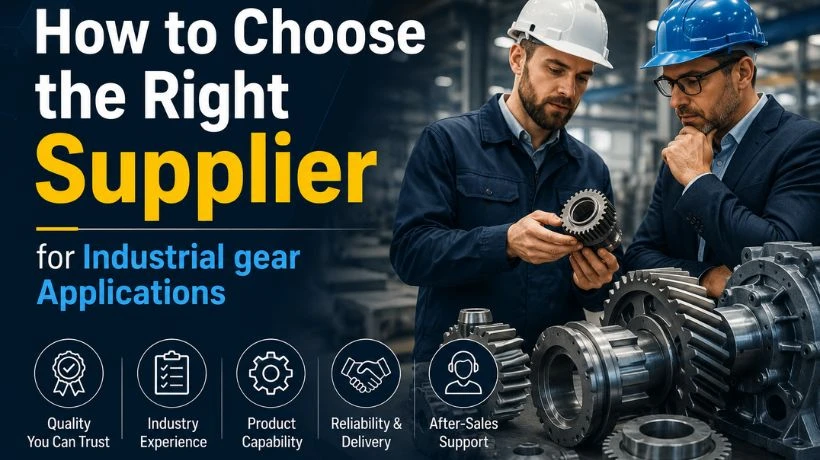
Choose the right Precision Gear supplier with proven quality, certifications, and delivery control. Avoid costly sourcing mistakes today.
A delayed shipment usually starts long before the truck misses the gate slot. It starts when a buyer picks a vendor based on a low quote, vague tolerances, or a factory that cannot explain how its Precision Gear inspection process actually works. Across India, procurement teams working with Precision Gears Suppliers in India are under pressure to cut lead times without inheriting quality disputes six months later.
Most buyers learn this after the first rejected batch.
Industrial sourcing is rarely about finding the cheapest part. It is about finding a supplier that can hold tolerances consistently, document material traceability, respond during production issues, and still ship on schedule during raw material fluctuations. That matters even more when dealing with Small Gears Manufacturers in India, where micron-level variation can affect torque transfer, noise levels, and gearbox life.
The Spec Detail Most Buyers Skip During Supplier Evaluation
A surprising number of buyers ask for pricing before confirming process capability.
That's backwards.
Material Grade Consistency Matters More Than Catalog Claims
Many Gears Manufacturers In India advertise alloy steel components, but few explain heat-treatment variation batch-to-batch. A gear hardened to 58 HRC behaves differently from one fluctuating between 52–56 HRC under continuous industrial load.
Which means the supplier should provide:
-
Material test certificates
-
Hardness reports
-
Runout inspection records
-
Surface finish data
-
Batch traceability documentation
A supplier unwilling to share these during sampling usually becomes difficult after purchase orders are issued.
Gear Tolerance Is Not Just a Design Number
AGMA and DIN tolerance compliance directly affects vibration and wear. According to AGMA standards, even small alignment deviations can reduce gear lifespan by over 30% in continuous-duty systems.
And yet, buyers still accept phrases like “standard industrial tolerance.”
That is not a specification.
Experienced Precision Gears Manufacturers will define:
-
Module accuracy
-
Backlash limits
-
Tooth profile inspection method
-
Concentricity range
-
Noise testing procedure
Nobody Talks Enough About Production Capacity Planning
One overlooked issue in industrial sourcing is machine loading. A factory running hobbing machines at 95% utilization often struggles during demand spikes.
Nobody tells you this until deliveries start slipping.
Ask suppliers:
-
How many hobbing lines they operate
-
Average dispatch lead time
-
Monthly production capacity
-
Emergency production handling process
A vague answer usually means the factory is outsourcing part of the job quietly.
5 Criteria That Separate Reliable Suppliers From Risky Ones
1. Certification Without Process Discipline Means Very Little
ISO certification matters. But certification alone does not guarantee manufacturing discipline.
A supplier who cannot explain calibration schedules for inspection instruments probably treats certification as wall decoration.
Bad answer:
“We check quality before dispatch.”
Reliable answer:
“We perform in-process inspection after hobbing, heat treatment, and final grinding.”
2. The Supplier Should Understand Application Load, Not Just Drawings
Good Small Gears Suppliers ask how the gear will operate. Conveyor duty cycles, shock loading, RPM variation, lubrication method — all of it matters.
A weak supplier only asks for dimensions.
That's usually where future failures begin.
3. Communication Speed Is a Procurement Metric
Delayed replies create delayed production.
Procurement managers already know this. A supplier taking four days to answer a technical clarification during sampling rarely becomes faster after advance payment is released.
Most professional Gears Suppliers in India respond to drawing reviews within 24–48 hours because production planning depends on it.
4. Tooling Ownership Must Be Defined Early
This becomes a serious dispute point in OEM manufacturing.
Who owns custom tooling? Who pays for maintenance? What happens if annual volume drops?
Many buyers skip this conversation entirely, then struggle to recover tooling after supplier disagreements.
5. Sampling Quality Tells You More Than Sales Presentations
The first sample batch reveals everything:
-
Burr quality
-
Surface finish consistency
-
Packaging discipline
-
Inspection seriousness
-
Documentation accuracy
A supplier sending poorly labeled samples while promising export-grade production is already showing you how future shipments will arrive.
Believe that evidence.
How the Right Supplier Protects Margins, Not Just Production
Lower Rejection Rates Reduce Hidden Operational Cost
Industrial rejection costs extend beyond replacement parts. Line stoppages, re-inspection labor, freight correction, and customer penalties compound quickly.
According to manufacturing studies, quality failures can consume 15–20% of operational revenue in industrial supply chains.
Reliable Precision Gears Suppliers reduce those downstream losses through repeatability.
Better Surface Finish Extends Equipment Life
Poorly finished gear teeth increase friction and heat generation. Over time, that affects gearbox efficiency and bearing performance.
Which means lower maintenance frequency for the buyer.
Predictable lead times help better manage inventory.
Factories that rely on sourced parts experience frequent delays from shipping, customs, or even the value of the currency.
This is one of the reasons that most OEMs prefer to source from Small Gears Manufacturers or suppliers that are located within India.
Good Sourcing Documentation is Beneficial for Audits
-
All OEM Procurement teams want:
-
PPAP
-
Traceable parts
-
Inspection reports
-
Heat-treatment certification
Having suppliers that are fully prepared in these areas takes a lot of the compliance work away from the buyers.
Packaging Standards Matter More Than Buyers Expect
One damaged gear tooth during transit can reject an entire shipment lot.
And yet some suppliers still use thin corrugated packaging for hardened steel components.
That is careless manufacturing discipline.
Why Location Is a Supply Chain Decision, Not Just an Address
India’s industrial manufacturing clusters offer real logistical advantages. Buyers sourcing from established regions like Delhi NCR, Gujarat, Pune, Rajkot, and Coimbatore often gain better access to:
-
Raw material suppliers
-
Heat-treatment vendors
-
Tooling support
-
Freight connectivity
For export buyers, working with experienced Gears Manufacturers near ICD facilities or major ports can reduce dispatch bottlenecks significantly.
Many global buyers sourcing from Precision Gears Suppliers in India also prefer factories with existing export documentation systems because customs paperwork errors delay shipments faster than production issues.
We Learned Early That Inspection Discipline Cannot Be Delegated
At Swadeshi Gears, we have spent years working with wholesalers, OEM buyers, and industrial procurement teams that cannot afford inconsistent gear performance. Our focus stays on controlled manufacturing, accurate specifications, and repeatable production quality across every batch.
We export to 31 countries, and that experience changed how we approach production scheduling. A shipment delayed by even three days can disrupt assembly timelines overseas, especially for buyers running lean inventory systems.
Back in 2021, we replaced one packaging method entirely after repeated transit feedback from a Middle East buyer handling hardened small gears in bulk cartons. The gears themselves were fine. Edge contact during transport was the problem. We redesigned the internal separators instead of arguing about claims.
That is how long-term manufacturing relationships are actually built.
Send the Drawing Before You Send the Purchase Order
If you are evaluating Precision Gears Manufacturers or comparing Small Gears Suppliers, send us:
-
Technical drawings
-
Module specifications
-
Material grade requirement
-
Annual quantity estimate
-
Application details
-
Target delivery schedule
We typically respond within one business day for technical review requests. MOQ depends on gear type and machining complexity, but we discuss it clearly before sampling begins.
Conclusion
Choosing the right Precision Gear supplier is rarely about brochures or price sheets. It comes down to process discipline, inspection credibility, communication speed, and whether the factory understands industrial risk the same way you do. Buyers working with experienced Gears Suppliers usually spend less time firefighting after dispatch. And as industrial lead times tighten across global supply chains, reliable manufacturing partnerships will matter even more over the next few years.
Here is another blog you might be interested in.
Top 7 Factors That Define High-Quality Small Gears for Industrial Machines
FAQs
How to Analyze Precision Gears Suppliers in India Before Bulk Ordering?
To begin with, sample quality, inspection, and production agility. I would recommend sample less Gears Suppliers in India, ask for hardness publish, ask for tolerance papers, and ask for export reference. If Supplier of Gears in India avoids conversation and only blocks the price, it is a warning signal.
What is your opinion of Small Gears Manufacturers in India for export quality production?
Many Indian farmers are interested in Gears and India is consistently exporting Industrial accessories to Europe, South East Asia, and the Middle East. How does one differentiate rather than a manufacturing companies? Request for Factory Gears Gears Buyers in India, Process, and the Capability of Gears Manufacturers in India to do
What industries use Precision Gear products the most?
Precision and Gear products are commonly found in Automotive Systems, Conveyors, textile gear, robotics, Gear of Agriculture, and the Gears and Industrial Automation.
What are the reasons behind the shift of buyers from import suppliers to local Gears Suppliers in India?
One of the factors is Lead-time uniformity. Since 2020, import delays, and currency and freight fluctuations have led many OEMs to local sourcing. And sourcing domestically also provides better communication during the design process.
Does everyone among Precision Gears Manufacturers do customized gear development?
No. Some manufacturers only produce their standard items. For customized Gear to be offered, there is a rigorous requirement of Gear, Gear, and IT.Buyers should verify this before finalizing tooling investment.
What should I ask Small Gears Suppliers during technical discussions?
Ask about:
-
Heat-treatment process
-
Gear inspection stages
-
Material sourcing
-
Surface finish control
-
Monthly production volume
And ask who handles failures. A supplier saying “we’ll see after dispatch” is already giving you the wrong answer.
Are Indian Gears Manufacturers In India competitive on quality or only pricing?
Quality varies widely. Some factories compete only on low pricing and loose tolerances. Others operate with export-grade inspection systems and strict process controls. Buyers need to separate the two carefully instead of assuming every low-cost quote offers the same manufacturing standard.


Comments
Login to Comment