How to Choose the Right Hydraulic Oil Cooler for Industrial Machines
09 May, 2026
1788 Views 0 Like(s)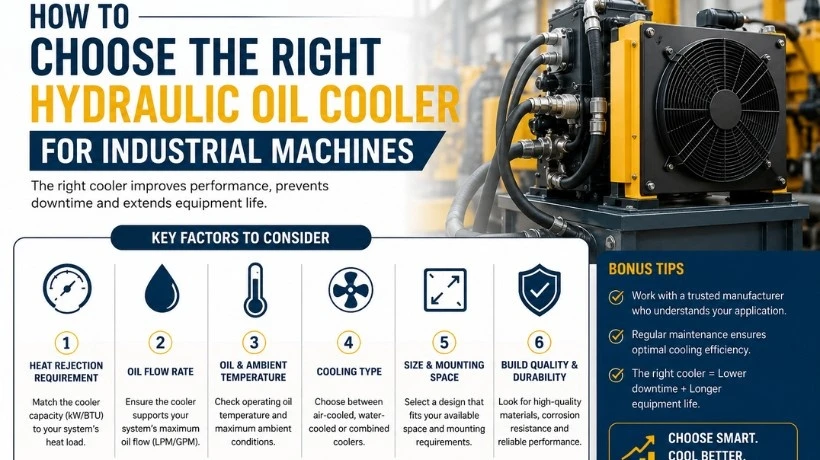
Choose the right Hydraulic Oil Cooler for industrial machines. Learn specs, supplier checks, and buying tips from experienced Indian manufacturers.
A hydraulic press that runs at 78°C for three months straight usually doesn’t fail dramatically. It slows first. Oil viscosity drops. Seals harden. Operators start hearing a whining pump during the second shift. Then production stops without warning. That’s why choosing the right Hydraulic Oil Cooler is less about accessories and more about machine survival.
Most buyers compare only dimensions and flow rate. That mistake gets expensive fast. A poorly matched Hydraulic Oil Cooler Heat Exchanger can increase oil contamination, raise power consumption by 8–12%, and shorten hydraulic component life by nearly 40% according to fluid power maintenance studies.
The Specification Detail Most Procurement Teams Skip
Industrial cooling systems are rarely “standard,” even when suppliers pretend they are.
Core Types of Hydraulic Heat Exchanger Systems
Air-Cooled Hydraulic Oil Coolers
These use ambient air and fan assemblies to reduce oil temperature. They’re common in mobile equipment, construction machinery, and compact industrial units where water availability is inconsistent.
And yet, buyers often underestimate ambient temperature impact. Cooler performance at 25°C workshop conditions will be much different at a steel plant working at 46°C in the summer in western India.
Water-Cooled Hydraulic Oil Coolers
Water-cooled systems are faster cooling and can achieve tighter thermal stability. This is why they are used in almost all injection molding plants, rolling mills, marine systems and continuous-duty hydraulic applications.
Which means water quality suddenly matters more than many purchasing teams expect. High TDS water causes internal scaling surprisingly fast. We’ve seen shell-and-tube units lose cooling efficiency within 11 months because maintenance teams skipped water filtration.
Brazed Plate Heat Exchangers
Compact. Efficient. Easier to install in space-restricted systems.
But they are less forgiving during oil contamination events. One bad flushing procedure after pump failure can block passages permanently.
The Temperature Range Buyers Should Actually Ask About
Most hydraulic systems operate efficiently between 45°C and 60°C oil temperature. Beyond 65°C, oxidation rates rise sharply. Seal degradation accelerates. Oil life drops almost by half for every 10°C increase above recommended operating range.
Nobody tells you this during quotation discussions because many suppliers are focused on closing orders, not reducing your maintenance budget.
The Overlooked Specification: Pressure Drop
This is where inexperienced sourcing teams get trapped.
A cooler with excellent heat transfer but excessive pressure drop can hurt overall hydraulic efficiency. We’ve seen imported units create pump cavitation issues simply because the pressure-loss calculation was ignored during system matching.
That problem never appears in catalog photos.
Five Supplier Evaluation Criteria That Separate Reliable Vendors from Sales Traders
1. Ask for Actual Thermal Performance Data
A serious Hydraulic Heat Exchanger Manufacturer should provide heat rejection capacity, oil flow compatibility, and operating pressure ranges.
A bad answer sounds like this:
“We supply this model to many industries.”
That means nothing.
2. Check Manufacturing Consistency, Not Just Certifications
ISO certification matters. Process discipline matters more.
Some factories outsource core brazing or machining work during high-demand months. Tolerances start drifting. Leak complaints rise six months later.
Ask whether pressure testing is done on every unit or batch-tested randomly.
3. Verify Spare Availability Before Ordering
This becomes painful during breakdown season.
A supplier promising a 2-week dispatch but keeping zero fan motors, seals, or cores in stock is creating future downtime risk. Indian industrial buyers learned this the hard way during the 2021 logistics disruptions when imported cooling assemblies were delayed for 9–14 weeks.
4. Look at Application Experience, Not Product Brochures
Most buyers overlook this completely.
A vendor supplying coolers for CNC machines may not understand hydraulic shock loads inside forging presses or steel processing lines. Application mismatch causes more field failures than outright manufacturing defects.
5. Push Back on Vague Warranty Language
A supplier who says “defects handled case by case” doesn’t have a warranty policy. That’s a future argument disguised as customer support.
Get written clarity on leakage coverage, pressure failure responsibility, and replacement timelines.
Why the Right Hydraulic Oil Cooler Heat Exchanger Protects Margins
Lower Oil Replacement Costs
Hydraulic oil is expensive now. Especially premium-grade industrial fluids.
Maintaining stable temperatures can extend oil service intervals by 30–50%, depending on duty cycles and contamination control.
Reduced Unplanned Downtime
A failed hydraulic line already disrupts production. Add overheating to the same system and repair costs multiply quickly.
That’s particularly true in continuous production industries where every stopped hour affects dispatch schedules.
Better Pump and Seal Life
Heat damages seals quietly.
Once oil temperature remains high for extended periods, elastomer hardening accelerates. Pumps begin losing efficiency gradually, which makes troubleshooting harder because the decline feels “normal” until performance collapses.
Improved Energy Efficiency
Cooling systems influence power usage more than many operators realise. Stable oil viscosity reduces unnecessary hydraulic resistance and improves system response.
One automotive supplier in Pune reportedly reduced hydraulic energy consumption by almost 9% after correcting undersized cooling units across three production lines.
Fewer Contamination Problems
Overheated oil oxidises faster. Sludge formation rises. Filter loading increases.
That creates secondary maintenance issues buyers rarely connect back to cooling performance.
Longer Equipment Service Cycles
A properly selected Hydraulic Oil Cooler Heat Exchanger protects valves, hoses, seals, and servo systems simultaneously.
One correct cooling decision can delay a major overhaul cycle by years.
Why Indian Supply Location Changes Delivery Reliability
India’s industrial corridor matters more than overseas buyers often expect.
Most of the Hydraulic Oil Cooler Manufacturers in India can be found in the states of Gujarat, Maharashtra, Delhi NCR, and Tamil Nadu. This is mainly because of the presence of component ecosystems. Fan assemblies, aluminium cores, machining vendors, and testing facilities, are available to be sourced quickly.
That reduces lead-time volatility.
For export buyers, working with established Hydraulic Oil Cooler Suppliers and Hydraulic Heat Exchanger Suppliers in India also helps during container shortages because inland logistics coordination becomes easier near manufacturing hubs.
Most overseas buyers focus only on FOB price. Freight delays usually cost more than the discount they negotiated.
Built Through Real Factory-Side Experience
At N.T Associates, we’ve spent years working with hydraulic systems that don’t operate under ideal lab conditions. Dust-heavy workshops. High-load industrial presses. Machines running 20 hours daily because shutdown windows are limited.
We manufacture and supply Hydraulic Oil Cooler Heat Exchanger systems for industrial applications across India and export markets in 31 countries. Our team works directly with procurement managers, maintenance engineers, and OEM buyers who need stable performance — not just attractive catalogs.
Mistakes are also part of the job. In 2022, we changed the process of fin-bonding because of the heavy-duty equipment users operating in summer where the corrosion rates were higher than we expected. We adjusted the process instead of arguing with customers.
That matters in long-term supply relationships.
Send Operating Data Before You Finalise Your Next Cooler Order
If you’re sourcing a Hydraulic Oil Cooler, send us these details first:
-
Oil flow rate
-
Maximum operating temperature
-
Hydraulic pressure range
-
Machine application
-
Duty cycle hours
-
Installation space availability
We typically respond within one business day with sizing guidance and commercial details.
Our MOQ depends on model configuration and OEM requirements, especially for export orders and customised industrial assemblies.
Final Thoughts
The right Hydraulic Oil Cooler does far more than reduce temperature. It protects hydraulic stability, maintenance budgets, and production continuity at the same time. Buyers who evaluate only unit pricing usually pay later through downtime and replacement costs. As industrial machines continue operating under higher loads and longer shifts, properly matched cooling systems will become less optional and more operationally critical.
Here is another blog you might be interested in.
Hydraulic Heat Exchanger vs Hydraulic Oil Cooler: What’s the Real Difference?
FAQs
Should I choose an air-cooled or water-cooled Hydraulic Oil Cooler Heat Exchanger?
Air-cooled units function best where water supply is inconsistent or when a simple installation is prioritized. If there are many heavy-duty continuous applications, choose a water-cooled system. Maintenance is the downside. Poor water can create scaling problems at an alarming speed.
Why do buyers prefer in choosing Hydraulic Heat Exchanger Manufacturer in India?
This is due to shorter lead times, easy availability of spares, and, often, better communication during technical modifications. Also, many of the Indian manufacturers provide an option of custom sizing for OEM applications rather than being rigid to standard models and forcing the buyers to compromise.
What to do if hydraulic oil continues to overheat despite installing a cooler?
Sometimes the cooler isn’t undersized. The issue can be clogged filters, poor airflow, excessive pressure drop, or incorrect oil viscosity. We’ve also seen buyers install a correct cooler with an incorrect fan orientation.
Can all Hydraulic Oil Cooler Suppliers make custom designs?
No. Most traders depend on outsourcing fabrication and lose control over dimensions and thermal performance. Always ask the supplier whether they perform manufacturing in-house or outsource fabrication.
Which industries are the main users of products from Hydraulic Oil Cooler Heat Exchanger Manufacturers?
Steel manufacturing, injection molding, marine hydraulics, construction, and mining machinery, power plants, and CNC manufacturing all use hydraulic systems of controlled temperature on a large scale.
How many years can you expect a Hydraulic Heat Exchanger to last?
With the right amount of service, they can last for6–10 years or even longer. On the other side, they can go the opposite way very quickly. Cleaning schedules that are neglected and oil that is dirty are sure to shorten the lifespan.
Are imported coolers always better than Indian-made systems?
Not necessarily. Some imported systems are excellent. Others are difficult to service locally and expensive to maintain. Buyers often underestimate spare part delays until a breakdown happens.


Comments
Login to Comment