How PVD Coatings Protect Medical Implants Against Corrosion from Bodily Fluids and Sterilization
08 Apr, 2026
2813 Views 0 Like(s)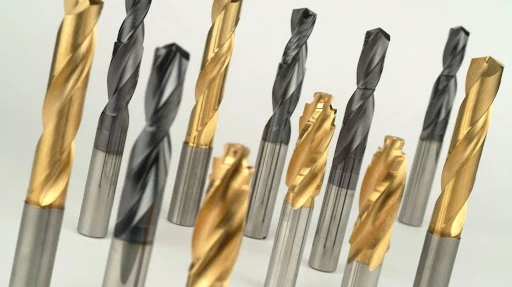
Medical implants and surgical instruments face constant chemical attack from bodily fluids and repeated sterilization cycles. Corrosion resistant coatings for medical implants place a chemically inert barrier between the base metal and these conditions. Understanding which PVD coatings protect against which corrosion mechanisms helps manufacturers specify with confidence.
How Corrosion Attacks Medical Components
Corrosion on medical components typically follows one of three patterns.
Uniform corrosion occurs when the entire exposed surface degrades at a roughly consistent rate. This is the most predictable form and is managed by selecting a coating with broad chemical inertness.
Pitting corrosion is localized and more dangerous. Chloride ions in bodily fluids penetrate the passive oxide layer on stainless steel or cobalt-chrome substrates, creating small but deep pits that concentrate stress and can initiate fatigue cracks. Pitting is particularly problematic on implants that bear mechanical load.
Crevice corrosion develops in tight gaps, between a screw head and a bone plate, within modular junctions, or at the interface of mating surfaces. Restricted fluid flow in these areas creates localized chemistry changes that accelerate attack on unprotected metal.
A properly selected PVD coating seals the substrate surface against all three mechanisms by providing a continuous, non-reactive film that prevents direct contact between the metal and the corrosive environment.
Which PVD Coatings Protect Against These Conditions
Medical PVD coating services typically focus on three coating types, each with distinct properties suited to different device requirements.
CrN (Chromium Nitride) provides strong corrosion resistance with a hardness of 1,800 HV, a COF of 0.30, and a max working temperature of 700°C. Its silver-grey appearance is discreet on surgical instruments, and its chemical stability holds up through repeated autoclaving and chemical disinfection. CrN is commonly applied to reusable instruments, orthopedic tools, and mold components used in medical plastics manufacturing.
ZrN (Zirconium Nitride) adds biocompatibility to the corrosion-resistance equation. At 2,400 HV with a COF of 0.30 and a champagne-gold appearance, ZrN is specified for devices where direct tissue or fluid contact occurs. Dental instruments, surgical guides, and select implantable components benefit from ZrN's combination of corrosion protection and biological inertness.
DLC (Diamond-Like Carbon) provides the lowest friction option at COF 0.05 to 0.1 with chemical inertness and very high hardness with diamond-like hardness characteristics. DLC does not react with bodily fluids, cleaning agents, or sterilization chemicals, making it well suited to instruments that require smooth articulation and long-term surface stability. Its max working temperature of 300°C comfortably exceeds standard autoclave temperatures (121 to 134°C).
Sterilization Compatibility in Practice
Every reprocessing cycle is a chemical and thermal event that tests the coating's adhesion and integrity. For reusable surgical instruments that may be autoclaved hundreds of times over their service life, the coating must resist degradation without chipping, discoloring, or losing adhesion.
PVD coatings applied at 1 to 4 µm thickness bond at an atomic level to the substrate during vacuum deposition. This adhesion mechanism is more resilient to thermal cycling than electroplated or painted finishes that rely on mechanical or chemical bonding. When the substrate is properly prepared and the coating is matched to the base metal, PVD films maintain their integrity through steam autoclaving, EtO sterilization, and hydrogen peroxide plasma exposure.
What Biocompatibility Does and Does Not Mean
PVD coatings like ZrN and DLC are generally recognized as biocompatible, meaning they do not provoke adverse biological responses when in contact with tissue. However, biocompatibility is application-specific. A coating validated for a reusable instrument that contacts tissue briefly during a procedure may require additional testing for a permanent implant that remains in the body for years.
Corrosion resistant coatings for medical implants must be evaluated within the regulatory framework applicable to the specific device classification, intended use, and duration of contact. Your regulatory and quality teams should treat coating biocompatibility as one input in the broader device submission, not as a standalone approval.
Choosing the Right Coating Partner
Medical PVD coating services require more than a vacuum chamber and a target material. The coating provider should demonstrate ISO 9001:2015 certification with documented lot traceability, experience with medical-grade substrates (stainless steel, titanium, cobalt-chrome), and the ability to work collaboratively with your engineering and quality teams on coating selection, substrate preparation, and inspection criteria. The documentation that ships with the coated parts matters as much as the coating itself.



Comments
Login to Comment