How Property Developers Balance Scale, Sustainability, And Smart Design
27 Feb, 2026
6409 Views 0 Like(s)
Learn how property developers balance scale, sustainability, and smart design to create future-ready residential and commercial developments.
Cities grow in layers. First comes demand, then construction, and finally the question that lingers long after buildings rise. Was this growth thoughtful, or was it rushed? Today, property developers operate in a space where size alone no longer defines success. The real challenge lies in building at scale without exhausting resources, disrupting communities, or sacrificing long-term value.
Modern development is a careful balancing act. Bigger footprints invite bigger responsibility. Sustainability is no longer a side discussion, and smart design has moved from optional to expected. This article explores how these three forces intersect and how thoughtful planning turns tension into cohesion.
Understanding Scale Beyond Square Footage
Scale is often misunderstood. It is not just about taller towers or larger land parcels. True scale is operational. It includes timelines, supply chains, infrastructure pressure, and the daily lives that will unfold inside those walls.
When projects expand, complexity multiplies. Parking, circulation, safety, utilities, and maintenance all require foresight. The smartest large-scale developments are those that feel intuitive once completed. Residents should not sense the complexity that went into making the place work.
This is where planning discipline becomes essential. Phased construction, modular layouts, and future-ready infrastructure allow scale to grow without chaos.
Sustainability as a Structural Decision, Not a Feature
Sustainability used to mean green labels and rooftop gardens. That mindset has shifted. Today, it begins much earlier, at the drawing board.
Core sustainability choices developers now prioritize
● Site orientation to reduce heat gain
● Efficient building envelopes to stabilize indoor temperatures
● Water management systems that reduce dependency on municipal supply
● Material selection that balances durability with environmental impact
These decisions shape operating costs for decades. They also influence how buildings age.
Below is a simplified view of how early choices affect long-term outcomes.
|
Planning Area |
Short-Term Impact |
Long-Term Benefit |
|
Energy systems |
Slightly higher setup cost |
Lower lifetime energy use |
|
Water recycling |
Additional planning time |
Reduced water dependency |
|
Material quality |
Higher upfront spend |
Fewer repairs over time |
Sustainability, when embedded correctly, becomes invisible. That invisibility is its strength.
Smart Design That Serves People First
Smart design is not about filling spaces with technology. It is about understanding behavior.
How do people move through a lobby during peak hours? Where does noise travel? How does daylight affect productivity or rest? These questions guide design decisions that cannot be fixed later with gadgets.
Good design anticipates friction points before they appear. Corridors that breathe, lifts that do not bottleneck, and shared spaces that invite use rather than feel ornamental.
In urban hubs, especially those shaped by mixed-use growth, design must also adapt to changing work patterns. Developments near business corridors often blur the line between residential and commercial needs.
This is where experience matters. A real estate company in Gurgaon working within dense, fast-evolving zones understands that design must remain flexible long after handover.
Technology as an Enabler, Not the Centerpiece
Smart buildings are often discussed in terms of apps and automation. In reality, technology works best when it supports decisions already made through good design.
Practical smart systems now integrated at scale
● Energy monitoring for common areas
● Predictive maintenance systems for critical equipment
● Smart access control that improves security flow
● Data-backed facility management
The goal is not complexity. It is consistency. Technology should simplify operations for residents and managers alike.
When technology fails, design carries the load. That is why the smartest developments never rely on systems alone.
Managing Construction Without Losing Vision
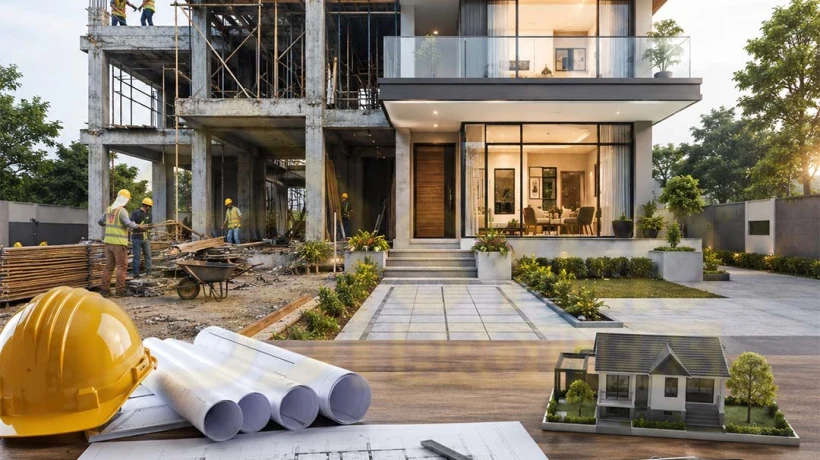
Execution is where many plans falter. Scaling responsibly requires discipline on-site.
Large projects demand coordination between architects, engineers, contractors, and suppliers. Delays in one area ripple quickly. Cost overruns often stem from misalignment rather than ambition.
This is why collaboration with an experienced construction company in Gurgaon becomes critical. Construction expertise ensures that sustainability goals and design intent survive real-world constraints.
Value engineering, when done right, refines projects without diluting them. When done poorly, it strips away purpose.
Commercial Development Adds Another Layer
Commercial projects raise the stakes further. Offices must perform. They must attract tenants, adapt to changing work cultures, and remain efficient under heavy daily use.
Smart commercial design now prioritizes:
● Flexible floor plates
● Efficient vertical circulation
● Energy-conscious HVAC zoning
● Employee wellness features
These elements influence occupancy rates and long-term asset value. In competitive markets, they are no longer differentiators. They are expectations.
Balancing Today’s Demand With Tomorrow’s Reality
Perhaps the hardest part of development is resisting short-term thinking. Markets shift. Lifestyles change. Regulations evolve.
The best projects are those that age gracefully. They allow conversion, expansion, and adaptation without disruption. That resilience is not accidental. It is designed.
Developers who understand this plan are not just for sale, but for life after completion.
Conclusion
The modern built environment reflects choices made years earlier. When done well, those choices fade into the background, supporting daily life without demanding attention.
Today’s property developers must think beyond delivery dates and sales milestones. They must balance ambition with restraint, technology with empathy, and growth with responsibility. In evolving markets that include residential and commercial office space in Gurgaon, this balance defines long-term relevance.
It is this measured approach that guides developers like MNB Buildfab, who view scale, sustainability, and smart design not as competing goals, but as parts of the same conversation.

Comments
Login to Comment