How Does a Public Safety Command Center Improve Emergency Coordination?
27 Aug, 2026
488 Views 0 Like(s)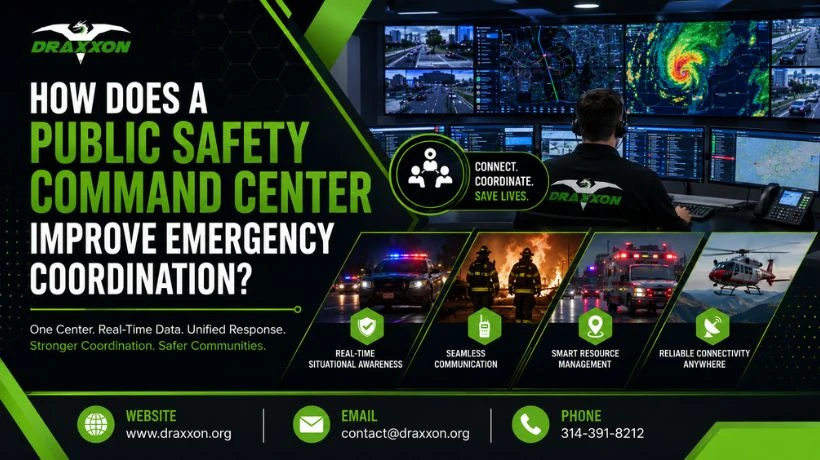
A public safety command center is an integrated system that allows the combination of emergency responders, real-time data, and communications. The concept of interoperability, situational awareness, resource management, and mobile solutions in a command center assists various emergency response units like police, fire, EMS, and emergency management in making informed decisions.
In a large disaster, the largest difficulty isn’t often a lack of responders. The challenge may be in conveying the appropriate information to the right people at the right time. Police officers, firefighters, EMS teams, emergency management and other organizations may all be working toward the same goal, but using various systems and communication channels.
A public safety command center is a hub for decision-makers to gather information, communicate with teams in the field and coordinate the response. If a fixed facility is too far or local infrastructure is disrupted, mobile solutions can bring that capability closer to the situation.
Emergency Teams Need a Shared Operational Picture
An emergency can change quickly. Information that was accurate ten minutes ago may no longer reflect what is happening.
Different Agencies May See Different Parts of the Incident
Fire personnel may track the movement of a fire. Law enforcement may be dealing with road closures and evacuations. EMS teams could be reacting to injuries.
Coordination is more difficult when each group has incomplete information. A common command environment can incorporate vital updates and enable leaders to make choices on a more comprehensive perspective of the incident.
Real-Time Information Can Support Faster Decisions
Live video, location data, weather information and field reports can help command staff have a better handle on evolving conditions.
But the information still has to be examined. But being able to access real-time data can eliminate the time lag that occurs when data needs to be passed via a number of different teams before it gets to decision-makers.
A Central Location Can Reduce Confusion
A single point of coordination can also help to define who is responsible for making certain decisions.
This is especially beneficial in huge occurrences with many agencies and units working at the same time.
Communication Between Agencies Is Often the Hard Part
Emergency agencies may employ multiple radio frequencies, communication platforms and operating protocols.
Interoperability Can Connect Separate Systems
A command environment can include technology designed to bridge communication between agencies.
This can allow responders using different systems to share information more effectively during an incident. Experts describe radio interoperability and integrated communication as important features for coordinating police, fire, and EMS operations.
Backup Connectivity Can Matter During Major Events
Storms, remote locations, and infrastructure damage can affect normal communication networks.
A mobile command platform may use combinations of cellular connectivity, radio systems, and satellite communications to maintain operational links when one network becomes unavailable.
Secure Communication Also Has a Role
Some emergency information should not be shared publicly.
A public safety security command center can support protected communications and controlled access to operational information. The specific security measures should match the agency's mission, systems, and policies.
Mobility Can Bring Command Closer to the Incident
A fixed emergency operations center has clear advantages. Yet it may not always be close to where the response is taking place.
Teams Can Establish Operations Near the Scene
A mobile command vehicle can serve as a working hub near a disaster, search operation, large public event, or other incident.
This allows command personnel to coordinate with teams while remaining closer to changing conditions on the ground.
Remote Areas Can Present Different Challenges
Search and rescue operations may take place far from reliable infrastructure.
Portable and mobile command solutions can provide communications and situational awareness tools that travel with the operation. Professional public safety solutions include mobile and portable configurations designed around different mission requirements.
The Setup Can Be Adapted to the Mission
A command vehicle used for wildfire response may need different capabilities from one supporting a major public event.
Customised layouts and technology can help agencies build around their existing workflows rather than forcing every mission into the same setup.
Better Coordination Can Improve Resource Management
Emergency response involves more than communication.
Command staff also need to understand where people, vehicles, and equipment are needed.
Resources Can Be Tracked More Clearly
Location data and field updates can help teams understand where responders are deployed.
That information may support decisions about moving personnel, redirecting equipment, or adjusting an operational plan as conditions change.
Agencies Can Respond to Changes Together
Consider a rapidly changing weather event.
Road closures may need to change. Evacuations may need to expand. Medical teams may need to move to another location.
A public safety command center can provide a place where information is reviewed and response decisions are coordinated across the agencies involved.
Planning Can Continue During the Response
The immediate incident receives most of the attention.
However, command staff may also need to prepare for what happens next. They might plan additional evacuation routes, arrange incoming resources, or prepare for another change in conditions.
A central workspace can support both immediate coordination and ongoing operational planning.
FAQs
What is the main purpose of a public safety command center?
Its main goal is to act as a central point of communication, information exchange, coordination and operational decision-making during public safety operations or emergencies.
Can a mobile command center support more than one agency?
Yes. Mobile command systems can be configured to support joint operations involving law enforcement, fire departments, EMS, emergency management, and other authorised organisations.
What technology is commonly used inside a command center?
The configuration depends on the mission. Systems may include radios, satellite communications, cellular connectivity, video displays, mapping tools, location tracking, and equipment for sharing information securely.
Coordination Depends on More Than Equipment
Technology alone cannot manage an emergency. Agencies still need trained people, clear procedures, and effective leadership.
What a well-designed public safety command center can provide is a stronger environment for bringing those elements together. When responders can share information, communicate across teams, and maintain a clearer view of the incident, coordination can become more organised when conditions are changing quickly.


Comments
Login to Comment