How Does a 1.5-Ton AC Stabilizer Price Impact Long-Term Appliance Safety?
17 Sep, 2026
10 Views 0 Like(s)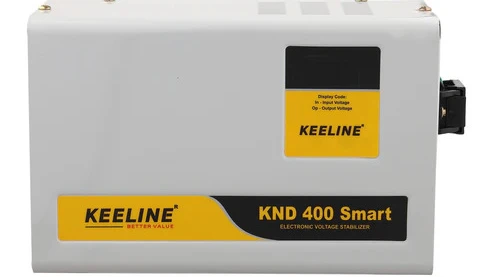
Buying an air conditioner is a significant investment, so protecting it from voltage fluctuations can help support reliable performance over time. Unstable electricity, sudden voltage changes, and low or high voltage conditions can place stress on an AC's electrical components. A suitable stabilizer can help regulate the incoming voltage and provide an additional layer of protection for the appliance.
Buying an air conditioner is a significant investment, so protecting it from voltage fluctuations can help support reliable performance over time. Unstable electricity, sudden voltage changes, and low or high voltage conditions can place stress on an AC's electrical components. A suitable stabilizer can help regulate the incoming voltage and provide an additional layer of protection for the appliance.
For homeowners with a 1.5-ton air conditioner, comparing the AC stabilizer 1.5 ton price is often one of the first steps when shopping. However, price should not be the only consideration. The stabilizer's capacity, voltage range, protection features, construction, and compatibility with the AC can all influence its long-term value.
Why Does AC Stabilizer Price Matter?
The price of an AC stabilizer can vary based on its capacity, technology, voltage regulation range, protection features, and build quality. A basic model may have essential voltage regulation, while another model may include features such as thermal overload protection, surge protection, time delay, and a digital display.
When considering the AC stabilizer 1.5 ton price, buyers should compare what they receive for the price rather than simply selecting the cheapest product. A low-cost stabilizer may appear attractive initially, but it may not provide the specifications required by a particular AC or local voltage conditions.
At the same time, a higher-priced model is not automatically the right choice. The objective is to select a stabilizer that matches the appliance's requirements.
How Does a Stabilizer Protect a 1.5-Ton AC?
An AC stabilizer is designed to regulate fluctuations in the incoming electrical supply within its specified operating range. If the voltage becomes too low or too high, the stabilizer can adjust the output to a suitable level, depending on its design and specifications.
This can be useful because modern air conditioners contain sensitive electronic components, including control boards, sensors, compressors, and other electrical systems. A suitable stabilizer can provide an additional layer of protection against voltage-related issues.
However, a stabilizer cannot protect an appliance from every electrical problem. Proper wiring, earthing, circuit protection, and professional installation remain important.
Does a Higher AC Stabilizer Price Mean Better Safety?
A higher price does not automatically guarantee better protection. Price differences can result from additional features, higher-quality components, wider voltage ranges, greater capacity, warranty coverage, or other product specifications.
For a 1.5-ton AC, buyers should first determine the electrical requirements of their particular appliance. Different AC models can have different power requirements, so tonnage alone should not be the only factor used when selecting a stabilizer.
Look at the stabilizer's rated capacity, input-voltage range, output voltage, protection features, and manufacturer recommendations before making a purchase.
Why Is Input Voltage Range Important?
Input voltage range is an important specification because it determines the conditions in which the stabilizer can regulate the incoming supply.
Homes in areas with frequent voltage fluctuations may require a stabilizer capable of operating across a suitably wide voltage range. If the incoming voltage falls outside the stabilizer's specified range, its regulation capabilities may be limited.
Therefore, before comparing an AC stabilizer 1.5 ton price, understand the voltage conditions where the AC will be installed. This can help you select a model that is appropriate for your electrical environment.
What Features Should You Consider?
Price becomes more meaningful when you compare the features and specifications offered by different models. Depending on your requirements, useful features can include:
-
Wide input-voltage operating range
-
Overload protection
-
Thermal protection
-
Surge protection
-
Time-delay functionality
-
Digital voltage display
-
Suitable load capacity
-
Durable enclosure and components
-
Warranty and after-sales support
Not every buyer needs every feature. The most important thing is to ensure that the stabilizer meets the AC manufacturer's requirements and is suitable for the local power supply.
Can a Cheap Stabilizer Affect Long-Term Appliance Safety?
Choosing a low-priced stabilizer is not necessarily a problem if the product is properly rated and suitable for the AC. The concern comes when price becomes the only purchasing criterion.
For example, selecting a stabilizer with inadequate capacity or an unsuitable input-voltage range simply because it costs less may leave the appliance without the intended level of voltage regulation.
Since an AC can be considerably more expensive than its stabilizer, buyers should consider the stabilizer as part of the overall electrical protection setup rather than focusing only on the initial purchase cost.
How Does the Right Price Improve Long-Term Value?
The right price is one that reflects suitable specifications, dependable construction, relevant protection features, and appropriate warranty support. A properly matched stabilizer can be a practical investment because it is designed to work with the connected appliance under specified electrical conditions.
For someone comparing the AC stabilizer 1.5 ton price, consider the total value rather than just the upfront cost. A model with appropriate protection and a suitable voltage range may offer greater practical value than a cheaper product that does not match the installation requirements.
Should You Install a Stabilizer With Every 1.5-Ton AC?
Not every 1.5-ton AC necessarily requires an external stabilizer. Some newer air conditioners are designed to operate across a wider voltage range and may include built-in voltage protection.
The best approach is to check the AC manufacturer's specifications and recommendations. If your home experiences frequent voltage fluctuations, a suitable external stabilizer may provide an additional layer of protection.
Professional installation is also important. An incorrectly installed stabilizer cannot be expected to provide its intended performance.
Tips for Choosing an AC Stabilizer
Start by identifying the exact AC model and its electrical requirements. Then assess the voltage conditions in your area. Compare stabilizers based on their capacity, operating range, protection features, warranty, and manufacturer specifications.
Do not assume that a product designed for one 1.5-ton AC will automatically be ideal for every other 1.5-ton model. The electrical characteristics of the appliance and stabilizer should be compatible.
It is also useful to choose a product from a manufacturer that provides clear specifications and after-sales support.
Conclusion
The AC stabilizer 1.5 ton price can provide useful information about the features and specifications offered by different products, but price alone should not determine your choice. Long-term appliance safety depends more directly on selecting a stabilizer that is correctly matched to the AC and the electrical conditions where it will operate.
Before purchasing an AC stabilizer, compare its voltage range, capacity, protection features, construction, warranty, and compatibility with your air conditioner. A suitable product can provide an additional layer of voltage protection and support more reliable AC operation over time.
Frequently Asked Questions
1. What is the right stabilizer for a 1.5-ton AC?
The right stabilizer depends on the AC's electrical specifications, power requirements, and the voltage conditions at your location. Check the AC manufacturer's recommendations and the stabilizer's rated capacity before purchasing.
2. What is the AC stabilizer 1.5 ton price?
The price varies depending on the brand, capacity, voltage range, technology, protection features, and warranty. Comparing specifications alongside price is more useful than choosing a stabilizer based solely on cost.
3. Does a 1.5-ton AC require a stabilizer?
Not always. Some modern ACs have built-in voltage protection or are designed to operate across a wider voltage range. If your area experiences frequent voltage fluctuations, an external stabilizer may provide additional protection.
4. What voltage range should an AC stabilizer have?
There is no single voltage range suitable for every installation. The required range depends on the electrical conditions at your location and the AC manufacturer's specifications. A qualified electrician can help assess your supply if fluctuations are frequent.
5. Can an AC stabilizer increase the life of an AC?
A suitable stabilizer can help protect an AC from certain voltage fluctuations within its specified operating range. However, it does not guarantee a longer appliance lifespan. Regular servicing, correct installation, proper wiring, and appropriate usage are also important for long-term AC performance.



Comments
Login to Comment