How Do Turnkey Interior Fit-Out Services in India Improve Retail Store Planning
08 May, 2026
1794 Views 0 Like(s)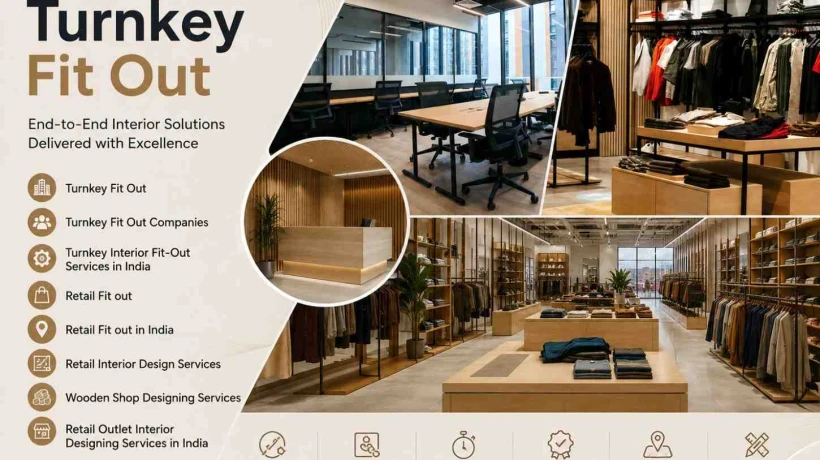
A delayed store launch usually starts long before the carpenters arrive. It starts when the branding agency, civil contractor, lighting vendor, and procurement team are all working from different drawings. That’s exactly why more retail chains now prefer Turnkey Fit Out execution instead of splitting responsibility across five vendors who blame each other once the site slips behind schedule.
A delayed store launch usually starts long before the carpenters arrive. It starts when the branding agency, civil contractor, lighting vendor, and procurement team are all working from different drawings. That’s exactly why more retail chains now prefer Turnkey Fit Out execution instead of splitting responsibility across five vendors who blame each other once the site slips behind schedule.
In retail, delays cost more than rent. A mid-sized apparel outlet in India can lose 18–25 selling days during a badly coordinated setup cycle, especially before festive launches. And yet many buyers still choose suppliers based only on the lowest interior quotation. That mistake becomes painfully expensive once rework begins. A poor Retail Fit out contractor rarely admits mistakes early. They wait until the ceiling closes and electrical conflicts become visible.
The Real Planning Problem Most Retailers Discover Too Late
Retail planning is not furniture placement. It is movement engineering.
Customers enter, pause, touch products, queue, turn around, and leave within a predictable behavioural pattern. According to multiple Indian retail consultancy reports, shoppers spend nearly 70% of their time within the first one-third of a store footprint. Which means bad planning near the entrance quietly kills conversion rates before product quality even matters.
That’s where experienced Turnkey Fit Out Companies make a measurable difference. They coordinate design intent with execution realities instead of treating drawings like presentation material.
One missing conduit can delay an entire storefront lighting sequence.
Why Turnkey Fit Out Improves Retail Store Planning
A fragmented project creates fragmented accountability. Retailers feel this most during multi-location expansion. One contractor blames late approvals. Another blames site readiness. The vendor handling display fixtures says the flooring team changed dimensions.
Meanwhile, the launch date disappears.
A proper Turnkey Interior Fit-Out Services in India model centralises responsibility under one execution structure. Design, procurement, fabrication, electrical work, ceiling installation, signage integration, and final handover move through one coordinated timeline.
That reduces three major retail risks:
-
Site coordination errors
-
Material mismatch between drawings and execution
-
Vendor scheduling conflicts
Most buyers underestimate how difficult retail execution becomes once three trades start working simultaneously inside a 1,200-square-foot site.
Material Specifications That Quietly Affect Retail Durability
Not every laminate survives Indian retail traffic equally.
Ceiling and Lighting Coordination
Retail lighting layouts typically require spacing precision within 15–25 mm tolerance for visual symmetry. Cheap contractors often shift fixtures onsite because they skipped proper marking during false ceiling preparation.
Customers notice uneven lighting faster than buyers expect.
Flooring Load and Wear Resistance
High-footfall stores should evaluate abrasion resistance ratings before approving tiles or vinyl flooring. Fashion retailers with metal racks usually need stronger substrate preparation than cosmetic stores.
That detail gets skipped constantly.
Joinery Accuracy in Wooden Displays
Professional Wooden Shop Designing Services depend heavily on edge banding quality, moisture resistance, and dimensional consistency. Poorly calibrated modular fixtures start swelling within months in humid regions like Mumbai or Chennai.
A polished render means nothing if the drawers jam after 90 days.
Electrical Load Planning
Retailers expanding POS systems, trial room lighting, and digital displays often underestimate future electrical loads by 18–22%. Experienced fit-out planners leave capacity margins during initial execution instead of reopening ceilings later.
HVAC and Customer Movement
Cold spots near entrances reduce dwell time. That sounds minor until sales reports confirm it. Proper airflow planning matters more in retail than many procurement teams realise.
The Supplier Evaluation Question Most Procurement Teams Avoid
1. Ask Who Owns Delay Responsibility
Good answer: One project manager controls execution schedules.
Bad answer: “Different teams handle different stages.”
That usually translates into zero accountability once work slows down.
2. Check Whether Drawings Match Site Reality
Good answer: The contractor performs physical site verification before fabrication.
Bad answer: “We’ll adjust during installation.”
Adjustment onsite usually means cutting corners.
3. Ask About Material Substitution Policy
Good answer: Written approval required before substitutions.
Bad answer: “Equivalent materials will be used if needed.”
Equivalent according to whom?
4. Evaluate Multi-City Execution Capability
Good answer: Standardised vendor management across regions.
This is a poor answer: "We confirm something like that when we employ other contractors."
Merely financially speaking, retail organizations cannot tolerate uneven final touches across various places.
5. Inspect Handover Documentation
Good answer: Electrical layouts, warranty documents, maintenance instructions.
Bad answer: “We complete work physically.”
That answer creates future maintenance chaos.
How Retail Fit out Execution Protects Profit Margins
Faster Store Launch Cycles
Retail rental costs in metro locations can cross ₹280–₹650 per square foot monthly. Delayed openings burn money immediately. Coordinated Retail Interior Design Services reduce idle rental exposure by tightening execution schedules.
Better Fixture Longevity
Cheap modular displays fail early at hinges, edge joints, and laminate corners. Proper fabrication reduces replacement costs across multiple store cycles.
Fewer Vendor Disputes
One contractor handling execution removes blame shifting between carpenters, electricians, flooring vendors, and signage installers.
That alone saves management bandwidth.
Standardised Brand Experience
Multi-store retail chains need identical customer experience across locations. Their services help with the alignment of fixtures, consistency of colors and display logic throughout their outlets in various cities in India.
Minimized Rework with Widening
For those who are looking to make changes in the future, it is helpful to have set wiring, organized documentation, and scalable fixture planning.
Better Inventory Visibility
Store planning affects stock movement directly. Narrow aisles and poorly designed gondolas reduce replenishment efficiency for staff during peak hours.
Most interior presentations never mention that operational reality.
Where Turnkey Interior Fit-Out Services in India Matter Most
Retail expansion in India is no longer concentrated only in Mumbai, Delhi, and Bengaluru. Tier-2 cities like Indore, Surat, Lucknow, and Coimbatore are seeing aggressive organised retail growth, especially in apparel, electronics, and beauty formats.
That changes supply chain expectations.
A contractor undertaking Turnkey Fit-Out execution across several regions must be aware of local sourcing delays, transportation timelines, mall compliance processes, and labour coordination discrepancies. For example, material movement inside premium malls in NCR often happens only during restricted night windows. Miss that slot once, and the project loses a full day.
Which means location affects execution strategy far more than brochures suggest.
Retail brands searching for Retail Fit out partners in India also increasingly prioritise vendors with in-house coordination capability instead of disconnected subcontractor networks.
About Defos Design
At Defos Design, we work closely with retail businesses that cannot afford execution confusion between design approval and site completion. We’ve seen projects fail because vendors treated retail interiors like residential decoration work. Retail spaces operate differently. Footfall pressure, fixture durability, lighting balance, customer circulation, and fast execution timelines all collide inside one project.
We coordinate planning, fabrication, execution, and finishing under one operational structure because fragmented responsibility slows stores down. In one apparel rollout project, we had to redesign cash counter wiring after discovering mall electrical shafts were positioned differently from approved drawings. That correction happened before ceiling closure. A less experienced contractor would have noticed it after finishing work — and billed the client again for rework.
We also recommend reviewing our internal resource on retail interior execution planning for businesses evaluating expansion timelines across multiple retail locations.
Defos Design responds to qualified project enquiries within 24 business hours. If you are planning a retail launch, renovation, kiosk rollout, or multi-city store expansion, send us your floor plan, expected opening timeline, carpet area, preferred material specifications, and store category.
We’ll review feasibility before execution starts instead of discovering conflicts halfway through construction.
MOQ depends on project scope, but most commercial fit-out discussions begin from single-store execution onwards.
Conclusion
Retail brands choosing Turnkey Fit Out execution usually discover the benefit long after drawings are approved. They see it when deadlines hold, fixtures align properly, and store teams can actually operate without constant repairs. Good Retail Fit out planning is less about decoration and more about coordination discipline. As organised retail expands deeper across India, businesses that plan stores operationally — not cosmetically — will scale faster with fewer costly surprises.
Here is another blog you might be interested in
Why Are Businesses Choosing Turnkey Fit Out Companies for Modern Commercial Spaces
FAQs
1. How do Turnkey Fit Out Companies reduce project delays?
They centralise execution responsibility. Instead of coordinating five separate vendors, retailers deal with one operational team handling drawings, procurement, fabrication, and installation timelines together.
2. What makes Retail Interior Design Services different from residential interiors?
Retail spaces prioritise customer movement, visibility, inventory access, and conversion behaviour. Residential contractors often struggle with retail execution because store environments face far heavier usage pressure daily.
3. Why do businesses prefer Turnkey Interior Fit-Out Services in India for multi-location expansion?
Consistency. Retail chains want the same customer experience across every outlet. A coordinated fit-out structure improves execution control across cities and reduces vendor dependency issues.
4. Are Retail Outlet Interior Designing Services in India expensive for smaller brands?
Not always. Smaller stores actually benefit from better planning because space mistakes become more visible in compact layouts. The challenge is finding a contractor willing to prioritise operational practicality over decorative presentations.
5. How early should a retailer involve Turnkey Fit Out Companies in planning?
Before finalising MEP layouts or fixture fabrication. Late involvement usually creates avoidable rework costs once ceiling, flooring, or electrical systems are already installed.

Comments
Login to Comment