How Daily Caregiver Notes Support Smarter Caring
14 Sep, 2026
5 Views 0 Like(s)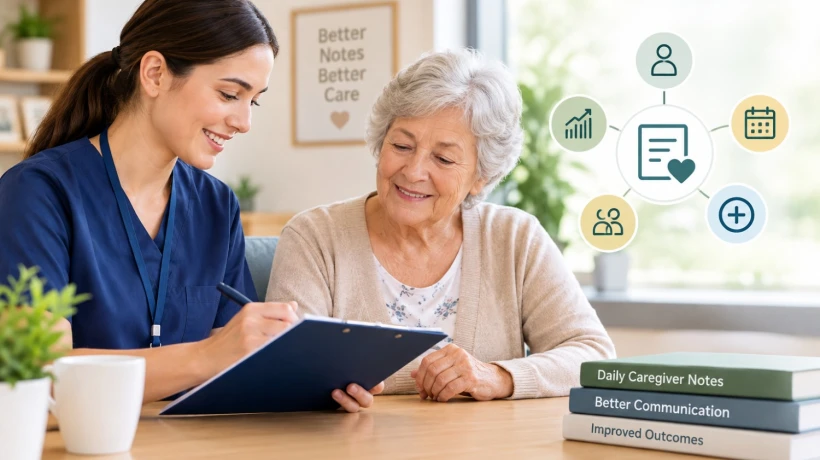
Learn how daily caregiver notes improve communication, care planning, documentation, and resident support through smarter caregiving practices.
Good care depends on more than completing daily tasks. Caregivers also need a reliable way to record what they observe, what they do, and how a resident responds. Clear documentation can help care teams understand changing needs and make better decisions.
This is where daily caregiver notes become valuable. When written consistently, these records create a practical picture of a resident's day. They can document changes in behavior, meals, mobility, personal care, medication-related observations, appointments, and other important events.
Combined with a smart caring approach, effective documentation can make communication easier while helping staff provide more consistent and personalized support.
What Are Daily Caregiver Notes?
Daily caregiver notes are records created by care staff to document relevant activities, observations, and events during a resident's care.
The information may include:
- Personal care provided
- Changes in mood or behavior
- Food and fluid intake
- Mobility or activity levels
- Sleep patterns
- Resident concerns
- Appointments or scheduled activities
- Unusual observations
- Communication with family members or other care professionals
- Follow-up actions that may be needed
The exact information recorded depends on the resident's care plan, facility policies, and applicable documentation requirements.
The goal is not to write a long story about everything that happened. Good notes focus on information that is relevant, accurate, timely, and useful to the next person involved in care.
Why Consistent Documentation Matters
Care teams often work across different shifts. One caregiver may notice something that another caregiver needs to know several hours later.
Without proper documentation, important details can easily be forgotten or communicated inaccurately.
For example, a caregiver might notice that a resident appears less active than usual or has difficulty completing a familiar task. Recording that observation gives the next caregiver useful context.
Over time, individual notes can also reveal patterns. A single observation may not seem significant, but repeated observations could indicate a change that deserves further attention.
This makes documentation an important part of continuity of care.
How Smart Caring Improves the Documentation Process
Smart caring is not simply about using technology. It is about combining good caregiving practices, accurate information, efficient workflows, and informed decision-making.
A well-organized documentation process can support this approach in several ways.
1. Better Shift-to-Shift Communication
Caregivers need access to relevant information when taking over responsibilities.
Well-written notes can provide a quick summary of important events from the previous shift. This reduces dependence on memory and informal verbal communication.
Staff can spend less time trying to reconstruct what happened and more time responding to current resident needs.
2. Easier Identification of Changes
Residents' needs can change gradually. Small differences in appetite, mood, activity, sleep, or behavior may be difficult to recognize without consistent records.
Regular documentation provides a timeline that can help caregivers and supervisors identify meaningful changes.
If a concern continues, documented observations can also give authorized professionals better information for determining appropriate next steps.
3. More Personalized Resident Care
Every resident has different routines, preferences, abilities, and support needs.
Care notes can help staff understand those individual differences. For example, records may show preferred meal times, activity participation, common concerns, or changes in daily routines.
This information can support a more individualized approach rather than treating every resident's care needs the same way.
What Makes a Good Caregiver Note?
Effective documentation should be specific, objective, and relevant.
Instead of writing:
"Resident was not feeling well."
A more useful note would describe the observable situation, such as a resident reporting a particular concern or displaying a noticeable change from their normal behavior.
Caregivers should distinguish between what they directly observed, what the resident reported, and what actions were taken.
A strong note generally answers basic questions such as:
- What happened?
- When did it happen?
- What was observed or reported?
- What action was taken?
- Was follow-up required?
- Who was notified, when appropriate?
This structure makes records easier for other authorized members of the care team to understand.
Common Problems With Care Documentation
Many documentation problems are caused by rushed workflows rather than a lack of effort.
One common issue is incomplete information. A caregiver may remember an event but fail to record an important detail.
Another problem is vague language. Statements that lack specific observations may provide little value to someone reviewing the record later.
Delayed documentation can create another challenge. Waiting too long increases the risk of forgetting details or recording information incorrectly.
Facilities can reduce these problems by establishing clear documentation standards and giving caregivers practical tools that fit naturally into their daily routines.
Technology Can Make Documentation More Efficient
Digital care management systems can simplify the process of creating, organizing, and reviewing records.
Depending on the system and its configuration, caregivers may be able to document information electronically instead of relying on scattered paper notes.
A centralized system can also make relevant records easier for authorized staff to locate. This can be especially useful in larger care environments where multiple caregivers and departments contribute to resident support.
However, technology should support good documentation practices rather than replace them. Staff still need appropriate training and clear policies about what information should be recorded and how it should be handled.
Protecting the Quality of Resident Information
Care documentation may contain sensitive personal information. Facilities should therefore establish appropriate privacy, security, access, and retention practices.
Only authorized individuals should have access to information they need for their responsibilities. Staff should also follow organizational policies and applicable privacy requirements when creating, viewing, sharing, or storing resident records.
Accurate documentation is valuable, but protecting that documentation is equally important.
A Simple Daily Documentation Routine
Care teams can make documentation more manageable by following a consistent routine.
First, identify the information that actually matters for the resident's care. Next, record relevant observations as close to the event as practical. Use clear language and avoid unsupported assumptions.
Before completing a note, check that the entry explains the important facts and any action that was taken.
Finally, follow facility procedures for escalating concerns. Documentation should never be treated as a substitute for appropriate communication when an issue requires immediate attention.
The Connection Between Documentation and Better Care
Daily documentation may appear to be a routine administrative task, but its value extends beyond recordkeeping.
Accurate notes help create continuity between shifts, support communication, provide useful historical context, and help care teams recognize changes in resident needs.
When documentation is combined with thoughtful workflows and appropriate technology, it becomes part of a broader smart caring strategy.
The best systems are not simply designed to collect more information. They help caregivers capture the right information at the right time and make it useful for the people responsible for providing care.
Final Thoughts
Effective daily caregiver notes can make a meaningful difference in how care teams communicate and respond to resident needs. Clear, timely, objective documentation creates a stronger foundation for continuity of care and personalized support.
A smart caring approach brings these practices together with organized workflows, staff training, and suitable technology. The result is a care environment where important information is easier to understand, share, and use responsibly.
When documentation becomes a natural part of the caregiving routine, caregivers can spend less effort reconstructing what happened and more attention on providing thoughtful, consistent resident support.
Disclaimer: ThynkTales is a public blogging platform where content is contributed by individual users. While we encourage thoughtful and accurate sharing, we do not independently verify the information provided. Readers are advised to use their discretion and verify any information before relying on it.
Comments
Login to Comment