How Cold Storage Warehouse Manufacturers Build for Long-Term Efficiency
26 Aug, 2026
506 Views 0 Like(s)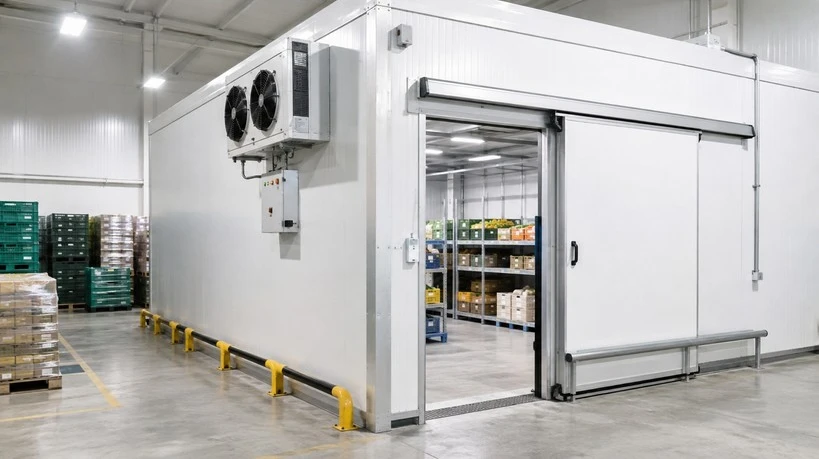
Discover how cold storage warehouse manufacturers design efficient facilities with durable materials, smart insulation, and reliable systems for long-term performance and lower energy use.
Cold storage plays a critical role in protecting temperature-sensitive products throughout the supply chain. From fresh produce and dairy to frozen foods, pharmaceuticals, and other perishable goods, these facilities must maintain controlled conditions while supporting smooth day-to-day operations. A well-designed cold storage facility does more than keep products cold—it helps businesses manage inventory, reduce avoidable losses, and maintain consistent product quality.
Choosing experienced Cold Storage Warehouse Manufacturers can make a significant difference because the design of the facility affects insulation, temperature control, storage capacity, energy use, hygiene, and operational efficiency. Understanding how these manufacturers contribute to an effective cold storage environment can help businesses make better decisions when planning or upgrading a facility.
What Makes a Cold Storage Warehouse Efficient?
An efficient cold storage warehouse needs to maintain the required temperature while allowing products to move safely and efficiently. This requires more than installing refrigeration equipment. The building envelope, insulation, doors, layout, refrigeration system, and operational requirements must work together.
Temperature Control Starts With the Building Design
Temperature stability is one of the most important considerations in cold storage. Frequent temperature fluctuations can affect product quality and increase the workload placed on refrigeration equipment.
A properly planned facility considers factors such as the required storage temperature, room size, product movement, access points, and internal heat loads. Manufacturers can use these requirements to develop a cold storage environment that supports consistent operating conditions.
Insulated Panels Help Reduce Heat Transfer
The walls and roof of a cold room are constantly exposed to temperature differences between the interior and exterior. Effective insulation helps limit unwanted heat transfer and supports the refrigeration system.
Cold storage facilities commonly use insulated panels as part of the building envelope. Their performance depends on factors such as panel construction, insulation material, thickness, installation quality, and the conditions in which the facility operates.
For this reason, Cold Storage Warehouse Manufacturers need to consider the complete application rather than selecting panels based only on appearance or initial cost.
Refrigeration Should Match the Storage Requirement
Refrigeration is another central component of cold storage efficiency. Different products may require different temperature ranges, airflow conditions, and cooling capacities.
A properly planned refrigeration system considers the warehouse dimensions, expected product load, ambient conditions, door openings, heat generated by equipment, and other operational factors. Matching refrigeration capacity to the actual application can help create a more balanced and dependable facility.
Warehouse Layout Can Improve Product Movement
Storage efficiency is not simply about fitting more products into a building. A practical layout should allow workers and equipment to move products safely while keeping unnecessary door openings and handling steps to a reasonable level.
Depending on the operation, the facility may include separate areas for receiving, staging, chilled storage, frozen storage, dispatch, and other activities. Logical zoning can make inventory handling easier and help reduce unnecessary movement between temperature-controlled areas.
How Manufacturers Contribute to Better Cold Storage Performance
Manufacturers and solution providers can influence efficiency from the planning stage through installation and system integration. Their role is to understand the intended use of the facility and translate those requirements into suitable construction and temperature-control solutions.
Planning Around the Product
A cold storage facility should be designed around what it will store. Fresh food, frozen products, dairy, meat, seafood, and other temperature-sensitive goods may have different requirements.
Product characteristics can influence storage temperature, room configuration, airflow, hygiene requirements, loading patterns, and access. Starting with these operational needs helps avoid a one-size-fits-all approach.
Selecting Suitable Cold Store Panels
Cold store panels form an important part of many temperature-controlled facilities. They provide insulated wall and ceiling surfaces while helping establish the controlled internal environment.
The appropriate panel specification depends on the application. Considerations can include insulation performance, panel thickness, joint detailing, surface finish, durability, hygiene requirements, and installation conditions.
Experienced Cold Storage Warehouse Manufacturers can help businesses evaluate these factors according to the intended application instead of focusing on a single specification.
Designing for Hygiene and Maintenance
Cleanability is particularly important in food-related cold storage environments. Wall and ceiling surfaces should be suitable for the operating conditions and allow routine cleaning and maintenance.
Good detailing around joints, doors, penetrations, and other interfaces can also help support a cleaner and more manageable facility. Easy access to equipment and service areas is equally important because refrigeration systems require inspection and maintenance over their operating life.
Managing Doors and Access Points
Every time a temperature-controlled room is opened, warmer air can enter while conditioned air escapes. High levels of unnecessary access can place additional demand on the refrigeration system.
Warehouse planning should therefore consider where doors are positioned and how frequently they will be used. Appropriate access arrangements can support smoother product movement without unnecessarily exposing storage areas to external conditions.
Supporting Scalable Storage
Business requirements can change over time. Product volumes may increase, new product categories may be introduced, or distribution requirements may evolve.
A well-planned cold storage facility can take future operational needs into account where practical. This might involve considering available expansion space, modular construction approaches, refrigeration capacity, or flexible internal layouts during the initial planning stage.
Integrating Multiple Systems
Cold storage performance depends on several interconnected elements. Insulated panels, refrigeration equipment, doors, electrical systems, temperature monitoring, lighting, and warehouse operations all contribute to the overall result.
Manufacturers with experience across cold storage solutions can help coordinate these elements so that the facility works as an integrated environment rather than as a collection of unrelated components.
Why Professional Installation Matters
Even high-quality materials and equipment can perform poorly when installation is not handled correctly. Panel joints, connections, doors, penetrations, and equipment installation all require attention to detail.
Proper installation helps the intended design perform as expected and can reduce issues that may otherwise affect temperature stability, maintenance, or long-term usability.
Efficiency Goes Beyond Energy Consumption
Energy efficiency is an important consideration, but warehouse efficiency also includes time, space, labor, maintenance, and product handling.
For example, a layout that reduces unnecessary product movement may improve operational productivity. Similarly, appropriate insulation and refrigeration design can support temperature control while helping manage the workload on cooling equipment.
A successful cold storage project therefore looks at the facility as a complete operational system.
Choosing the Right Cold Storage Partner
When evaluating Cold Storage Warehouse Manufacturers, businesses should look beyond product specifications alone. Relevant experience, understanding of the application, design capability, installation practices, material quality, and after-sales support can all influence the overall project.
It is also useful to communicate practical requirements early, including storage temperatures, product types, expected capacity, loading frequency, available space, and future expansion plans. Clear requirements allow the manufacturer or solution provider to recommend an approach that is better aligned with the facility's actual use.
About TSSC Group
TSSC Group provides building and cold storage solutions designed around the practical requirements of temperature-controlled environments. Its offering covers cold store solutions and related systems intended for applications where controlled conditions, appropriate insulation, and functional facility design are important.
By considering the building envelope and refrigeration requirements together, businesses can develop cold storage facilities that support reliable storage and day-to-day operations.
Final Thoughts
Efficient cold storage depends on maintaining the right conditions while making the facility practical to operate. Insulation, refrigeration, layout, access control, hygiene, installation, and maintenance all have a role to play.
Working with experienced Cold Storage Warehouse Manufacturers can help businesses approach these requirements systematically. Instead of treating cold storage as simply a refrigerated room, careful planning creates a facility designed around product protection, operational efficiency, and long-term usability.


Comments
Login to Comment