How CNC Machining Achieves Perfect Precision in Components
06 May, 2026
1852 Views 0 Like(s)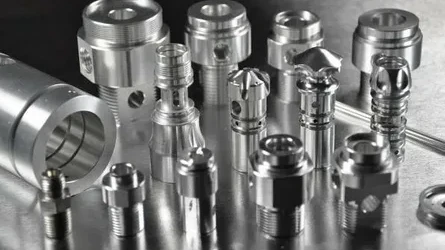
CNC machining has revolutionized modern manufacturing by delivering unmatched accuracy, consistency, and efficiency.
Modern manufacturing relies heavily on advanced technologies to produce highly accurate parts, and CNC machining stands at the center of this transformation. Industries such as aerospace, automotive, medical, and robotics depend on precision CNC machined components to ensure safety, performance, and reliability. CNC (Computer Numerical Control) machining uses automated controls to operate cutting tools with extreme accuracy, eliminating many of the inconsistencies found in manual machining.
This article explains how CNC machining achieves such a high level of precision, the technologies behind it, and why it is essential for producing complex and high-performance parts.
The Foundation of CNC Precision in Manufacturing
CNC machining begins with digital instructions that guide every movement of the machine. These instructions are created using CAD (Computer-Aided Design) models, which define the exact dimensions and tolerances of a component. Because everything is computer-controlled, human error is significantly reduced, resulting in highly accurate production of precision CNC machined components.
In addition, CNC machines operate with repeatability, meaning they can produce identical parts multiple times without losing accuracy. This consistency is critical for industries that require mass production of identical components.
Key factors contributing to CNC precision:
- Computer-controlled automation reduces human error
- High repeatability ensures consistent production
- Digital design ensures exact measurements
- Reduced material waste improves efficiency
- Tight tolerance control enhances accuracy
The foundation of CNC precision lies in its ability to translate digital designs into physical components without deviation. This seamless conversion process ensures that every part matches the original design specifications exactly.
CNC systems also allow engineers to simulate machining operations before actual production begins. This helps detect potential errors early and refine designs for optimal accuracy. As a result, manufacturers can confidently produce complex precision CNC machined components with minimal risk.
Role of CAD and CAM in Achieving Accuracy
Computer-Aided Design (CAD) and Computer-Aided Manufacturing (CAM) are essential in ensuring CNC precision. CAD software is used to create detailed 3D models of components, while CAM translates these models into machine-readable instructions. Together, they form the digital backbone of CNC machining.
The integration of CAD/CAM ensures that every detail of a design is accurately communicated to the CNC machine. This eliminates interpretation errors and guarantees that precision CNC machined components match exact specifications.
How CAD/CAM improves CNC precision:
- Converts designs into precise machine instructions
- Reduces manual programming errors
- Allows simulation before actual machining
- Enhances design optimization
- Improves production efficiency
Another major advantage of CAD/CAM is the ability to modify designs quickly. Engineers can adjust dimensions, materials, or tolerances without restarting the entire process. This flexibility ensures faster production while maintaining high precision.
Moreover, CAD/CAM systems enable advanced toolpath optimization, ensuring cutting tools move in the most efficient and accurate way possible. This leads to smoother surfaces and tighter tolerances in finished components.
Machine Technology and Tooling Accuracy
The physical CNC machine plays a crucial role in achieving precision. High-quality machines are built with rigid frames, advanced spindles, and servo motors that allow extremely accurate movements. These machines can operate at micron-level precision, which is essential for producing precision CNC machined components.
Tooling is equally important in maintaining accuracy. Cutting tools must be sharp, durable, and properly aligned. Even the smallest deviation in tool positioning can affect the final output, so regular calibration is essential.
Key elements of machine precision:
- High-speed spindle accuracy
- Servo-controlled motion systems
- Rigid machine structure to reduce vibration
- High-quality cutting tools
- Automated tool calibration systems
Advanced CNC machines also use multi-axis technology, allowing them to move in several directions simultaneously. This capability enables the production of complex geometries that would be impossible with manual machining.
Additionally, thermal stability systems help maintain accuracy by controlling temperature variations during machining. Since heat can expand materials and affect precision, maintaining stable conditions ensures consistent production of precision CNC machined components.
Quality Control and Measurement Systems
Quality control is a critical stage in CNC machining, ensuring every component meets strict specifications. Manufacturers use advanced measurement tools such as Coordinate Measuring Machines (CMM) and laser scanners to verify accuracy.
These systems detect even the smallest deviations in dimensions, allowing immediate corrections in the production process. This ensures that precision CNC machined components consistently meet industry standards.
Quality control techniques in CNC machining:
- Coordinate Measuring Machines (CMM) inspection
- Laser scanning for surface accuracy
- Real-time monitoring systems
- Statistical process control (SPC)
- Automated defect detection
In-process monitoring is another important feature. Modern CNC machines can detect tool wear or deviations during operation and automatically adjust settings. This reduces defects and improves production efficiency.
By combining real-time monitoring with post-production inspection, manufacturers ensure that every component meets exact tolerances, maintaining the reliability of precision CNC machined components across industries.
Applications and Benefits of CNC Precision
CNC machining is widely used across multiple industries due to its ability to produce highly accurate parts. From aerospace engines to medical implants, precision is essential for safety and performance. The demand for precision CNC machined components continues to grow as industries adopt more advanced technologies.
These components are particularly valuable in applications requiring tight tolerances and complex geometries that cannot be achieved through traditional manufacturing methods.
Key applications of CNC precision components:
- Aerospace engine parts
- Automotive transmission systems
- Medical surgical instruments
- Robotics and automation systems
- Electronics and semiconductor devices
The benefits of CNC precision go beyond accuracy. It also improves production speed, reduces waste, and enhances scalability. Manufacturers can produce large quantities of identical components without sacrificing quality.
Furthermore, CNC machining supports innovation by allowing engineers to design more complex and efficient parts. This has opened new possibilities in high-tech industries where performance and precision are critical.
Conclusion
CNC machining has revolutionized modern manufacturing by delivering unmatched accuracy, consistency, and efficiency. Through the integration of advanced software, high-performance machines, and strict quality control systems, it is possible to produce precision CNC machined components that meet the most demanding industrial requirements.
As technology continues to evolve, CNC machining will become even more precise, enabling manufacturers to push the boundaries of design and engineering. Its role in shaping the future of manufacturing is undeniable, making it a cornerstone of modern industrial production.



Comments
Login to Comment