Gas Leak Detector Singapore: Complete Buying Guide for Industrial Facilities
17 Aug, 2026
630 Views 0 Like(s)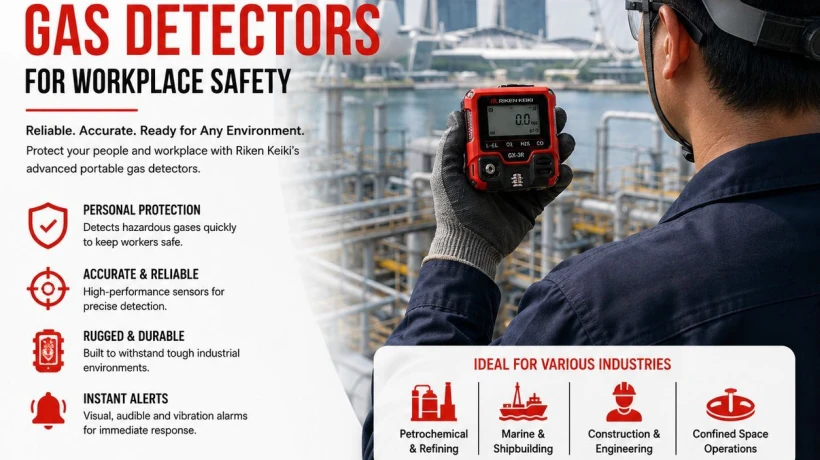
Singapore's industrial sector spans petrochemicals, semiconductors, food processing, pharmaceuticals, and wastewater treatment all industries where toxic or flammable gases are a daily operational reality.
Choosing the right gas leak detector in Singapore depends on the specific gases present in your facility, the environmental conditions, the detection technology required, and the regulatory standards you must meet. Industrial facilities should evaluate sensor type, target gas, response time, certifications, and maintenance requirements before purchasing. A mismatched detector can leave critical hazards undetected, increasing risk to personnel and operations.
Why Gas Detection Matters in Singapore's Industrial Landscape
Singapore's industrial sector spans petrochemicals, semiconductors, food processing, pharmaceuticals, and wastewater treatment all industries where toxic or flammable gases are a daily operational reality. The Workplace Safety and Health (WSH) Act, enforced by the Ministry of Manpower (MOM), mandates that employers take all reasonably practicable measures to ensure a safe working environment. This directly includes the detection and control of hazardous gases.
According to the WSH Institute, chemical and process industries consistently rank among the higher-risk sectors for workplace incidents in Singapore. Proper gas detection is not optional it is a legal and operational baseline.
In facilities handling substances under the Hazardous Substances (Controls) Act or the Fire Safety Act, the absence of functioning gas detection systems can result in regulatory penalties, facility shutdowns, or worse loss of life. EHS managers and facility engineers need to treat gas detection as critical infrastructure, not an afterthought.
What Types of Gases Should You Be Detecting?
Before you evaluate any gas detection system in Singapore, you need a clear inventory of the gases present in your facility. Detectors are not universal. Each sensor is calibrated for specific gas types and concentration ranges.
Flammable Gases
These include methane, propane, hydrogen, and LPG common in refineries, gas utilities, and food processing plants. Detection focuses on the Lower Explosive Limit (LEL), the minimum concentration at which a gas can ignite. Catalytic bead (pellistor) sensors or infrared sensors are the standard choice here.
Toxic Gases
Hydrogen sulfide (H₂S), carbon monoxide (CO), ammonia (NH₃), chlorine (Cl₂), and nitrogen dioxide (NO₂) are frequently encountered in wastewater treatment, cold storage, chemical processing, and manufacturing. Electrochemical sensors are the dominant technology for these applications due to their precision at low concentrations.
Oxygen Depletion and Enrichment
Confined space entry is regulated under the WSH (Confined Spaces) Regulations 2009. Before anyone enters a tank, vessel, or enclosed sewer, oxygen levels must be verified both depletion (below 19.5%) and enrichment (above 23.5%) are life-threatening. Electrochemical oxygen sensors are the standard tool here.
Volatile Organic Compounds (VOCs)
Semiconductor fabs, chemical storage facilities, and laboratories often handle solvents, adhesives, and cleaning agents that emit VOCs. Photoionization detection (PID) sensors are highly sensitive to these compounds and are commonly used for both continuous monitoring and handheld spot-checking.
Gas Detection Technologies: Which Sensor Type Is Right for You?
The sensor technology determines the detector's sensitivity, selectivity, maintenance burden, and lifespan. Here is a direct comparison of the most widely used sensor types in industrial gas detection systems.
|
Sensor Type |
Target Gases |
Key Strengths |
Limitations
|
|---|---|---|---|
|
Electrochemical |
Toxic gases, O₂ |
High accuracy, low power, wide range |
Limited lifespan (2–3 years), humidity sensitive |
|
Catalytic Bead (Pellistor) |
Flammable gases (LEL) |
Cost-effective, robust, established technology |
Requires oxygen to function, susceptible to poisoning |
|
Infrared (IR) |
Hydrocarbons, CO₂ |
Long sensor life, no O₂ dependency |
Higher upfront cost, not suitable for all gases |
|
Photoionization (PID) |
VOCs, organic solvents |
Extremely sensitive (ppb level) |
Cannot detect methane, affected by humidity |
|
Semiconductor (MOS) |
Broad range, LEL |
Low cost, compact |
Lower selectivity, affected by temperature |
For most industrial applications in Singapore, electrochemical and infrared sensors offer the best combination of accuracy, reliability, and compliance with local safety standards. Catalytic bead sensors remain cost-effective for general hydrocarbon monitoring where sensor poisoning risk is low.
Fixed vs. Portable Gas Detectors: Understanding the Difference
This is one of the most practical decisions you will make. The choice between a fixed gas detection system and a portable gas detector depends on whether you are monitoring a defined zone continuously or protecting workers who move through different areas.
Fixed Gas Detection Systems
Fixed detectors are permanently installed at strategic points near potential leak sources, at breathing zone height, or along process pipelines. They integrate with building management systems (BMS), alarm panels, and automatic shutdown systems. For compressor rooms, boiler rooms, chemical storage areas, and confined space entries, fixed systems provide 24/7 coverage without human intervention.
In Singapore, many high-risk facilities are required under SCDF fire safety guidelines or MOM WSH regulations to have fixed gas detection as part of their approved fire and safety plans. Your facility's hazard assessment will typically specify where fixed detectors are mandatory.
Portable Gas Detectors
Portable detectors both single-gas and multi-gas are essential for workers entering confined spaces, conducting inspections, or working in areas where gases may be present intermittently. Under the WSH (Confined Spaces) Regulations 2009, an atmospheric test must be performed before entry using a calibrated instrument.
Multi-gas detectors that simultaneously monitor LEL, O₂, CO, and H₂S are the industry standard for confined space entry in Singapore's utilities, construction, and marine sectors. They are compact, clip-on wearable devices that provide real-time alerts.
Key Factors to Evaluate When Buying a Gas Leak Detector in Singapore
Once you have identified the gases, environment, and application type, evaluate potential detectors against these criteria before committing to a purchase or system design.
1. Certifications and Compliance
For use in explosive atmospheres classified as hazardous areas under the ATEX or IECEx standards your detector must carry the appropriate Ex certification. In Singapore, MOM and the relevant industry guidelines reference IECEx-certified equipment for use in Zone 0, Zone 1, and Zone 2 classified areas. Always confirm the detector's certification matches the hazardous area classification of your facility.
2. Response Time
In gas detection, every second counts. T90 response time (the time taken to reach 90% of full-scale reading) is the standard benchmark. For toxic gas detection in confined spaces or enclosed environments, a T90 below 30 seconds is generally expected. Faster response times directly reduce exposure risk to personnel.
3. Environmental Suitability
Singapore's tropical climate high humidity, ambient temperatures routinely above 30°C, and heavy rainfall affects sensor performance. Ensure the detector's IP (Ingress Protection) rating is appropriate. IP65 is the minimum for outdoor industrial use; IP67 or IP68 for wet or washdown environments. Humidity compensation features are important for electrochemical sensors in this climate.
4. Calibration and Maintenance Requirements
A detector that drifts out of calibration is worse than no detector it creates false confidence. Confirm the calibration interval (typically every 3–6 months for industrial use), the availability of certified calibration gases locally in Singapore, and whether bump testing facilities exist on-site or need to be outsourced. Some advanced fixed systems include automatic self-calibration features that reduce maintenance burden.
5. Alarm Configuration
Industrial gas detectors should support at least two alarm thresholds a first-stage alert (typically 10–20% of threshold) for early warning, and a second-stage alarm (at or near the threshold) for immediate action. For toxic gases, the alarm setpoints must align with Singapore's permissible exposure limits (PELs) defined in the WSH (General Provisions) Regulations.
6. Integration with Existing Systems
If you are designing a gas detection system for a new facility or upgrading an existing one, consider how detectors integrate with your current infrastructure. 4–20 mA analogue outputs, Modbus RTU, or HART communication protocols are standard for integrating with SCADA systems, DCS platforms, or BMS. Wireless gas detectors are increasingly available for difficult-to-wire locations, though they require careful consideration of battery life and data reliability.
Industrial Applications: Matching the Right Detector to Your Facility
Different industries in Singapore have distinct gas hazard profiles. Here is how detection requirements vary by sector.
Oil, Gas, and Petrochemicals (Jurong Island)
Jurong Island hosts over 100 companies in the energy and chemicals sector. Facilities here deal with hydrocarbons, hydrogen sulfide, ammonia, and chlorine often simultaneously. Multi-point fixed detection systems with infrared and electrochemical sensors, full ATEX/IECEx certification, and integration with emergency shutdown (ESD) systems are the norm. Wireless sensor networks are increasingly used for pipeline leak detection across large sites.
Wastewater Treatment and Utilities
PUB-operated and private wastewater facilities face H₂S, methane, and CO hazards in confined spaces including manholes, pump wells, and digesters. Portable multi-gas detectors are mandatory for maintenance personnel. Fixed H₂S and methane detectors are installed in enclosed pump rooms and digester buildings.
Cold Storage and Food Processing
Ammonia refrigeration systems are common in Singapore's cold chain logistics and food manufacturing sectors. Ammonia leaks are both toxic (TLV-TWA: 25 ppm) and potentially flammable at high concentrations. Electrochemical ammonia sensors with dedicated alarm panels are the standard solution. Catalytic bead sensors are not appropriate for ammonia detection in these environments.
Semiconductor and Electronics Manufacturing
Fabs in Singapore's Wafer Fab Park and across Woodlands, Tampines, and Tuas use a range of specialty gases silane, phosphine, arsine, and various etchants that are acutely toxic at extremely low concentrations. Detection here requires highly sensitive electrochemical or photoionization sensors calibrated to ppb levels, often with toxic gas cabinets featuring integrated detection built into the gas delivery system.
Pharmaceuticals and Laboratories
Research and manufacturing facilities handle solvents, reagents, and compressed gases. PID sensors for VOC monitoring and electrochemical detectors for specific toxic gases are commonly deployed. Portable detectors are frequently used during equipment maintenance or process changeovers.
How to Design a Gas Detection System for Your Facility
Buying a single detector is straightforward. Designing a system that genuinely protects your facility requires a structured process.
Step 1 - Conduct a Gas Hazard Assessment. Identify every gas that could be present under normal operation, maintenance, or failure scenarios. Reference Safety Data Sheets (SDS), process flow diagrams, and historical incident data.
Step 2 - Define Hazardous Area Classification. Work with a competent person to classify areas as Zone 0, 1, 2 (flammable gases) or Zone 20, 21, 22 (combustible dusts) per SS 528 or IEC 60079 standards. This determines the Ex rating required for all electrical equipment including detectors.
Step 3 - Identify Detector Placement Points. Heavier-than-air gases (H₂S, LPG) pool near the floor; lighter-than-air gases (methane, hydrogen) rise to the ceiling. Detectors must be placed at the appropriate height and proximity to likely release sources. Wind patterns, ventilation flow, and congestion should all influence placement.
Step 4 - Select Detector Type and Technology. Based on the gas type, hazardous area classification, environmental conditions, and integration requirements, specify the appropriate sensor technology, housing IP rating, and output protocol.
Step 5 - Plan Alarm and Response Protocols. Define alarm setpoints aligned with Singapore's PEL values. Document the response procedure — evacuation, isolation, ventilation, emergency services notification and train personnel accordingly.
Step 6 - Establish a Calibration and Maintenance Schedule. Assign ownership, frequency, and documentation requirements. Calibration records should be retained as evidence of due diligence under MOM inspection requirements.
Common Mistakes Industrial Facilities Make with Gas Detection
Even experienced EHS teams make avoidable errors when specifying or managing gas detection systems. These are the most frequently encountered:
-
Using the wrong sensor for the gas: A catalytic bead sensor used in an oxygen-deficient atmosphere will fail silently, giving a zero reading that appears safe.
-
Skipping bump tests: A bump test verifies the detector responds to gas. Calibration alone does not confirm the sensor is physically functional.
-
Ignoring sensor lifespan: Electrochemical sensors have a defined service life, typically 2–3 years. An expired sensor may give inaccurate readings without obvious failure signs.
-
Poor detector placement: Mounting a detector too far from the leak source, or at the wrong height for the gas's specific gravity, dramatically reduces detection effectiveness.
-
No integration with shutdown systems: A detector that only sounds an alarm but does not trigger process isolation provides limited protection in high-consequence environments.
-
Neglecting documentation: Under MOM requirements, calibration and maintenance records must be maintained. Missing records constitute a compliance gap during workplace inspections.
Regulations and Standards Relevant to Gas Detection in Singapore
Singapore has a well-developed regulatory framework for industrial gas safety. The following are directly relevant to gas detection purchasing and system design decisions.
-
WSH Act (Cap. 354A): Primary occupational safety legislation requiring employers to identify and control workplace hazards, including gas hazards.
-
WSH (General Provisions) Regulations: Defines permissible exposure limits (PELs) for hazardous substances. Alarm setpoints on gas detectors must be anchored to these values.
-
WSH (Confined Spaces) Regulations 2009: Mandates atmospheric testing before confined space entry using a calibrated gas detector.
-
SS 528: Code of Practice for Hazardous Area Classification: Singapore Standard for classifying explosive atmospheres, directly determining which Ex-rated detectors are required.
-
SCDF Fire Code: Singapore Civil Defence Force requirements for fire and gas detection in high-risk occupancies including industrial buildings.
-
IECEx / ATEX Certification: International certifications for equipment used in explosive atmospheres, widely referenced in Singapore's process industries.
For authoritative regulatory guidance, the Ministry of Manpower's WSH Council publishes industry-specific guidelines and codes of practice. which is the recommended reference point for Singapore-specific compliance requirements.
Questions to Ask Your Gas Detector Supplier Before Buying
Not all suppliers operating in Singapore provide the same depth of technical support. Before committing to a purchase, ask these questions:
-
Is the detector certified for use in my hazardous area zone (IECEx/ATEX rated)?
-
What is the sensor's expected service life in Singapore's humidity and temperature conditions?
-
Is local calibration gas supply available in Singapore?
-
What is the warranty period and local after-sales support structure?
-
Can the detector integrate with my existing BMS, SCADA, or DCS via standard protocols?
-
Do you provide site surveys, installation support, and commissioning services in Singapore?
-
Are replacement sensors and spare parts stocked locally?
A supplier who cannot answer these questions clearly is a liability — not just a procurement risk, but a safety risk.
Choosing a Reliable Gas Detection Partner in Singapore
The best gas detector is only as good as the supplier standing behind it. For industrial facilities in Singapore operating under WSH and SCDF regulations, you need a partner who understands local compliance requirements, can provide locally stocked equipment and calibration gases, and offers genuine technical support not just a sales transaction.
Riken Keiki, represented in the Asia-Pacific region through Riken Keiki APAC, brings decades of precision gas detection expertise to Singapore's industrial sector. Their portfolio covers fixed gas detection systems, portable multi-gas detectors, and application-specific solutions for industries ranging from petrochemicals and semiconductors to wastewater and cold storage. As a manufacturer with deep instrumentation engineering roots, Riken Keiki APAC offers the technical depth that EHS managers, plant engineers, and procurement teams need to make confident, compliant purchasing decisions.
Frequently Asked Questions
What is the difference between a gas detector and a gas leak detection system?
A gas detector is a single instrument fixed or portable that senses one or more gases and



Comments
Login to Comment