From Living Room to Movie Theater: The Setup Choices That Actually Make the Difference
18 Aug, 2026
619 Views 0 Like(s)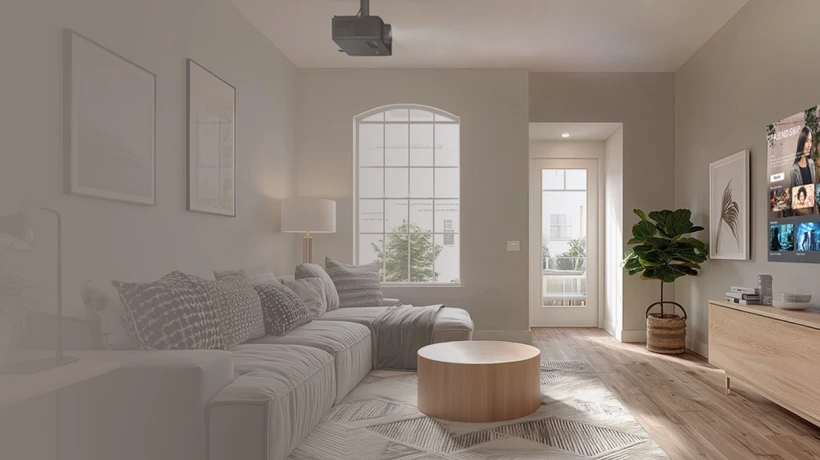
Discover what makes a home theater feel cinematic, from 4K projector resolution and screen quality to room lighting, placement, and the right setup for immersive viewing.
Every home theater journey seems to start the same way — someone watches a movie on a friend's projector setup, gets blown away by the scale of it, and decides they need one too. Then reality sets in during the research phase: dozens of models, conflicting advice, and no clear sense of what actually separates a mediocre setup from one that genuinely feels like a theater. The good news is that the real differentiators are fewer and more learnable than most buying guides suggest.
Resolution Is Only the Starting Point
A 4k movie projector is often treated as the single deciding factor in home theater quality, and while resolution matters, it's really just the foundation. What actually determines whether a movie looks cinematic or merely "big" comes down to how that resolution is delivered — brightness levels suited to the room, contrast that gives depth to dark scenes, and color accuracy that doesn't wash out under different lighting conditions.
This is why two 4K setups in different homes can look completely different from each other, even with similar projectors. The surrounding choices — screen, room lighting, placement — end up shaping the final result just as much as the projector's core specs.
The Screen Choice People Regret Skipping
If there's one shortcut that consistently disappoints buyers, it's skipping a proper screen. A home movie projector screen is designed specifically to reflect projected light evenly across its surface, preserving both brightness and color accuracy in a way ordinary walls cannot replicate — including walls painted a clean, neutral white.
The difference becomes especially clear during darker scenes or content with subtle color gradients, where an uneven wall surface tends to flatten detail that a proper screen would render clearly. For anyone who has invested in a strong projector, pairing it with an inadequate surface essentially caps how good the picture can actually look.
What Commercial Theaters Get Right (That Homes Often Miss)
It helps to look at how professional setups approach the problem. In 4k projector movie theaters, a few deliberate choices consistently show up:
-
Carefully controlled ambient lighting to maximize on-screen contrast
-
Screens engineered specifically for uniform light reflection
-
Precise projector placement calculated for the room's exact dimensions
None of these require theater-scale budgets to replicate at home. Dimming ambient light during viewing, choosing a screen suited to the room, and taking projector placement seriously go a long way toward closing the gap between a home setup and a commercial one.
Building the Full Picture, Not Just Buying a Projector
The households happiest with their home theater results tend to approach it holistically rather than buying one impressive piece of equipment and hoping the rest falls into place. Room darkness, screen material, seating distance, and projector placement all interact with each other, and a weak link in any one of them noticeably limits the final result.
Optoma has built its home entertainment range around exactly this kind of complete-system approach, offering projectors and complementary display solutions engineered to work together, backed by reliable technical support for buyers navigating these decisions for the first time. That combination of thoughtful product design and support tends to matter more in practice than any single spec on a comparison chart.
Is the Extra Effort Worth It?
For casual, occasional viewing, a simpler setup might feel sufficient. But for anyone who watches often, hosts regularly, or simply wants that unmistakable big-screen immersion, the difference a properly considered setup makes is obvious almost immediately — usually within the opening minutes of the first film watched on it.
Getting close to a genuine theater experience at home isn't about spending without limit. It's about understanding which choices actually matter and making sure they work together as one system, rather than treating the projector as the only decision that counts.
FAQs
1. How much does room darkness actually affect picture quality?
Significantly — reducing ambient light improves contrast and color depth even with a high-quality projector and screen.
2. Is a specialized screen worth it over a plain wall?
Yes, a proper screen noticeably improves brightness uniformity, contrast, and color accuracy compared to any wall surface.
3. What's the biggest mistake people make setting up a home theater?
Focusing entirely on the projector's specs while ignoring screen quality, room lighting, and placement, which affect the final picture just as much.


Comments
Login to Comment