Forensic Audit: The Modern Approach to Detecting Financial Fraud
29 Jun, 2026
1211 Views 0 Like(s)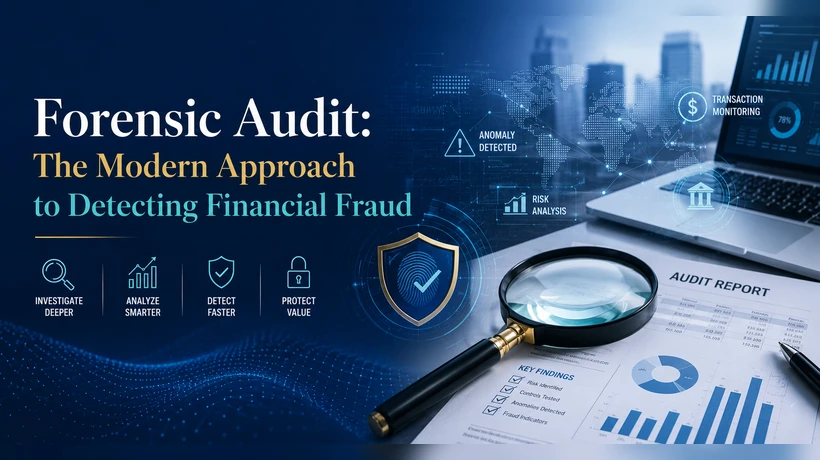
Learn what a forensic audit is, how it works, its benefits, process, and how AI, data analytics, and digital forensics are transforming forensic audits.
In today's digital business environment, financial fraud has become more sophisticated than ever. Organizations face risks such as cyber fraud, financial manipulation, embezzlement, insider fraud, and money laundering. A forensic audit helps businesses identify, investigate, and prevent these fraudulent activities while providing legally admissible evidence.
Unlike a regular financial audit, which focuses on verifying the accuracy of financial statements, a forensic audit goes much deeper. It investigates suspicious financial transactions, uncovers hidden fraud, and supports legal proceedings if required.
With the adoption of Artificial Intelligence (AI), machine learning, blockchain analysis, and advanced data analytics, forensic audits have become faster, smarter, and more accurate.
What is a Forensic Audit?
A forensic audit is a detailed examination of an organization's financial records to detect fraud, financial misconduct, or illegal activities. It combines accounting, auditing, investigation, and legal expertise to collect evidence that can be presented in court if necessary.
The primary goal is not only to identify fraud but also to determine how it happened, who was involved, and the financial impact on the organization.
Why is a Forensic Audit Important?
Financial fraud can cause significant financial losses and damage an organization's reputation. A forensic audit helps businesses:
- Detect financial fraud early
- Identify internal control weaknesses
- Investigate employee misconduct
- Prevent future fraud
- Recover financial losses
- Support litigation and legal cases
- Improve corporate governance
- Strengthen stakeholder confidence
As businesses increasingly rely on digital transactions, forensic audits have become essential for maintaining transparency and trust.
When is a Forensic Audit Required?
Organizations may require a forensic audit in situations such as:
- Suspected financial fraud
- Employee theft or embezzlement
- Insurance claim investigations
- Shareholder disputes
- Corporate corruption
- Cybercrime involving financial transactions
- Procurement fraud
- Money laundering investigations
- Regulatory compliance issues
- Business valuation disputes
A forensic audit is often initiated after receiving whistleblower complaints, unusual financial patterns, or regulatory investigations.
The Forensic Audit Process
A professional forensic audit generally follows these key steps:
1. Initial Assessment
Auditors understand the allegations, identify potential risks, and define the scope of the investigation.
2. Planning the Investigation
A structured audit plan is developed to determine which financial records, digital data, and evidence need to be examined.
3. Evidence Collection
Auditors gather financial documents, invoices, bank statements, emails, contracts, digital records, and transaction logs while maintaining evidence integrity.
4. Data Analysis
Using advanced analytical tools, auditors identify unusual transactions, hidden relationships, duplicate payments, and suspicious financial activities.
5. Interviews
Employees, management, vendors, and other stakeholders may be interviewed to gather additional information.
6. Reporting
The audit team prepares a detailed report explaining:
- Nature of fraud
- Financial impact
- Evidence collected
- Individuals involved
- Recommendations for corrective actions
7. Legal Support
If required, forensic auditors may provide expert testimony during legal proceedings.
How Modern Technology is Transforming Forensic Audits
Technology has significantly improved the effectiveness of forensic audits. Modern forensic investigations now use intelligent tools to detect fraud much faster than traditional manual methods.
Artificial Intelligence (AI)
AI analyzes millions of financial transactions in seconds and identifies unusual patterns that may indicate fraudulent activities.
Machine Learning
Machine learning algorithms continuously improve fraud detection by learning from historical fraud cases and identifying emerging risks.
Data Analytics
Advanced analytics helps auditors detect hidden relationships, duplicate invoices, fake vendors, abnormal spending, and unauthorized transactions.
Blockchain Analysis
For organizations dealing with cryptocurrencies and blockchain transactions, forensic auditors use blockchain analysis tools to trace digital assets and identify suspicious activities.
Digital Forensics
Digital forensic techniques recover deleted emails, files, transaction histories, and electronic evidence from computers, mobile devices, and cloud platforms.
Continuous Fraud Monitoring
Instead of waiting for annual audits, businesses now use real-time monitoring systems that instantly detect suspicious financial activities.
Benefits of a Forensic Audit
A forensic audit provides numerous advantages for businesses, including:
- Early fraud detection
- Stronger internal controls
- Better regulatory compliance
- Improved financial transparency
- Reduced financial losses
- Enhanced risk management
- Protection of business reputation
- Better corporate governance
- Increased investor confidence
Organizations that conduct periodic forensic audits are better prepared to identify risks before they become major financial problems.
Industries That Need Forensic Audits
Forensic audits are valuable across multiple industries, including:
- Banking and Financial Services
- Insurance
- Manufacturing
- Healthcare
- Government Organizations
- Information Technology
- Real Estate
- Retail
- E-commerce
- Non-Profit Organizations
Any organization handling significant financial transactions can benefit from forensic auditing.
Best Practices for Effective Forensic Audits
To maximize the effectiveness of forensic audits, organizations should:
- Maintain accurate financial records.
- Implement strong internal controls.
- Use AI-powered fraud detection software.
- Conduct regular risk assessments.
- Encourage whistleblower reporting.
- Perform periodic forensic reviews.
- Train employees on fraud prevention.
- Secure digital financial systems with cybersecurity measures.
These practices reduce the likelihood of financial fraud while improving organizational transparency.
Conclusion
A forensic audit has become an essential component of modern corporate governance and financial risk management. As financial crimes evolve with digital technologies, organizations need advanced investigation techniques to detect and prevent fraud effectively.
By combining accounting expertise with AI, data analytics, digital forensics, and blockchain technology, forensic audits deliver faster investigations, stronger evidence, and more reliable results. Businesses that invest in forensic auditing not only protect their financial assets but also strengthen stakeholder trust and ensure long-term sustainability.
Frequently Asked Questions (FAQs)
1. What is a forensic audit?
A forensic audit is a detailed financial investigation conducted to detect fraud, financial misconduct, or illegal activities while collecting evidence that can be used in legal proceedings.
2. How is a forensic audit different from a regular audit?
A regular audit verifies financial statement accuracy, whereas a forensic audit investigates suspected fraud, financial crimes, and misconduct.
3. When should a company conduct a forensic audit?
A company should conduct a forensic audit when fraud, embezzlement, corruption, cybercrime, or financial irregularities are suspected.
4. How does AI improve forensic audits?
AI analyzes large volumes of financial data, identifies suspicious patterns, automates fraud detection, and significantly reduces investigation time.
5. Who performs a forensic audit?
Certified forensic accountants, forensic auditors, fraud investigators, and financial experts with specialized investigative skills conduct forensic audits.
6. Can forensic audit reports be used in court?
Yes. Forensic audit reports are prepared following legal standards, making them suitable as evidence in court proceedings.
7. Which industries benefit most from forensic audits?
Banking, insurance, healthcare, manufacturing, government agencies, IT companies, retail, and real estate organizations commonly use forensic audits.
8. What technologies are commonly used in forensic audits?
Modern forensic audits use Artificial Intelligence, machine learning, data analytics, blockchain analysis, digital forensics, cloud investigation tools, and continuous fraud monitoring systems.

Comments
Login to Comment