Faux Leather Sofa Buying Guide: What to Look for Before You Buy
16 Sep, 2026
10 Views 0 Like(s)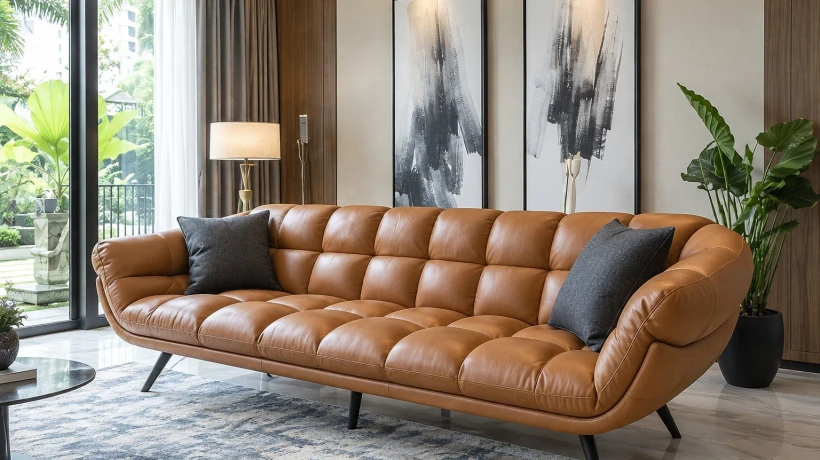
A faux leather sofa is upholstered in a synthetic material designed to replicate the look and feel of genuine animal leather.
When buying a faux leather sofa, focus on six key factors: material quality, frame construction, comfort, size, colour, and maintenance. A well-chosen synthetic leather sofa offers the look of genuine leather at a lower price point, with easier upkeep in humid climates. Knowing what to evaluate before purchasing saves money and ensures long-term satisfaction.
Choosing the right faux leather sofa is not as simple as picking the one that looks good in a showroom photo. In Singapore's warm, humid environment, the wrong material can crack, peel, or trap heat within a year. The right choice, on the other hand, can anchor your living room for years while staying easy to clean and stylish. This guide walks you through every factor that matters before you commit to a purchase.
What Is a Faux Leather Sofa?
A faux leather sofa is upholstered in a synthetic material designed to replicate the look and feel of genuine animal leather. The two most common types are PU (polyurethane) leather and PVC (polyvinyl chloride) leather. PU leather is softer, more breathable, and generally considered higher quality. PVC is more durable against scratches but less comfortable over extended use.
A faux leather couch is a practical alternative for households with children, pets, or anyone who wants a lower-maintenance lifestyle. It does not require conditioning like genuine leather, and most surface stains wipe off cleanly. For Singapore homeowners balancing aesthetics with practicality, it sits firmly in the sweet spot.
1. Material Quality: Not All Faux Leather Is Equal
The biggest variable in any synthetic leather sofa purchase is the grade of material used. Entry-level options often use thin PVC coatings over a fabric base. These tend to crack and peel within two to three years, especially when exposed to direct aircon drafts or sunlight both common in Singapore homes.
What to look for instead:
-
Multi-layer PU leather thicker construction with a fabric backing that resists peeling
-
Microfibre suede or bonded leather blends softer and more breathable for humid conditions
-
Anti-scratch coating useful for households with pets or young children
-
Pore texture a realistic pore pattern usually indicates a higher-quality top coat
Run your hand across the surface. Quality faux leather has a consistent texture and slight give. Cheap material often feels plastic-like or crinkles under pressure.
2. Frame Construction: The Skeleton Determines Longevity
The upholstery may be what you see, but the frame is what you sit on for years. A weak frame will sag, creak, or warp regardless of how premium the surface material is.
What Makes a Good Sofa Frame?
Solid hardwood frames such as rubberwood or beech are the industry benchmark. They resist warping in humid conditions, which makes them well-suited to Singapore's climate. Engineered wood (MDF or plywood) is acceptable in lower-stress areas but should be avoided as the primary structural material.
Also check the joinery. Sofas with glued-only joints tend to loosen over time. Dowelled, screwed, and glued construction holds far better. If you can test the sofa in person, press down on the corners and arms there should be no flex or sound.
Suspension System
Sinuous spring (S-spring) systems offer decent support for everyday use. Eight-way hand-tied coil springs are more durable but appear mainly in higher-end pieces. Webbing suspension is the most basic option and tends to loosen faster under regular use.
3. Comfort: Seat Depth, Cushion Fill, and Back Support
Comfort is subjective, but there are objective indicators you can evaluate. Seat depth between 55 cm and 65 cm suits most adults and allows you to sit back fully without your legs dangling. Shallower depths work well in compact HDB living rooms where space efficiency matters.
Cushion fill options and their trade-offs:
-
High-density foam (30–35 kg/m³) holds shape well, good long-term support
-
Memory foam conforms to the body but can trap heat
-
Foam and fibre blend softer feel with a slightly plush appearance
-
Pocket spring cushions premium feel, better airflow, longer lifespan
Back support matters as much as seat comfort. Fixed back cushions offer a clean, structured look. Loose scatter cushions allow you to adjust positioning but require regular fluffing. For everyday use in a Singapore living room, a semi-attached cushion system balances appearance and comfort reliably.
4. Size: Matching Your Sofa to Your Space
Singapore homes whether HDB flats, condominiums, or landed properties often have defined living area dimensions. Buying a sofa that is too large is one of the most common and costly mistakes homeowners make.
Before measuring, account for:
-
At least 45 cm of walking clearance on all open sides
-
Distance from the sofa to the TV or entertainment unit (ideally 2 to 3 metres)
-
Door and corridor widths for delivery access especially relevant in older HDB blocks
-
Overall room proportions a large sectional in a small room will overpower the space
As a general guide, a 3-seater sofa typically ranges from 180 cm to 220 cm in width. A 2-seater sits between 140 cm and 170 cm. Always measure your room and mark the sofa footprint on the floor with masking tape before ordering it gives you a realistic sense of scale.
5. Colour: Choosing a Tone That Lasts
Colour is often the first decision homeowners make, but it should be one of the last. Start with your floor, wall tones, and existing furniture. Neutral tones — ivory, light grey, taupe, and off-white remain versatile and age well across interior style changes.
In Singapore, where natural light varies significantly between north and south-facing units, test fabric swatches or material samples in your actual space at different times of day. A dark charcoal sofa can look sophisticated under warm lighting but heavy and space-shrinking in a poorly lit room.
Darker tones like espresso or black hide stains better, which is a practical consideration for families. Lighter tones open up a space visually but require more frequent surface cleaning. The leather sofa alternative category now spans a wide enough colour range that you should not feel restricted to just beige or black.
6. Maintenance: What Ownership Actually Looks Like
One of the strongest arguments for faux leather is ease of maintenance. Unlike genuine leather, it does not need conditioning oils or specialist treatment. However, it is not entirely maintenance-free.
Day-to-Day Care
Wipe down the surface weekly with a slightly damp microfibre cloth. Avoid alcohol-based or bleach cleaners — they strip the surface coating over time. For deeper cleaning, a mild soapy solution works well. Always dry the surface after cleaning to prevent moisture from sitting in seams.
Protecting Your Sofa Long-Term
-
Keep the sofa away from direct sunlight UV exposure causes colour fading and surface cracking
-
Avoid placing sharp objects directly on the upholstery
-
Use a sofa cover if you have pets with sharp claws
-
Rotate cushions regularly to distribute wear evenly
-
Check seam stitching every six months catching early loosening prevents larger tears
With proper care, a quality PU leather sofa should hold up comfortably for five to eight years in a Singapore household. Some higher-grade options perform even longer with consistent maintenance.
Quick Comparison: PU Leather vs PVC Leather
|
Feature |
PU Leather |
PVC Leather
|
|---|---|---|
|
Breathability |
Higher |
Lower |
|
Scratch Resistance |
Moderate |
High |
|
Durability |
5–8 years |
4–6 years |
|
Comfort |
Softer, more supple |
Firmer, less flexible |
|
Maintenance |
Easy |
Easy |
|
Price Range |
Moderate to high |
Low to moderate |
|
Best For |
Everyday comfort, long-term use |
High-traffic, budget-conscious buyers |
Making the Right Decision Before You Buy
A well-researched purchase always outperforms an impulsive one. Before finalising any order, cross-check the material grade, frame construction details, and dimensions against your actual living space. Ask the retailer for specific product specifications any reputable seller should be able to confirm foam density, frame material, and upholstery type.
If you are based in Singapore and looking for options that suit local home sizes and climate conditions, Ecozy Furniture carries a curated range of faux leather sofas designed with both comfort and durability in mind worth exploring if you want a reliable starting point for your search.
Frequently Asked Questions
How long does a faux leather sofa last in Singapore?
A quality PU leather sofa typically lasts five to eight years with regular care in Singapore's climate. Avoid direct sunlight and wipe down the surface weekly to prevent premature cracking or peeling of the upholstery coating.
Is faux leather sofa good for Singapore's humid weather?
PU leather handles humidity reasonably well compared to genuine leather, as it does not absorb moisture or develop mould as easily. Ensure good room ventilation and keep the sofa away from aircon vents to prevent surface drying and cracking.
What is the difference between PU leather and PVC leather sofas?
PU leather is softer, more breathable, and generally more comfortable for extended sitting. PVC leather is harder and more scratch-resistant but less supple. For everyday home use in Singapore, PU leather is the more comfortable and durable long-term choice.
How do I clean a faux leather sofa?
Wipe the surface weekly with a damp microfibre cloth and a mild soap solution for deeper cleans. Avoid bleach or alcohol-based products, as they strip the surface coating. Always dry the sofa after cleaning to protect the seams and stitching.
What size sofa should I buy for an HDB flat in Singapore?
A 2-seater between 140 cm and 170 cm or a compact 3-seater up to 200 cm typically suits most HDB living rooms. Always measure your floor space and mark the sofa footprint with tape before purchasing to confirm proportion and walking clearance.
Is a faux leather sofa easy to maintain compared to genuine leather?
Yes, faux leather requires significantly less maintenance than genuine leather — no conditioning oils or specialist treatments are needed. Regular wiping and keeping it out of direct sunlight are sufficient to maintain the surface quality and extend its lifespan.



Comments
Login to Comment