Event Guard Security vs Venue Security: What's the Difference?
17 Aug, 2026
616 Views 0 Like(s)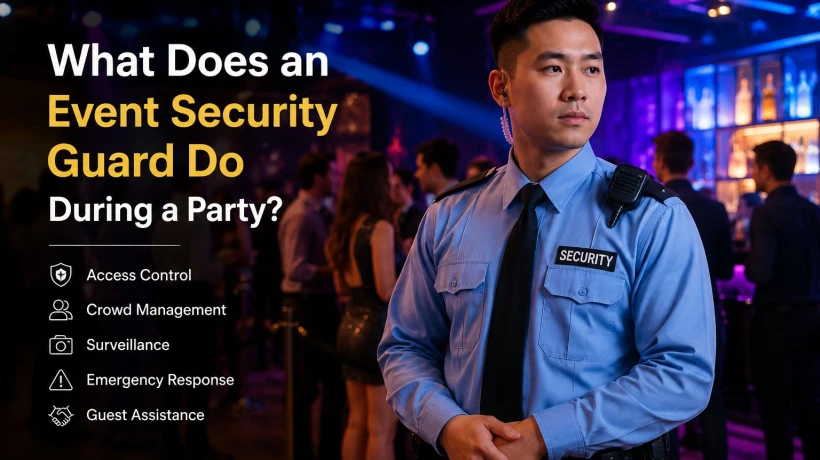
If you're an event planner or venue owner in Singapore, understanding this distinction isn't just academic it directly affects how you budget, plan, and protect your guests.
Event guard security and venue security are two distinct services that are often used interchangeably but they serve different purposes. Event security is deployed for a specific occasion, managing crowd flow, access control, and incident response during that event. Venue security is an ongoing, facility-based service protecting the physical premises day-to-day, regardless of what's happening inside.
If you're an event planner or venue owner in Singapore, understanding this distinction isn't just academic it directly affects how you budget, plan, and protect your guests. Getting it wrong can leave you either over-secured and overspending, or exposed to risks you didn't account for. Learn more about how event guard security works before your next booking.
Defining Event Security: Purpose-Built Protection for a Specific Occasion
Event security is designed around a single occasion a concert, corporate gala, product launch, trade show, or private celebration. The security team is activated before the event begins and stands down once it ends. Their entire deployment is shaped by the event's profile: expected attendance, risk level, crowd demographics, and venue layout.
A well-structured event security plan typically covers:
-
Pre-event risk assessment and site walkthrough
-
Perimeter and access point control
-
Crowd management and guest flow coordination
-
VIP or artist/speaker protection
-
Emergency response planning and coordination with local authorities
-
Post-event dispersal management
The Singapore Police Force requires event organisers to apply for a Public Entertainment Licence (PEL) for many ticketed or public-facing events. Security providers working these events must be licensed under the Private Security Industry Act, administered by the Singapore Police Force's Licensing Division. This regulatory framework sets a clear standard for how event security teams must operate in Singapore.
Defining Venue Security: Ongoing Protection for a Physical Space
Venue security, by contrast, is a continuous service. It protects a physical location a convention centre, hotel, stadium, shopping mall, or arts facility throughout its operational hours, with or without a scheduled event. The guards know the building intimately: its entry and exit points, blind spots, restricted zones, and day-to-day foot traffic patterns.
Core responsibilities in venue security include:
-
Patrolling and monitoring the premises on a fixed schedule
-
Controlling access to restricted or staff-only areas
-
Managing CCTV systems and alarm response
-
Handling trespassers, loitering, and property protection
-
Liaising with building management and maintenance teams
-
Providing a visible deterrent to opportunistic threats
For venues that host frequent events, venue security guards often serve as the institutional knowledge layer they understand the space in ways a newly deployed event team simply cannot replicate on short notice.
Event Security vs Venue Security: Side-by-Side Comparison
Here's a direct comparison to help event planners and venue owners make informed decisions:
|
Factor |
Event Security |
Venue Security
|
|---|---|---|
|
Duration |
Temporary - event-specific |
Ongoing - daily operations |
|
Scope |
Crowd, access, VIP, emergency response |
Premises, assets, access control |
|
Team size |
Scales with attendance and event type |
Fixed based on venue size |
|
Deployment trigger |
Activated for each event |
Always active during operating hours |
|
Risk focus |
Dynamic crowd and situational risks |
Static and environmental risks |
|
Regulatory requirement |
Often required under PEL conditions |
Required for licensed premises |
|
Familiarity with space |
Pre-event briefing and site visit |
Deep, ongoing familiarity |
When Do You Need Event Protection Specifically?
Event protection becomes essential the moment you have a concentrated gathering with elevated risk whether from crowd size, high-profile attendees, alcohol service, or public-facing exposure. In Singapore, events at Marina Bay Sands, Suntec City, or outdoor civic spaces routinely deploy dedicated event security teams separate from the venue's standing guards.
You should prioritise event-specific security when:
-
Expected attendance exceeds 500 people
-
The event involves public access or ticketing
-
VIPs, government officials, or celebrities are present
-
The event takes place outside a permanently secured venue
-
Your event runs late into the night or involves alcohol
Private event security is also increasingly requested for high-net-worth private gatherings birthday celebrations, corporate dinners, and charity galas where confidentiality and controlled access are priorities alongside safety.
Can One Team Handle Both Roles?
Yes - but only with clear coordination
Many Singapore venues bring in external event security teams to supplement their existing venue guards during large bookings. This is common at integrated resorts, convention centres, and performing arts venues. The key is defining roles clearly before the event begins.
Without that coordination, you end up with gaps. Venue guards may not know the event's access tiers. Event guards may not know where fire exits or first aid stations are located. Neither team performs at full effectiveness without a shared briefing and a unified command structure.
Who takes command during an incident?
This is the question most event planners don't ask until it's too late. When an incident occurs a medical emergency, an altercation, a security breach both teams need to know who is the primary responder and who provides support. That clarity must be established in the pre-event security brief, not improvised on the night.
How Event Planners Should Think About This
If you're hiring a venue that already has a security team, don't assume that covers your event. Ask the venue specifically: what does your standing security team cover, and what falls on me as the event organiser?
Common gaps event planners overlook:
-
Guest list verification at registration tables
-
Bag checks or prohibited item screening
-
Stage or backstage access control
-
Managing uninvited guests or gatecrashers
-
Coordinating with vendors, caterers, and AV crews for access
These are event-layer responsibilities and they rarely fall within a venue's standard security scope.
How Venue Owners Should Think About This
If you manage a venue that hosts external events, your liability exposure doesn't disappear just because the event organiser brings their own security team. Your premises, your CCTV infrastructure, your emergency exits these remain your responsibility. A hybrid approach, where your venue guards integrate with the event team under a shared operational brief, is the most defensible position.
Some venue operators in Singapore now include a minimum event security requirement in their hire agreements specifying guard-to-guest ratios and mandatory pre-event briefings as a condition of booking.
Choosing the Right Security Provider for Your Situation
Whether you need event protection, venue security, or both, the provider must hold a valid security agency licence issued by the Singapore Police Force. Beyond licensing, look for:
-
Demonstrated experience in your event type or venue category
-
A clear pre-event planning process, not just day-of deployment
-
Coordination capability with venue management, police, and emergency services
-
Supervisory presence on the ground throughout the event
RAS Security provides event and venue security services across Singapore with licensed, trained officers and structured pre-event planning support. Whether you're running a large public-facing event or managing a private venue that needs consistent protection, working with a provider that understands both sides of this distinction makes a measurable difference to outcomes.
Frequently Asked Questions
What is the main difference between event security and venue security?
Event security is temporary and deployed specifically for a scheduled occasion managing crowds, access, and incidents during that event. Venue security is an ongoing service protecting a physical space during regular operating hours. Both serve different functions and should not be treated as interchangeable.
Do I need a separate event security team if the venue already has guards?
Yes, in most cases. Venue guards manage the premises and its day-to-day operations they are not typically scoped to handle event-specific tasks like guest list verification, stage access control, or crowd management during a large gathering. Event planners should confirm coverage gaps with the venue before the event.
Is event security legally required in Singapore?
For many public-facing or ticketed events in Singapore, security is a condition attached to the Public Entertainment Licence (PEL) issued by the Singapore Police Force. All security personnel must be deployed through a licensed security agency under the Private Security Industry Act.
What does private event security cover?
Private event security typically covers access control, guest screening, perimeter monitoring, and incident response for closed-door gatherings such as corporate dinners, private celebrations, or high-profile personal events. It prioritises confidentiality and controlled access alongside guest safety.
How many security guards do I need for an event?
Guard-to-guest ratios depend on event type, venue layout, alcohol service, and risk profile. A general starting benchmark in Singapore is one guard per 100–150 guests for lower-risk events, with higher ratios required for concerts, nightlife events, or gatherings involving VIPs.
Can the same security company provide both event and venue security?
Yes. Many licensed security firms in Singapore offer both services and can deploy integrated teams for venues that host regular events. The key is ensuring both teams operate under a unified command structure with clearly defined roles before the event begins.



Comments
Login to Comment