Ethereum Scaling Is Broken — Here’s How Xhavic Is Fixing It
20 Apr, 2026
1966 Views 0 Like(s)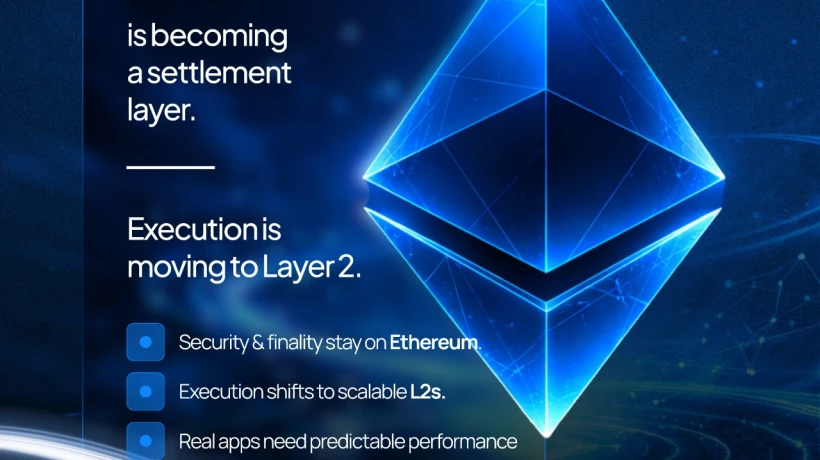
This is where Xhavic is stepping in with a Layer 2 execution network designed specifically to solve Ethereum’s biggest pain points: high fees, limited throughput, and user friction.
Ethereum is often called the “world computer,” and for good reason. It powers the largest smart contract ecosystem on earth, supporting DeFi protocols, NFT platforms, decentralized exchanges, and Web3 gaming economies. But despite Ethereum’s success, its scaling limitations remain one of the biggest roadblocks in blockchain adoption.
For years, Ethereum scaling has been treated as a temporary issue. But in 2026, it is clear: scaling is no longer optional—it is the survival requirement of Web3.
This is where Xhavic is stepping in with a Layer 2 execution network designed specifically to solve Ethereum’s biggest pain points: high fees, limited throughput, and user friction.
Why Ethereum Scaling Is “Broken”
Ethereum’s Layer 1 was designed for decentralization and security, not speed. The network can only process a limited number of transactions per second, and when demand rises, fees spike.
The results are predictable:
- Transactions become slow during congestion
- Fees become extremely expensive
- User experience becomes frustrating
- Developers struggle to scale applications
- Everyday adoption becomes unrealistic
Ethereum can’t compete with Web2-level performance without Layer 2 solutions.
Layer 2 Is Not Just a Trend — It’s the Future
Layer 2 networks solve Ethereum scaling by processing transactions off-chain (or off the main chain) and then finalizing them on Ethereum. This gives users the best of both worlds:
- Ethereum-level security
- Much higher transaction speed
- Lower transaction costs
But the Layer 2 space has become crowded, and not all solutions are built for the next generation of Web3 use cases.
Xhavic’s Solution: A High-Performance Execution Layer
Xhavic is positioning itself as a next-generation Ethereum Layer 2 execution network designed for performance-driven blockchain applications.
Its architecture is focused on delivering:
- Fast transaction confirmations
- Low transaction costs
- EVM compatibility for developers
- Scalable throughput for high-demand platforms
Instead of being “just another rollup,” Xhavic is built to support long-term ecosystem expansion.
Modular Architecture: Designed for Evolution
One of Xhavic’s strongest design principles is its modular architecture. Instead of building a monolithic blockchain system where everything is tied together, Xhavic separates critical components into layers.
This means the network can evolve faster because each module can be upgraded without redesigning the entire chain.
Modularity is important because blockchain technology is evolving rapidly. Networks that cannot adapt will fall behind.
The Dual Wallet System: Fixing the User Experience
Scaling is not only about speed and fees—it is also about usability. Many Layer 2 networks still expose users to confusing wallet interactions, bridge risks, and irreversible transaction errors.
Xhavic addresses this with its Dual Wallet System, including:
- An Instant Wallet for daily fast transactions
- A Secure/Funding Wallet with a 24-hour safety window
This system creates a more user-friendly financial structure that feels closer to modern banking, while maintaining decentralized ownership.
Developer Advantage: EVM Compatibility Matters
One of the most important adoption factors for any Layer 2 network is compatibility with Ethereum development tools. Xhavic supports EVM compatibility, which means developers can deploy smart contracts using familiar environments like Solidity and existing Ethereum frameworks.
This reduces friction and makes onboarding much easier for teams migrating from Ethereum or other EVM networks.
The Bigger Picture: Fixing Ethereum Without Replacing Ethereum
Xhavic does not aim to replace Ethereum. Instead, it aims to strengthen Ethereum’s ecosystem by acting as a scalable execution layer. This is exactly what Ethereum’s roadmap has been pointing toward: Ethereum as the settlement layer, with Layer 2 networks handling massive user activity.
That vision can only work if Layer 2 solutions deliver reliable performance and real-world usability.
Final Thoughts
Ethereum scaling is not “coming soon.” It is needed now. High fees and congestion continue to block mainstream adoption, and without scalable execution layers, Web3 will remain a niche ecosystem.
Xhavic is fixing Ethereum scaling by providing low fees, high performance, modular infrastructure, and an innovative dual-wallet design that improves user trust and security.
The future of Ethereum is Layer 2—and Xhavic is positioning itself as one of the networks ready to define that future.



Comments
Login to Comment