Essential Rules for Gorilla Trekking Safaris in Uganda
22 Oct, 2026
9 Views 0 Like(s)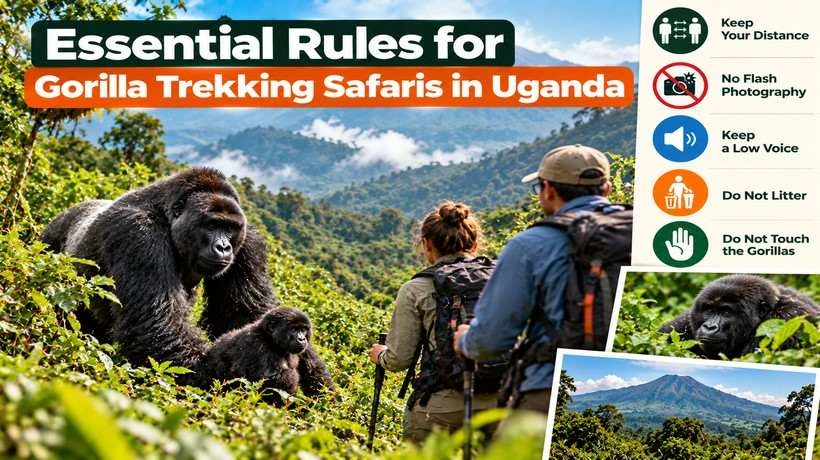
See Uganda’s gorilla trekking rules on permits, minimum age, viewing distance, group limits, illness, photography and forest conduct.
Uganda regulates mountain gorilla visits to limit disturbance and reduce the risk of human diseases reaching gorillas. Visitors planning gorilla trekking safaris in Uganda must secure suitable permits, meet eligibility conditions and follow rangers throughout their forest excursion. Rules apply before departure, along the trail and during the encounter itself. Knowing these requirements helps travellers prepare and avoid behaviour that could harm gorillas or compromise safety.
Permits, Age Limits and the Pre-Trek Briefing
Uganda Wildlife Authority manages regulated trekking in Bwindi Impenetrable National Park and Mgahinga Gorilla National Park. Bwindi includes the Buhoma, Ruhija, Rushaga and Nkuringo trekking sectors; Mgahinga lies separately within the Virunga Mountains. A booking for one location does not automatically authorise another.
Before arrival, visitors should check three essential conditions:
-
Valid authorisation: Obtain a confirmed gorilla trekking permit for the correct date and location. Accommodation or transport reservations alone do not establish trekking eligibility.
-
Minimum age: Uganda requires standard gorilla trekkers to be at least 15 years old. Families should check this before booking.
-
Group size: Authorities permit no more than eight tourists to visit a habituated gorilla group during a standard encounter. Rangers and authorised support personnel supervise the activity.
At registration, staff validate booking details and conduct a compulsory briefing. Rangers explain group allocation, expected conditions and visitor conduct. Carry identification and the documentation authorities request, and arrive according to the confirmed reporting arrangements. Do not enter the forest independently or join an unauthorised group.
Health Precautions and Disease Prevention
Human respiratory infections can threaten mountain gorillas, making visitor health more than a personal concern. Anyone with a cold, fever, persistent cough or another potentially infectious illness should disclose symptoms before the trek. Park personnel determine whether participation meets the applicable health requirements. Never conceal illness because of an expensive permit or a tightly planned itinerary.
Hygiene expectations can change. Confirm the current mask policy before travelling and obey ranger directions about wearing a face covering near gorillas. Keep hands clean and avoid unnecessary contact with surfaces or objects that could contaminate the encounter area.
During the visit, cover your mouth and nose if you need to cough or sneeze, and turn away from the animals. Distance, masks where required and illness screening reduce risks; none removes the possibility of transmission completely. If health concerns prevent trekking, request the applicable official advice about changing arrangements rather than assuming an automatic refund.
Viewing Distance, Time Limits and Ranger Instructions
Rangers control movement around gorillas because the animals choose where to feed, rest and travel. Visitors must follow the current minimum viewing distance that park personnel specify. Published distances have differed across periods, so do not rely on older figures. Never advance towards a gorilla for a closer photograph.
A standard gorilla visit allows up to one hour observing the group after trekkers reach it. Walking through the forest may take considerably longer, depending on terrain and gorilla movements. Separately authorised habituation activities have different arrangements; do not confuse those with ordinary trekking permits.
Remain with the assigned group and speak quietly. If a gorilla approaches unexpectedly, stay calm, avoid sudden gestures and follow ranger instructions. Do not attempt to decide independently whether to retreat, crouch or change position. A gorilla moving nearby does not give anyone permission to touch it.
The central encounter rules include:
-
No physical interaction: Never touch, feed, chase, provoke or deliberately attract a gorilla's attention.
-
Controlled movement: Let rangers determine safe viewing positions and when the group should move.
-
Quiet observation: Keep conversations low and avoid behaviour that interrupts feeding or resting.
-
Timely departure: Leave the viewing area when rangers end the encounter, even if photographers want additional minutes.
These restrictions limit unnecessary contact and help gorillas continue their normal activities without sustained human interference.
Photography, Food and Forest Protection
Visitors may photograph gorillas within permitted conditions, but authorities strictly prohibit flash photography. Disable flash before approaching the family, including any automatic setting on a phone or camera. Move slowly when adjusting equipment, and never step closer merely to improve the image. Specialist filming equipment may require separate permission.
Do not eat, drink or smoke in the presence of gorillas. Carry sufficient water and suitable food for the hike, then ask rangers where breaks can take place away from the animals. Leaving snacks or food scraps behind creates avoidable contamination and may encourage unwanted wildlife interaction.
Forest rules extend beyond the encounter:
-
Carry out rubbish: Keep packaging, tissues and other waste until you can dispose of them properly.
-
Protect vegetation: Avoid breaking branches, picking plants or leaving authorised routes without ranger direction.
-
Manage sanitation responsibly: Tell a ranger if you need a toilet break and follow the procedure they specify.
On the return journey, stay with the ranger-led group and continue respecting the habitat. Do not assume the conservation obligations finish once the hour of observation ends.
Prepare for Difficult Forest Conditions
Gorilla trekking can involve muddy slopes, tangled vegetation and long walks without predictable arrival times. Good preparation improves comfort, but ordinary packing advice differs from official visitor rules. Choose supportive boots, long trousers, rain protection and a manageable daypack. Bring drinking water, relevant personal medication, and enough energy for the return hike.
Tell park personnel about mobility concerns before the activity, and assess your fitness realistically. Ask about available assistance rather than expecting a short, level trail. Rain may change footing quickly, so walk at the group's pace and alert a ranger if you struggle.
Conclusion
Responsible gorilla trekking begins with a valid permit, age eligibility, and an honest health declaration. In the forest, ranger supervision governs distance, movement, photography, and the limited observation period. Visitors must also avoid contact, food contamination, and damage to habitat. Because specific requirements can change, confirm the latest official instructions before departure and follow the briefing on the day. Each responsible decision reduces pressure on mountain gorillas and supports the protection of their forest home.


Comments
Login to Comment