Dewpoint Transmitter for Continuous Moisture Monitoring in Industrial Systems
12 Sep, 2026
5 Views 0 Like(s)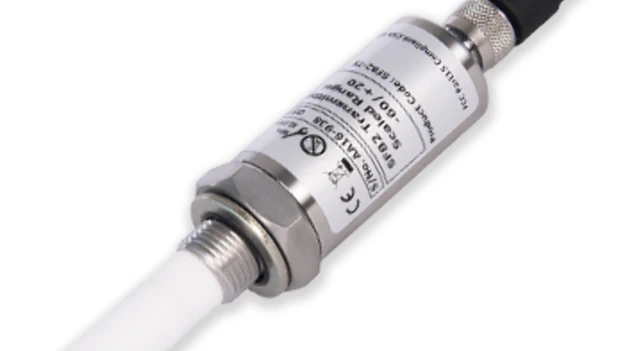
A dewpoint transmitter measures moisture within a gas and converts the sensing information into an electrical output that can be monitored by a display, control system, PLC, or SCADA platform. This makes it suitable for applications where moisture needs to be monitored continuously rather than checked only during periodic inspections.
Controlling moisture in compressed air and process gases is important for industries where gas quality can influence equipment performance, production conditions, and product consistency. Unlike occasional spot measurements, continuous monitoring allows technical teams to observe moisture conditions as they change during normal operation. A properly selected transmitter can provide real-time information, integrate with industrial control systems, and support maintenance teams in identifying changes in gas dryness. For applications involving trace moisture, sensor technology, signal output, calibration, and sampling arrangements all contribute to the reliability of the overall measurement system.
What a Dewpoint Transmitter Does
A dewpoint transmitter measures moisture within a gas and converts the sensing information into an electrical output that can be monitored by a display, control system, PLC, or SCADA platform. This makes it suitable for applications where moisture needs to be monitored continuously rather than checked only during periodic inspections.
Dew-Point's AMT model is designed for continuous trace moisture measurement in process gases and compressed air. It uses ultra-high-capacitance aluminium oxide sensing technology and provides a 2-wire, 4–20 mA loop-powered configuration.
Why Continuous Moisture Monitoring Matters
Moisture conditions can change as equipment operates, production loads vary, or gas moves through different parts of a distribution system. A single measurement taken at one point in time may not show these changes.
Continuous monitoring provides a more complete view of the process. If moisture levels begin moving outside an expected range, operators can investigate the situation and determine whether equipment, sampling conditions, drying systems, or another part of the process requires attention.
This can be especially useful in compressed-air networks, specialty gas systems, manufacturing processes, and applications where maintaining dry gas conditions is important.
Wide Measurement Ranges for Industrial Applications
Different processes require different moisture measurement ranges. Extremely dry gases may require measurement at very low dewpoints, while other applications may operate closer to ambient conditions.
The AMT is available across dewpoint ranges from -120°C to +20°C, with an accuracy of ±2°C dewpoint according to the manufacturer's published specifications. It can also be configured to display measurements in units such as °C or °F dewpoint, ppm(V), ppb(V), g/m³, and lb/MMSCF.
This range of measurement options allows the instrument to be specified according to the requirements of different gas and process applications.
Connecting Moisture Data to Control Systems
Industrial facilities often need measurement information to be available beyond the instrument itself. Connecting a transmitter to a control or monitoring system can make moisture readings easier to observe alongside other process parameters.
The AMT provides a linear 4–20 mA output and is also available with Modbus RTU communication through RS485. This allows digital data to be integrated with PLC and SCADA systems while providing access to information such as calibration and sensor parameters.
Explore Dew-Point Dewpoint Transmitter Solutions – dew-point.com
Sensor Technology for Trace Moisture Measurement
The sensing element is one of the most important parts of any moisture measurement system. For trace moisture applications, the sensor needs to respond reliably to very low concentrations of water vapor while maintaining stability over time.
The AMT uses ultra-high-capacitance aluminium oxide sensing technology, which Dew-Point identifies as providing sensitivity, response speed, accuracy, repeatability, and stability. The same sensing technology is used across other Alpha Moisture Systems measurement products.
The correct sensor technology should always be selected according to the gas composition, measurement range, operating conditions, and required accuracy.
Sampling Conditions Should Not Be Overlooked
Even an accurate transmitter depends on an appropriate sampling arrangement. Pressure, flow, contamination, temperature, and the way the gas reaches the sensor can all influence measurement conditions.
Dew-Point offers optional sensor holders and sample cells designed to provide suitable sampling conditions and allow the transmitter to be removed for calibration without interrupting the process. The company's SS-B sample system, for example, is compatible with AMT and PDT transmitters and includes pressure regulation and flow indication.
For demanding installations, considering the sampling system as part of the complete measurement solution can help support more consistent readings.
Calibration and Measurement Confidence
Calibration is particularly important when moisture readings are used for quality control, maintenance decisions, or documented process requirements. A traceable calibration certificate provides information about the relationship between the instrument's measurements and recognized humidity standards.
The AMT is supplied with a calibration certificate traceable to National and International Humidity Standards at the National Physical Laboratory. It also includes an AutoCal span correction feature that allows field span checks and corrections between laboratory calibrations.
Regular calibration practices can help maintain confidence in measurements over the operating life of the equipment.
Applications Across Different Industries
Continuous trace moisture monitoring can be useful in a wide range of industrial environments. Dew-Point identifies applications including aerospace, breathing air, food and beverage, HDPE production, injection moulding, medical gases, natural gas and LNG, pharmaceuticals, power generation, and welding gases.
For example, moisture monitoring can help maintain suitable conditions for dry gases used in aerospace manufacturing or monitor gas dryness in food packaging. In natural gas and LNG applications, controlling moisture can also help address risks associated with freezing within pipelines and valves.
The measurement requirements differ from one industry to another, so equipment should be selected according to the specific process and gas conditions.
Options for Hazardous Environments
Some industrial facilities operate in areas where standard measurement equipment may not be appropriate. In potentially hazardous environments, the transmitter must have the necessary certification and be installed according to applicable safety requirements.
Dew-Point offers the AMT-Ex intrinsically safe transmitter for hazardous-area applications. It is certified to IECEx and ATEX standards and uses the same aluminium oxide trace moisture sensing technology.
The standard AMT should not be used in hazardous applications where the required certification is not provided; the appropriate Ex-rated configuration should be selected instead.
Selecting the Right Transmitter
Choosing a transmitter involves more than comparing measurement ranges. Users should consider the gas being measured, expected dewpoint, pressure, temperature, required output signal, sampling method, installation environment, calibration requirements, and whether digital communications are needed.
For applications that require connection to automation systems, Modbus RTU may be useful. Where straightforward analog integration is preferred, a 4–20 mA output can provide a familiar industrial signal. Display controllers such as the DS1200, DS4000, and DS1500 can also be paired with compatible transmitters for different monitoring requirements.
Supporting Reliable Process Monitoring
A Dewpoint transmitter provides a practical way to turn trace moisture measurements into continuous process information. With the right sensing technology, output configuration, sampling arrangement, and calibration strategy, moisture data can become a useful part of industrial monitoring and maintenance.
Dew-Point offers transmitter solutions for compressed air and process gases, including the AMT for general applications and the AMT-Ex for suitable hazardous-area installations. These systems can provide continuous measurement while supporting integration with displays and industrial control platforms.
For facilities where gas dryness matters, selecting a properly specified transmitter can give operators clearer visibility into moisture conditions and help support more informed decisions about process performance, maintenance, and equipment protection.



Comments
Login to Comment