Conversion Data Is Becoming More Valuable Than Click Data in PPC
28 Aug, 2026
494 Views 0 Like(s)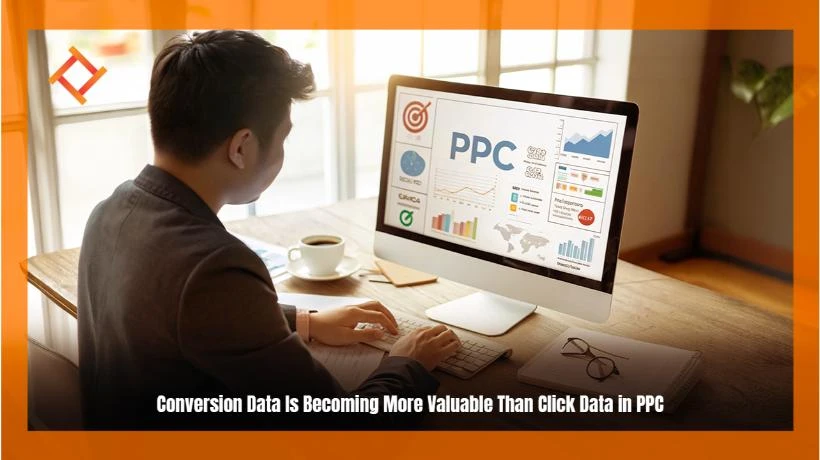
Clicks don't pay bills; conversions do. Discover why a smart PPC service in Kolkata now prioritises conversion data over click counts.
Your ads got a thousand clicks last month. Great news, right? Not if only three people bought anything. Clicks feel good. They fill up dashboards and make campaigns look busy. But clicks don't pay salaries or grow businesses. Conversions do. Too many brands in Kolkata still chase click-through rates like it's 2015, then wonder why the phone isn't ringing.
This obsession with surface-level traffic metrics quietly drains ad budgets while competitors with sharper strategies walk away with the actual customers. If you're running paid campaigns and only tracking clicks, you're flying blind on the one number that decides whether your PPC service in Kolkata actually makes you money.
This article breaks down why conversion intelligence, not click volume, now defines real advertising success, and how a results-driven PPC agency in Kolkata builds campaigns around revenue, not vanity metrics.
Why Clicks Alone No Longer Tell the Full Story
Clicks used to be the easiest number to celebrate. A high click-through rate looked impressive in a report and gave account managers something quick to point at. But a click only proves someone was curious enough to tap a button. It says nothing about whether that person had a genuine need, a real budget, or any intention to buy.
Google Ads benchmarks for 2026 put the average search CTR somewhere between 6.1% and 6.7% across industries, according to consolidated data from WordStream and PPC Chief. PPC Chief's consolidated benchmark set shows an all-industry Google Search CTR of 6.7 per cent, while the broader WordStream benchmark reports a slightly lower figure of 6.1 per cent. Two respected sources, two different numbers, same underlying truth: CTR benchmarks shift depending on who's measuring, which makes them a shaky foundation for judging real success.
Here's the deeper problem. A campaign can hit an above-average CTR and still lose money. Someone clicks out of curiosity, bounces off a slow landing page, and never returns. Meanwhile, a campaign with a modest CTR but sharp targeting brings in fewer visitors who convert at a much higher rate. Click-through rate measures attention. It doesn't measure appetite. Businesses that keep optimising purely for clicks end up paying more to attract window shoppers instead of buyers.
What Conversion Data Actually Measures
Conversion data tracks what happens after the click. Did the visitor fill out a form? Call the number? Add a product to cart and actually check out? Book a consultation? This is where lead quality and qualified enquiries come into play, because not every submitted form is a genuine opportunity. A serious PPC agency in Kolkata separates real prospects from tyre kickers by tracking micro conversions alongside macro conversions, giving a fuller picture of buyer intent at every stage.
Conversion rate optimisation looks at the entire journey, not a single click event. It studies landing page speed, form length, trust signals, mobile responsiveness, and message match between ad copy and page content. What is a good conversion rate in PPC advertising? According to WordStream's 2026 benchmark study, which analysed over 13,000 search campaigns across 23 industries, the average conversion rate in Google Ads for 2026 sits at 8.18 per cent, though this varies wildly by sector.
Animals and pets campaigns converted at 16.22%, automotive repair and parts at 15.51%, while finance and insurance lagged at just 2.64%. This spread proves a single blanket benchmark means little without context specific to your industry, your offer, and your audience.
Lead Quality Over Lead Quantity
More leads sound better until you realise half of them were never going to buy. A campaign generating two hundred low-intent enquiries a month can cost more in sales team hours than one generating fifty highly qualified leads. This is the chasing volume trap. Lead scoring helps separate genuine buyers from casual browsers by assigning value based on behaviour, source, and engagement depth.
How Lead Scoring Shapes Smarter Budget Decisions
When a business assigns scores to incoming leads, patterns emerge fast. Maybe leads from a specific keyword group convert at three times the rate of another group, despite costing less per click.
Maybe enquiries arriving through mobile devices close faster than desktop ones. This kind of insight only becomes visible once you track conversions properly, connecting every rupee spent to an actual outcome. Businesses that shift budget toward high-scoring lead sources typically see acquisition costs drop, because they stop wasting spend chasing traffic that was never going to convert anyway.
The Role of Sales and Marketing Alignment
Conversion tracking only works when marketing and sales speak the same language. If the sales team closes a deal but never reports it back to the ad platform or CRM, the campaign that generated that lead looks less effective than it really is.
Closing this feedback loop matters enormously, especially for businesses with longer sales cycles like education, healthcare, or B2B services, where the first form fill is just the beginning of the journey, not the finish line.
Cost Per Acquisition and Return on Ad Spend Explained
Cost per acquisition, often shortened to CPA, tells you exactly how much you're spending to win one paying customer or one qualified lead. It's a far more honest number than cost per click, because it accounts for the entire funnel rather than just the entry point. Recent industry data from 2026 shows the average cost per conversion on Google Search rose 6 per cent year over year to $53.89, though this increase was smaller than the jump in cost per click, meaning conversion rates improved enough to partially offset rising click costs.
What is return on ad spend, and why does it matter more than clicks? ROAS compares revenue generated against advertising expenditure, giving a direct measure of profitability rather than popularity. The median ROAS across Google Ads campaigns currently sits at approximately 3.5 to 1, meaning every rupee spent should ideally return three and a half rupees in revenue.
A campaign can have a fantastic click-through rate and still deliver a poor ROAS if the traffic never converts into paying customers. This is exactly why forward-thinking businesses now demand ROAS and CPA reporting from any PPC service in Kolkata they hire, rather than settling for impression counts and click totals.
How AI-Powered Bidding Is Shifting Focus Toward Conversions
Automation has changed the game entirely. Smart bidding and automated campaign types now dominate ad platforms, and they run entirely on conversion signals rather than click data. AI-powered bidding now drives 78 per cent of all Google Ads spend heading into 2026, with Smart Bidding and Performance Max accounting for the bulk of that investment. This matters enormously for advertisers, because these algorithms need accurate, well-structured conversion data to work properly. Feed them clean signals, and they'll find more buyers efficiently. Feed them vague or missing conversion data, and they'll optimise blindly, wasting budget on the wrong audiences.
Advertisers using AI bidding strategies report 22 per cent lower cost per conversion on average compared to manual CPC bidding, though results vary depending on industry and how mature the account is. This single statistic explains why conversion tracking setup has become the single most important technical task for any agency managing paid campaigns today. Without properly configured conversion actions, offline conversion imports, and value-based bidding signals, even the smartest algorithm has nothing useful to learn from.
Building a Conversion-First PPC Strategy in Kolkata
How can a business in Kolkata improve PPC conversion rates? It starts with clear conversion goals defined before a single ad goes live. Every campaign needs a specific action it's optimising toward, whether that's a phone call, a form submission, a purchase, or a booking confirmation. Vague goals produce vague results.
Landing Page Alignment with Ad Intent
A mismatch between what an ad promises and what the landing page delivers kills conversions instantly. If someone clicks an ad for affordable eye checkups and lands on a generic homepage with no clear next step, they'll leave within seconds. Landing pages built specifically for each campaign, with fast load times, clear calls to action, and mobile-friendly design, consistently outperform generic pages by a wide margin.
Using First-Party Data for Better Targeting
With privacy regulations tightening globally and third-party cookies fading out, first-party data has become essential for accurate targeting and conversion measurement. Businesses collecting their own customer data through CRMs, newsletter signups, and past purchase history can feed this information back into ad platforms, helping algorithms find more people who resemble actual paying customers rather than just curious clickers.
Continuous Testing and Attribution Modelling
Attribution modelling helps businesses understand which touchpoints actually drove a conversion, especially when customers interact with multiple ads before buying. A/B testing landing pages, ad copy variations, and audience segments on an ongoing basis ensures that conversion rates keep improving rather than plateauing. This kind of disciplined, data-backed refinement separates agencies that talk about performance marketing from those that actually deliver it.
Conclusion
Clicks were never the finish line; they were only ever the starting point. The real story of any advertising campaign lives in what happens after someone taps that ad, whether they become a customer, a qualified lead, or just another bounce statistic.
Conversion data, lead quality, cost per acquisition, and return on ad spend now matter far more than click volume or impression counts, especially as AI-powered bidding continues reshaping how campaigns get optimised. Businesses that shift their focus toward conversion intelligence consistently spend smarter and grow faster than those still chasing surface-level traffic numbers.
If you're evaluating a PPC agency in Kolkata, ask about their conversion tracking setup, their attribution approach, and their reporting on ROAS and CPA, not just their promises about clicks and impressions. That's where the real value gets created.
Frequently Asked Questions
1. Why is conversion data more important than click data in PPC advertising?
Conversion data shows actual business outcomes like sales or leads, while clicks only show curiosity. Revenue and growth depend on conversions, not traffic volume alone.
2. What is a good conversion rate for PPC campaigns in 2026?
It varies by industry, but the overall Google Ads average sits around 7 to 8 per cent. Compare your rate against your specific sector's benchmark for accuracy.
3. How does a PPC agency in Kolkata improve conversion rates?
Through landing page optimisation, precise audience targeting, first-party data usage, and continuous A/B testing aligned with clear, measurable conversion goals.
4. What is the difference between CPA and ROAS in PPC?
CPA measures cost per acquired customer or lead. Revenue earned per rupee spent is measured by ROAS. Both matter for judging true campaign profitability.
5. Does AI bidding reduce PPC costs?
Yes, advertisers using AI-powered bidding report noticeably lower cost per conversion compared to manual bidding, though results depend on industry and account maturity.


Comments
Login to Comment