Choosing Flatbed Carriers and Trucking Services: What Mid-Sized Companies Look for in Complex Freight Transportation
29 Jun, 2026
1185 Views 0 Like(s)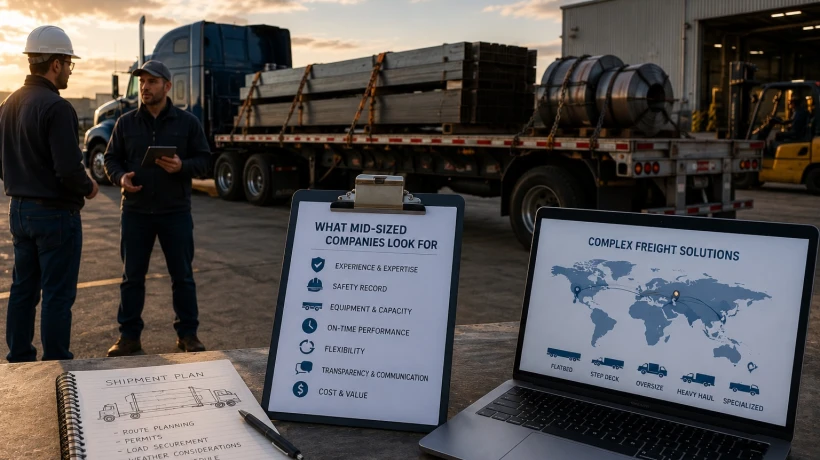
Discover how mid-sized shippers evaluate flatbed trucking companies, equipment fit, safety records.
Specialized freight movement depends on open-deck capacity that enclosed vans cannot accommodate. Mid-sized shippers handling structural steel, machinery, prefabricated assemblies, or dense industrial cargo face a recurring procurement question: how to qualify flatbed trucking companies capable of executing complex, high-value loads without disruption. Evaluation extends well beyond rate negotiation, spanning equipment fit, compliance posture, securement discipline, and the provider's ability to coordinate permitting, routing, and delivery windows against project-driven schedules.
Why Evaluating Flatbed Trucking Companies Matters for Shippers
Engaging unvetted providers introduce compounding exposure when cargo is heavy, oversized, or irregularly shaped. A mismatched trailer, undertrained securement crew, or lapsed operating authority can convert a routine shipment into a claims event with downstream production consequences. Procurement leaders consistently find that disciplined qualification of flatbed trucking companies narrows variability across transit time, damage frequency, and documentation accuracy. Mid-sized organizations rarely have the absorptive capacity to weather repeated service failures, which is why vendor evaluation functions as a risk control mechanism rather than a sourcing formality, embedded directly into project planning rather than treated as a downstream task.
Mitigating Operational Risks
A rigorous qualification process tends to reduce total landed exposure by surfacing weak securement protocols, thin coverage, and inadequate dispatch oversight before tender. The cost of failure, including rework, repositioning, and claims, materially exceeds the cost of upfront diligence.
Types of Equipment Used by Flatbed Trucking Companies
Open-deck capability spans a wider equipment range than many shippers recognize. Standard flatdecks handle dense bulk materials, palletized building products, and machinery that does not require dock-height loading. Step-decks and removable gooseneck trailers accommodate taller industrial components, while extendable and multi-axle configurations support long structural members or weight-sensitive distribution requirements. Conestoga systems add tarping efficiency for moisture-sensitive freight. Each configuration carries distinct securement obligations, route planning constraints, and permit implications that meaningfully shape cycle time when flatbed trucking companies are sourcing capacity through brokerage partners.
Assessing Specialized Trailer Configurations
Matching trailer geometry to commodity profile prevents loading delays, deck damage, and re-tendering. Procurement teams that document load characteristics, axle requirements, and tie-down points before sourcing avoid the friction of carriers arriving on the dock with non-conforming equipment.
Step-by-Step Process for Selecting Flatbed Transportation Services
Disciplined selection of flatbed transportation services typically follows a consistent sequence:
-
Document the commodity profile, including securement points, blocking and bracing needs, and site access constraints.
-
Solicit operating authority, insurance certificates, and safety scoring data directly from prospective providers.
-
Evaluate dispatch communication cadence, after-hours coverage, and exception management protocols.
-
Confirm demonstrated experience on comparable lanes, permit jurisdictions, and commodity classes.
-
Pilot a representative load before scaling tender volume across the network.
This sequencing surfaces gaps that price-led evaluations consistently miss and produces a defensible audit trail for stakeholders.
Verifying Carrier Safety Records
Reviewing publicly available safety scoring, inspection history, and out-of-service trends provides directional insight into carrier discipline. Buyers evaluating long-term contracts should also review freight insurance requirements to ensure coverage limits align with cargo replacement exposure.
Advanced Considerations for Evaluating Flatbed Trucking Companies
Mature evaluation of flatbed trucking companies moves beyond baseline qualification. Over-dimensional loads require coordinated permitting across multiple jurisdictions, pilot car escorts, daylight movement windows, and route surveys accounting for bridge clearance and turn geometry. Visibility infrastructure has become a meaningful differentiator: telematics-enabled tracking, geofenced milestones, and proactive exception alerts allow shippers to reposition downstream resources before delays cascade. Brokerage partners with mature carrier networks consistently outperform arrangements dependent on manual check calls and fragmented communication.
Navigating Jurisdictional Regulatory Compliance
Cross-border movement subjects flatbed trucking services to layered securement standards governing high-tensile chain, synthetic strapping, edge protection, and corner reinforcement. Documented evidence of compliant tie-down practice, combined with current driver training records, protects shippers during roadside inspection and reduces the likelihood of detention or load reconfiguration in transit.
How MGA International Supports Complex Flatbed Freight Transportation
For mid-sized companies managing oversized, heavy, or specialized freight, selecting the right logistics partner is as important as selecting the right carrier. MGA International helps businesses coordinate flatbed transportation across Canada and the United States through a carefully managed network of qualified carriers and specialized equipment providers.
With more than 25 years of transportation and logistics experience, MGA International supports the movement of industrial machinery, construction materials, structural steel, project cargo, and other freight that requires open-deck transportation solutions. The company works closely with shippers to evaluate equipment requirements, routing considerations, securement needs, and regulatory compliance factors before freight is scheduled for movement.
MGA's logistics approach emphasizes carrier qualification, shipment visibility, cross-border coordination, and proactive communication throughout the transportation process. By leveraging an extensive network of flatbed, step deck, and specialized equipment providers, MGA helps businesses secure capacity while maintaining operational flexibility and transportation reliability.
Whether managing recurring shipments or one-time project freight, MGA International provides customized logistics solutions designed to help organizations navigate complex transportation requirements with greater confidence and control.
Contact MGA International to discuss flatbed transportation solutions tailored to your freight specifications and supply chain objectives.


Comments
Login to Comment