CCTV Installation Perth: A Practical Guide to Choosing the Right Security System
20 Aug, 2026
594 Views 0 Like(s)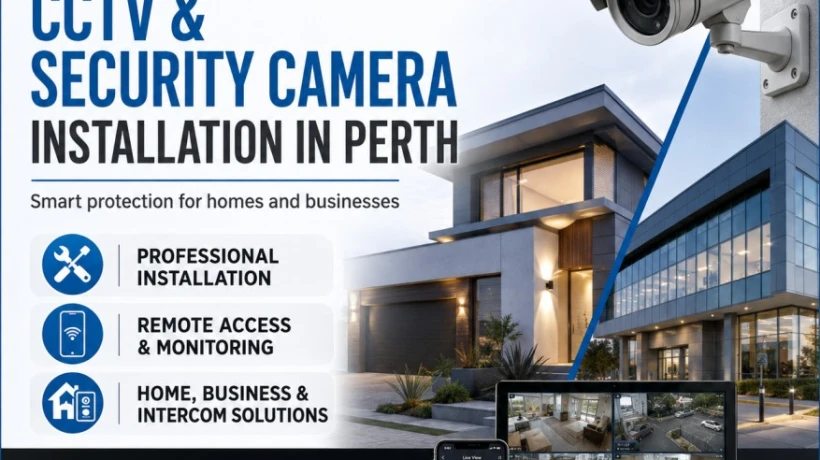
Security cameras have become a genuine priority for many Perth homeowners and businesses. A well-designed system lets you monitor key areas, review recorded footage and keep better visibility across a property. But getting real value from CCTV takes more than buying a camera kit and mounting it wherever there's a free spot on the wall.
If you're researching cctv installation perth options, it pays to think through your property layout, camera positions, image quality, storage, night-time performance and room to grow before you commit. The best security system is built around the areas you actually need to watch, not around a box of cameras. Spend a little time on these factors and you'll end up with a setup that still makes sense years after installation.
Start With the Areas You Need to Monitor
Before comparing camera models, walk your property and pinpoint the spots that matter most.
For a home, common coverage areas include the front entrance, driveway, garage, side access, backyard and any patio or alfresco space. Businesses often need eyes on customer entrances, loading zones, car parks, stock rooms, warehouses, reception areas and perimeter access points.
The aim isn't to install as many cameras as possible — it's to achieve useful coverage through smart positioning. A good installer can help you spot blind spots and work out where each camera delivers the clearest, most usable view.
Think Carefully About Camera Placement
Placement has a huge impact on how useful your footage turns out to be. A camera mounted too high gives a broad overview but poor detail, while one set too low can be tampered with or offer only a narrow field of view.
Decide what each camera actually needs to capture. A driveway camera might need a clear overview of vehicles entering the property, whereas a camera at the front door should focus more tightly on the faces of people approaching. When you organise your security camera installation perth project, discuss the purpose of every proposed position rather than just asking how many cameras you can fit.
Match Image Quality to the Area
Resolution is another key decision. Higher-resolution cameras capture more detail, but that doesn't mean every position needs the maximum available spec.
Weigh up the size of the area, the distance to the subject, lighting conditions, the level of detail you need, available storage and your budget. A camera covering a wide driveway or a busy commercial entrance has very different demands from one watching a narrow side passage. A well-balanced system often mixes camera specifications depending on the importance and size of each zone.
Don't Overlook Night-Time Performance
Many security incidents happen in poor light, so after-dark image quality deserves serious attention. Ask how each camera performs at night and whether the system uses infrared, low-light imaging or colour night technology.
Consider your existing lighting too. Streetlights, outdoor fittings and nearby buildings all influence what a camera sees, and sometimes improving external lighting works alongside CCTV to sharpen visibility. When you view demonstrations, ask to see footage recorded in low light rather than judging quality from bright daytime clips alone.
Weigh Up Wired vs Wireless
Homeowners often ask whether to go wired or wireless. Wireless systems can look easier to install, but they lean heavily on Wi-Fi coverage, available power and network stability. Wired systems need cabling, yet they tend to be more dependable where continuous recording and reliable connectivity matter.
Before choosing, factor in your property's construction, roof and ceiling access, the distance between cameras and the recorder, Wi-Fi coverage, recording needs, long-term reliability and future expansion. The right answer depends on the property, not a one-size-fits-all rule.
Check How Much Recording Storage You Need
Storage is easy to skip over when comparing systems, yet it shapes how far back you can review footage. Retention depends on the number of cameras, resolution, frame rate, recording mode, compression and hard-drive capacity.
Someone who wants to look back several weeks needs very different storage from a homeowner happy with a shorter history. Ask your installer for an estimated retention period based on the exact system being quoted — that's far more meaningful than simply comparing hard-drive sizes.
Consider Smart Detection Features
Modern CCTV can do far more than basic motion recording. Depending on the system, you might get human detection, vehicle detection, motion alerts, smart search, perimeter alerts, mobile notifications and active deterrence features.
These tools make a system easier to manage, especially where ordinary motion detection would trigger constant false alerts. Still, extra features should solve a real problem. Don't pick a system just because it has the longest feature list — ask which functions will genuinely help your property.
Make Sure Remote Viewing Is Simple
Most people want to check their cameras while away from the property, so ask how remote viewing works before installation. A professional setup should make it easy to view live cameras, review recordings, receive relevant alerts, switch between feeds and reach key playback functions.
It's also worth clarifying whether any features carry ongoing subscription fees. At handover, ask the installer to walk you through the mobile app rather than assuming you'll figure it out later.
Plan for Future Expansion
Your security needs will likely change. You might build a shed, expand a warehouse, add an entrance or decide an overlooked area now needs a camera. When choosing your initial system, ask whether the recorder can take on extra cameras.
A system with no headroom can force a full upgrade when you only wanted to add one or two cameras. Planning ahead is especially valuable for growing businesses, warehouses, workshops, larger homes and multi-building properties.
Compare Complete Quotes, Not Just Camera Counts
Never compare CCTV quotes on camera numbers alone. Two four-camera systems can differ hugely in equipment, workmanship and included services.
A detailed quote should spell out the camera brand and model, resolution, recorder, hard-drive capacity, cabling, mounting hardware, installation labour, mobile app setup, system configuration, warranty and after-sales support. If one quote is far cheaper than another, look closely at what's missing rather than assuming the systems are equal.
Choose Your Installer as Carefully as Your Cameras
Great equipment is only half the story. Experienced cctv installers perth should be able to explain why particular cameras, locations and recording settings are being recommended.
Useful questions include: Which areas should I cover first? Why these camera locations? What resolution suits each area? How much footage should the recorder retain? Can the system be expanded? Is mobile viewing included? What warranty applies, and what support comes after installation? What licensing or credentials cover the work? Clear, confident answers make it far easier to compare providers.
Home and Business Needs Differ
Residential and commercial systems may share the same core technology, but their design demands vary. A Perth home usually needs cameras around entry points, driveways and outdoor areas. A commercial property often calls for wider perimeter coverage, multiple entrances, larger storage, more cameras, better scalability and coverage of loading or warehouse zones. Businesses should also think about who needs system access and how footage will be reviewed after an incident.
Don't Forget Maintenance
Once cameras are installed, they still need occasional attention. Outdoor units are exposed to dirt, dust and weather, and surroundings change over time. Periodically check the lenses, recording status, date and time settings, playback, hard-drive operation, mobile access and camera angles. New trees, structures or equipment can create blind spots that didn't exist on day one.
Final Thoughts
Choosing a CCTV system in Perth should start with understanding your property — not picking a package on price alone. Identify the areas you need to monitor, weigh up lighting and night-time performance, decide how much recording history you need and consider whether the system may expand later. Just as importantly, choose an installer who can clearly explain the equipment, positioning, storage and configuration they recommend. Compare the complete installation rather than counting cameras, and you'll make a far smarter security investment.


Comments
Login to Comment