Can HubSpot AI Replace Manual CRM Work? Let’s Find Out
09 Apr, 2026
2679 Views 0 Like(s)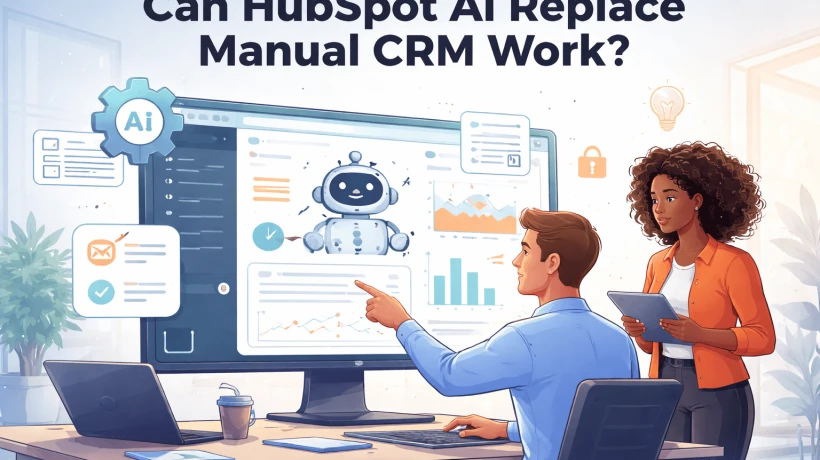
HubSpot AI is transforming CRM by automating data entry, tracking interactions, and delivering smart insights. But can it fully replace manual work? This blog breaks down what AI can handle, where human input still matters, and how businesses can boost efficiency with Custom AI Solutions, Custom AI Development, and Custom HubSpot CRM Solutions.
Customer relationship management has always required a balance between strategy and repetitive work. Sales and marketing teams spend a large part of their day updating records, tracking conversations, and managing pipelines. While CRM platforms were built to simplify this, manual effort still plays a big role.
With the rise of AI inside HubSpot, that dynamic is shifting. Businesses are now exploring whether automation can take over routine CRM work completely or simply make it more efficient.
Let’s take a closer look.
Understanding Manual CRM Work and AI’s Role
Manual CRM work is often repetitive and time-consuming. Teams regularly input contact details, update deal stages, and log emails or calls after every interaction. Even small delays in updating records can create gaps in data, which affects reporting and decision-making.
Over time, these inefficiencies add up. Sales teams spend less time selling and more time managing data. This is exactly where AI starts making a difference.
HubSpot AI introduces automation into everyday CRM activities. Instead of relying on manual updates, the system captures and processes data automatically. Contact information, email interactions, and activity logs are updated in real time without constant user input.
It also goes beyond automation by offering predictive insights. AI analyzes customer behavior and suggests next steps, helping teams respond faster and more effectively. It can even assist in drafting emails and responses, reducing the effort needed for communication.
Many businesses extend these capabilities further with custom AI solutions to align automation with their workflows.
What HubSpot AI Can and Cannot Replace
What AI Can Fully Replace
There are several areas where HubSpot AI can almost eliminate manual effort. Tasks like data entry and activity logging are handled automatically, reducing the risk of human error. Instead of manually updating records after every interaction, the system captures this information in the background.
Lead prioritization is another strong area. AI analyzes behavior and engagement patterns to rank leads more accurately than manual methods. Basic reporting has also become faster, with AI generating dashboards and insights instantly.
These improvements save time and create more reliable data across the system.
Where Human Input Is Still Needed
Despite these advancements, AI cannot replace every aspect of CRM work. Human involvement is still critical when it comes to building relationships and understanding customer intent. Conversations often require context and adaptability, which AI cannot fully replicate.
Strategic decisions also remain in human hands. While AI can provide insights and recommendations, it cannot define business goals or make complex judgment calls. Sales strategies, negotiations, and long-term planning still depend on human expertise.
To bridge this gap, many businesses invest in Custom AI Development, ensuring AI supports decision-making without replacing it.
Impact on Productivity and Business Operations
The biggest impact of HubSpot AI is improved efficiency rather than complete automation. By reducing time spent on administrative tasks, teams can focus more on meaningful work. Sales representatives can engage with prospects more often, while marketers can focus on strategy instead of reporting.
This shift improves response times and enhances customer experience. It also allows businesses to manage a higher volume of leads without expanding their teams. Instead of replacing roles, AI changes how those roles function and where time is spent.
Challenges and the Need for Customization
While the benefits are clear, adopting AI in CRM comes with challenges. One of the main issues is data quality. AI systems rely heavily on accurate and structured data, so poor data can limit their effectiveness.
There is also a learning curve. Teams need time to understand how AI works and how to use it properly. Over-automation can be another concern, as excessive reliance on AI may make interactions feel less personal.
Why Customization Matters
Out-of-the-box AI solutions may not fit every business model. Different companies have different workflows, customer journeys, and sales processes. This is why many organizations choose custom HubSpot CRM solutions to tailor AI features to their specific needs.
Customization ensures that automation enhances the process instead of disrupting it.
Final Verdict: Replacement or Enhancement?
HubSpot AI is transforming how CRM work gets done. It removes repetitive tasks, improves accuracy, and helps teams operate more efficiently. However, it does not completely replace manual CRM work.
AI is best seen as a support system. It handles routine tasks while humans focus on relationships, strategy, and decision-making.
The future of CRM is not about AI replacing people. It is about AI working alongside them to create better outcomes.
So, can HubSpot AI replace manual CRM work?
Not entirely. But it can make it faster, smarter, and far more effective.


Comments
Login to Comment