Can Growth Hormone Peptides Influence Fat Metabolism?
29 Jun, 2026
1204 Views 0 Like(s)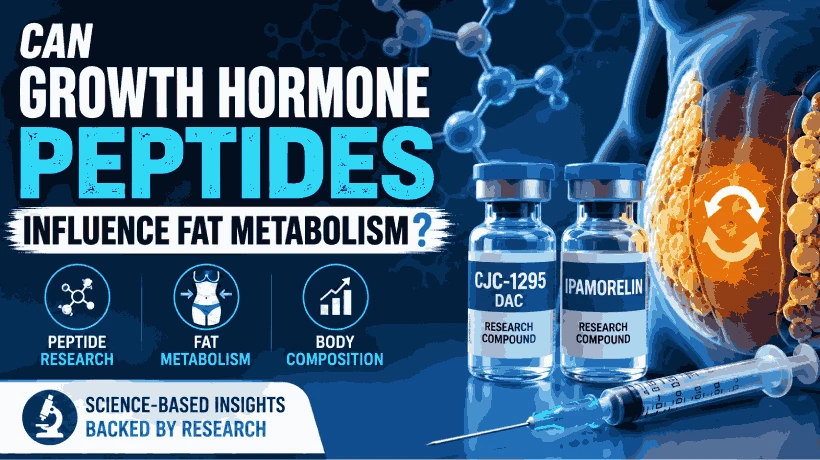
Can Growth Hormone Peptides influence fat metabolism? Explore the latest research on CJC-1295 & Ipamorelin, growth hormone pathways, and their potential role in body composition, metabolic health, and peptide science.
Understanding the Connection Between Peptides and Body Fat Research
Maintaining a healthy body composition has become an important area of scientific investigation. Researchers continue to study the biological mechanisms that regulate fat storage, energy expenditure, and metabolic function. Among the topics receiving increasing attention are Growth Hormone Peptides and their potential influence on fat metabolism.
Growth hormone is known to play a role in various physiological processes, including muscle maintenance, tissue repair, and energy utilization. Because of these functions, researchers have become interested in compounds that may stimulate growth hormone release and their possible effects on body composition.
This article explores the science behind Growth Hormone Peptides, the role of CJC-1295 & Ipamorelin in ongoing studies, and what current research suggests about their relationship with fat metabolism.
What Are Growth Hormone Peptides?
Growth Hormone Peptides are research compounds designed to influence the body's natural growth hormone pathways. Rather than supplying growth hormone directly, these compounds are investigated for their ability to stimulate the release of endogenous growth hormone through different signaling mechanisms.
Scientists have been examining several peptides due to their potential roles in:
-
Metabolic regulation
-
Muscle recovery
-
Tissue regeneration
-
Healthy aging research
-
Body composition studies
The growing interest in these compounds has led to extensive investigations within the fields of endocrinology and metabolic science.
Understanding Fat Metabolism
Fat metabolism refers to the processes through which the body stores, breaks down, and uses fat as an energy source. This complex system is influenced by several factors, including:
Hormonal Balance
Hormones such as insulin, cortisol, and growth hormone play significant roles in determining how the body utilizes energy and stores fat.
Physical Activity
Exercise can increase energy expenditure and influence the body's ability to oxidize fatty acids.
Nutrition
Dietary habits significantly impact metabolic efficiency and body composition.
Age
As individuals age, natural growth hormone production tends to decline, which has prompted interest in Anti-Aging Peptide Research and its potential implications for metabolic health.
How Growth Hormone May Influence Fat Metabolism
Growth hormone has been studied for its involvement in lipolysis, the process through which stored fat is broken down into fatty acids that can be used for energy.
Research has shown that growth hormone may contribute to:
Increased Fat Breakdown
Growth hormone appears to encourage the mobilization of stored fat, particularly from adipose tissue.
Enhanced Energy Utilization
The hormone may influence how efficiently the body uses fat as a fuel source.
Changes in Body Composition
Some studies suggest that growth hormone pathways may affect the ratio of lean mass to fat mass.
These findings have led researchers to investigate compounds that may naturally stimulate growth hormone release.
The Role of CJC-1295 & Ipamorelin in Research
Among the most discussed peptide combinations in metabolic studies is CJC-1295 & Ipamorelin.
CJC-1295
CJC-1295 is a synthetic peptide that has been researched for its ability to stimulate growth hormone-releasing hormone pathways. Researchers have explored its potential to increase and sustain growth hormone secretion.
Ipamorelin
Ipamorelin is another peptide compound that has been studied for its selective stimulation of growth hormone release while minimizing effects on other hormones.
When examined together, these compounds have generated interest because they may work through complementary mechanisms that support growth hormone activity.
Understanding CJC-1295 DAC
One specific variant that has received attention is CJC-1295 DAC.
The term "DAC" refers to Drug Affinity Complex technology, which was developed to extend the compound's half-life. Researchers have investigated CJC-1295 DAC because its prolonged activity may provide valuable insights into growth hormone signaling and metabolic processes.
Although studies continue, scientists remain interested in understanding whether extended stimulation of growth hormone pathways could influence body composition and fat metabolism.
Can Growth Hormone Peptides Affect Body Fat?
The relationship between Growth Hormone Peptides and body fat remains an active area of investigation.
Several mechanisms are currently being explored.
1. Promotion of Lipolysis
Growth hormone has been associated with increased breakdown of stored fats. Researchers are studying whether peptides that influence growth hormone release may contribute to similar metabolic responses.
2. Support of Lean Body Mass
Maintaining lean tissue can influence overall metabolic rate. Studies continue to examine whether certain peptides may affect body composition by supporting muscle preservation.
3. Improved Metabolic Efficiency
Scientists are investigating whether growth hormone signaling pathways may contribute to more efficient energy utilization.
However, it is important to recognize that many findings remain preliminary, and additional studies are necessary to fully understand these relationships.
The Growing Field of Peptide Therapy Research
The scientific community has shown increasing interest in Peptide Therapy Research because peptides represent highly targeted molecules capable of interacting with specific biological pathways.
Current areas of investigation include:
-
Metabolic health
-
Recovery and regeneration
-
Healthy aging mechanisms
-
Endocrine function
-
Body composition science
As research expands, scientists continue to evaluate how different peptides interact with hormonal systems and whether they may have applications in future therapeutic development.
Anti-Aging Peptide Research and Metabolic Health
One reason researchers study growth hormone pathways is their possible relationship with aging.
Natural growth hormone production tends to decline over time. This decline has been associated with changes in:
-
Body composition
-
Energy levels
-
Recovery capacity
-
Muscle mass maintenance
As a result, Anti-Aging Peptide Research frequently explores compounds that influence growth hormone secretion.
Researchers are particularly interested in understanding whether supporting healthy hormonal signaling may contribute to better metabolic function during aging.
Muscle Recovery Peptides and Their Connection to Metabolism
Another growing field involves Muscle Recovery Peptides.
Recovery processes require significant amounts of energy and involve complex interactions between hormones and cellular signaling pathways.
Scientists are investigating whether certain peptides may support:
Tissue Repair
The body undergoes continuous repair and regeneration processes that depend on numerous biological factors.
Protein Synthesis
Muscle maintenance and repair are closely linked to metabolic activity.
Body Composition Regulation
Preservation of lean tissue may indirectly influence how the body manages energy expenditure and fat utilization.
Because muscle tissue contributes significantly to overall metabolism, the relationship between recovery peptides and fat metabolism remains an area of considerable interest.
The Importance of Continued Peptide Research
Despite encouraging findings, many questions remain unanswered.
Researchers continue to study:
-
Long-term metabolic effects
-
Optimal dosing protocols in research settings
-
Differences between individual responses
-
Potential interactions with other metabolic pathways
-
Mechanisms underlying changes in body composition
The field of Peptide Research Compounds continues to evolve as scientists gather more data and improve their understanding of these complex biological systems.
Current Scientific Perspective
At present, available research suggests that growth hormone pathways may play a role in fat metabolism and body composition. Consequently, compounds such as CJC-1295 & Ipamorelin and CJC-1295 DAC have become important subjects of investigation.
However, researchers emphasize that these compounds are still being studied, and further clinical evidence is necessary to determine their full effects and potential applications.
Conclusion
The question of whether Growth Hormone Peptides can influence fat metabolism remains one of the most intriguing topics in modern metabolic research.
Emerging studies indicate that growth hormone pathways may contribute to fat breakdown, energy utilization, and body composition changes. This has fueled interest in compounds such as CJC-1295 & Ipamorelin and other Peptide Research Compounds that target growth hormone signaling.
At the same time, areas such as Peptide Therapy Research, Anti-Aging Peptide Research, and investigations into Muscle Recovery Peptides continue to expand our understanding of how these molecules may interact with complex metabolic systems.
While scientific exploration is ongoing, one thing is clear: the relationship between growth hormone signaling and fat metabolism will remain a significant focus of research for years to come.



Comments
Login to Comment